Description
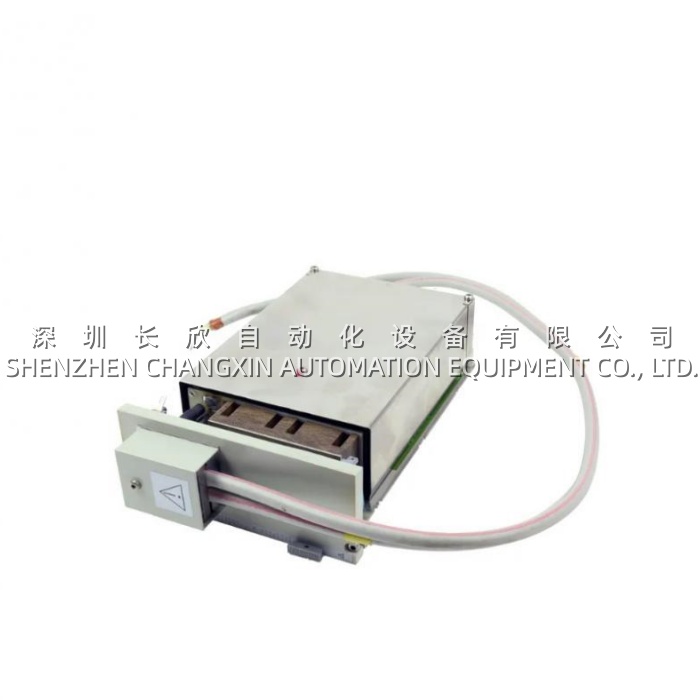
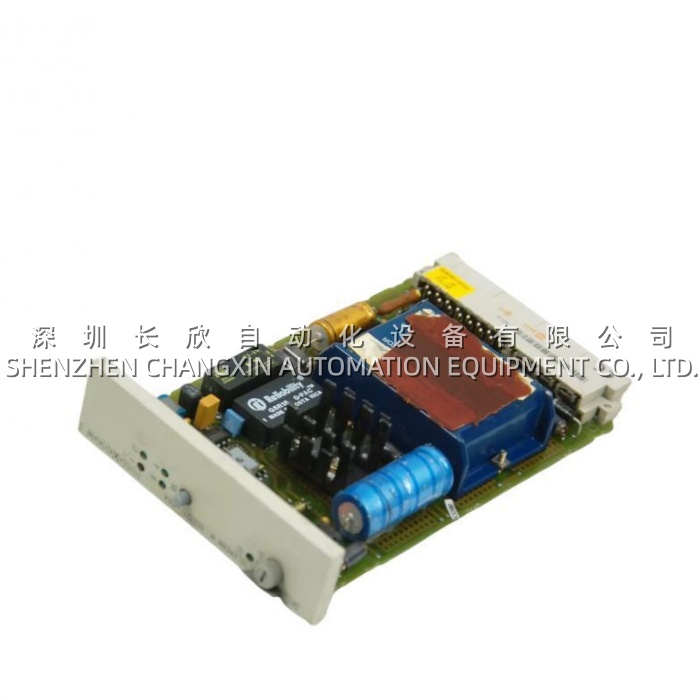
The Siemens 6DS1213-8AA is the Bus Coupler / Local Bus Interface Module (MBI) within the Teleperm M/ME distributed control system—Siemens’ legacy DCS backbone widely deployed in fossil-power plants, petrochemical complexes, and heavy-process sites from the late 1980s through the 2000s. The 6DS1213-8AA bridges the Teleperm M automation station (AP/AS processor rack) to the ME-level I/O subsystems (EG/ET/EM racks) over the proprietary ME-Bus, while simultaneously offering a PROFIBUS DP slave/master port (Sub-D 9, up to 12 Mbps) for integrating modern remote-I/O or Profibus field devices into the otherwise closed Teleperm M architecture. Mounted in Eurocard format on DIN rail or the dedicated Teleperm M rack slot, the module carries 2 KB input + 2 KB output data buffers, 24 V DC supply with triple-isolation (1,500 V surge), and front-panel LEDs for bus-health diagnosis—making it a critical sparing commodity now that Siemens has long exited active support for the 6DS12xx family.
Application Scenarios
In a 2 × 350 MW coal-fired unit in Poland commissioned in 1996, the secondary-air damper loop and the mill-pulverizer permissive logic sit on a Teleperm M/ME rack (AP16 automation processor + EG/ET I/O). The original design had the 6DS1213-8AA linking the AP rack’s local bus to the ET I/O rack 18 meters away in the mill cabinet, over a shielded ME-Bus twisted pair. Fifteen years in, the plant wanted to add a flue-gas desulfurization (FGD) scrubber package with modern Profibus DP instrumentation (flow, pH, density) without ripping the AP16 or migrating to SPPA-T2000—a €400k+ project the budget couldn’t absorb that year. The retrofit used the 6DS1213-8AA‘s second personality: the Profibus DP port was enabled as a DP master, and the FGD skid’s remote-I/O head (a Siemens IM153-2) was daisy-chained off the Sub-D 9 connector on the coupler. The AP16’s function charts talk to the FGD data via the 6DS1213-8AA buffer (2 KB In / 2 KB Out mapped into the Teleperm M data blocks)—zero AP firmware change, zero T2000 migration. The plant bought three tested 6DS1213-8AA units as spares (the original had been in service 19 years, LEDs still green but “why risk it”), and the FGD skid went live in a weekend outage. For Teleperm M asset owners, the 6DS1213-8AA is the “stay-put” bridge that postpones a full DCS migration by another 5–8 years.
Parameter
| Main Parameters | Value / Description |
|---|---|
| Product Model | 6DS1213-8AA |
| Manufacturer | Siemens (Teleperm M / ME series) |
| Product Category | Bus Coupler / Local Bus Interface Module (MBI) |
| Primary Bus | ME-Bus (proprietary Teleperm M local bus to AP/AS/EG/ET) |
| Secondary Bus | PROFIBUS DP (Slave/Master capable), Sub-D 9 |
| Transmission Rate | 9.6 kbps … 12 Mbps (auto-detect on Profibus) |
| Data Buffer | 2 KB Input / 2 KB Output |
| Supply Voltage | 24 V DC (19.2 … 28.8 V) |
| Power Consumption | ~8 W (typ.) |
| Isolation / Protection | Triple signal isolation, 1,500 V surge tolerance |
| Diagnostics | LED status (Pwr / Bus Active / Error / DP State) |
| Operating Temp. | 0 … +60 °C (storage –25 … +70 °C) |
| Mounting | Eurocard / Teleperm M dedicated slot or 35 mm DIN rail |
| Dimensions (approx.) | 120 × 40 × 75 mm (DIN-rail config) / Eurocard format |
| Protection | IP20 (front) |
| Lifecycle | Discontinued (PM500 / phased out, no Siemens replacement) |
Technical Principles and Innovative Values
- Innovation Point 1: Dual-Bus Bridge in One Eurocard. The 6DS1213-8AA is unusual among Teleperm M interface cards because it isn’t “ME-only”—it natively speaks both the proprietary ME-Bus (timing-determinate, optimized for AP↔ET telegrams at the ms level) and open PROFIBUS DP. That dual personality means one module can (a) serve as the standard AP-to-ET coupler and (b) act as a DP master hanging modern IM153 / drive / analyzer nodes off a 1995-vintage AP16—without a separate gateway PC or any Profibus-DP-to-ME protocol converter.
- Innovation Point 2: Deterministic ME-Bus Timing Preserved. The ME-Bus side of the 6DS1213-8AA runs the legacy Teleperm M cycle-synchronous handshake—meaning the AP’s 80 ms/160 ms/320 ms automation cycle isn’t perturbed by the Profibus chatter on the other port. The 2 KB/2 KB buffer decouples the two buses, so a DP node CRC storm won’t jitter the ME-side I/O scan. For power-plant DCS where “the boiler loop must scan every 80 ms or the flame-safeguard trips,” this isolation matters.
- Innovation Point 3: Redundancy-Ready Local Bus Architecture. The 6DS1213-8AA supports multi-node local-bus topologies and redundant system configurations—pair two couplers (primary + standby) behind an AP, and if the active ME-Bus leg to the ET rack faults, the standby coupler picks up the telegram stream. The front-panel LEDs distinguish “ME-Bus sync lost” from “DP slave dropped,” which cuts troubleshooting time from “swap everything” to “check that one Sub-D.”
Application Cases and Industry Value
Case 1 – Combined-Cycle Power Plant (Italy, 2018). A 780 MW CCGT running Teleperm M/ME on the GT and steam-turbine auxiliaries had one 6DS1213-8AA per AP rack (four AP16s across GT#1, GT#2, ST, BOP). During a routine IR scan, the electricians noticed the 6DS1213-8AA in the ST aux rack running 18 °C hotter than its peer—the Profibus DP port had a marginal crimp on the Sub-D shell from the 1997 commissioning, and the termination resistor was floating. The rack hadn’t faulted yet, but the LED “DP Err” was blinking at 1 Hz (intermittent). They sourced a tested-pulled 6DS1213-8AA, swapped it during a 40-minute BOP window, re-crimped the Sub-D, and the blink stopped. The plant’s DCS engineer noted: “In Teleperm M, the coupler is the only thing between the AP and the I/O—when it coughs, the whole rack goes deaf. We now stock two per AP pair.”
Case 2 – Olefin Cracker DCS Extension (Malaysia, 2020). A 1994-vintage cracker DCS (Teleperm M/ME, AP12 + ET I/O) needed three new furnace-pressure loops for a debottlenecking project, but the ET rack had no spare slots and the AP12 was full on function-chart blocks. Rather than a T2000 migration (budget denied), the project used the 6DS1213-8AA Profibus port: hung an IM153-2 remote-I/O panel (6 ES7153-2BA10) with 2 × SM331 AI + 1 × SM332 AO off the coupler’s DP port, mapped the 2 KB buffer into the AP12’s data blocks via the existing ME-Bus telegram structure, and wrote three new function charts reading the IM153 data as “remote AI.” Total new-cable run: 35 m of Profibus purple cable. Total DCS-migration avoidance: ~€280k. The plant still runs that config four years later and keeps one 6DS1213-8AA spare per AP rack (six racks = six spares).