Product Overview
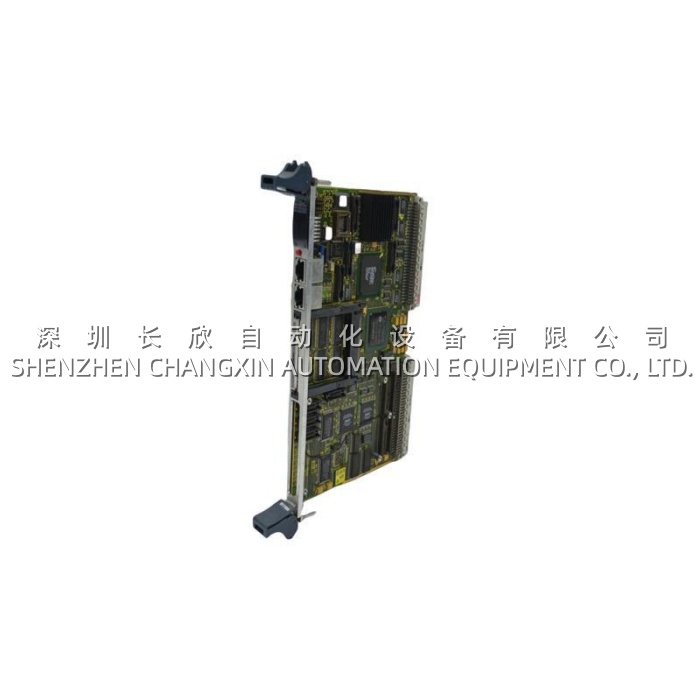
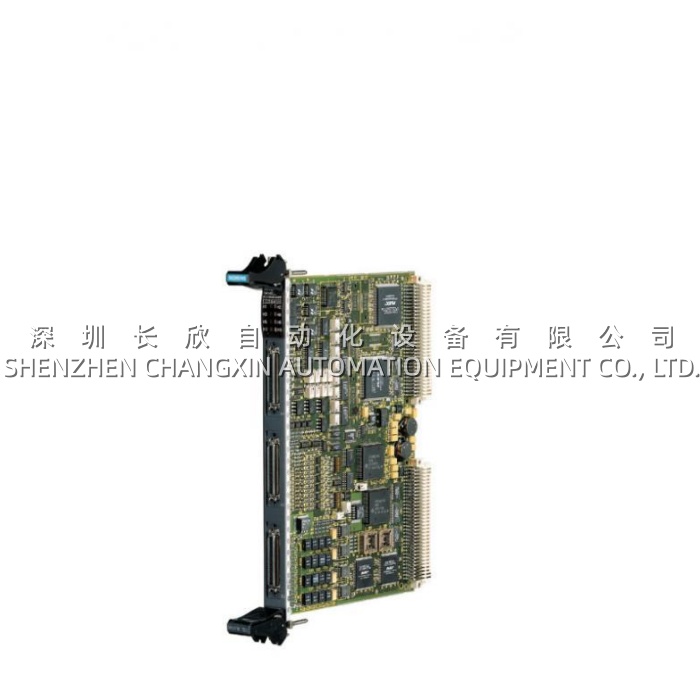
The 6DD1660-0BF0 is a Siemens SIMATIC TDC Communication Module designated CP 52M0, configured specifically as a Global Data Memory (GDM) expansion module carrying 2 MB of SRAM. While the 6DD1660 family broadly covers communication processors within the SIMATIC TDC rack, the 6DD1660-0BF0 variant is the memory-centric subtype—its role is to provide shared, deterministic data exchange space that multiple TDC CPU modules (such as the PM6, PM7, or the high-performance multicore CPUs in a TDC rack) can read and write with minimal latency. SIMATIC TDC itself is Siemens’ highest-tier multi-processor control platform, positioned above SIMADYN D and S7-400 in raw I/O bandwidth and closed-loop update rate, targeting applications where microsecond-level determinism and thousands of I/O across distributed racks matter. In that context, the 6DD1660-0BF0 acts as the inter-CPU glue memory that lets parallel processors coordinate without saturating the backplane with message traffic.
Physically, the 6DD1660-0BF0 is a narrow-format module—20 mm width in the TDC rack, 233 mm height, 160 mm depth, ~0.465 kg—designed to slot into the SIMATIC TDC rack’s communication/module bay alongside CP 52M0 variants that carry optical or RS485 interfaces (the -0BF0 is the SRAM-only GDM build; other -0xx suffixes differentiate by interface mix). Power is drawn from the rack backplane (5 V DC via backplane bus, typical 4.5 W loss), so no separate PSU cabling is needed. The 2 MB SRAM is battery-backed through the rack’s central backup concept, meaning the 6DD1660-0BF0 retains GDM contents across short power cycles as long as the rack’s backup battery/supercap is healthy.
Siemens placed the 6DD1660-0BF0 into PM400 “Phase-Out Started” effective October 1, 2023, meaning new orders from Siemens direct are closing and the module now lives in the aftermarket/spare-channel lifecycle. For plants running active TDC racks—rolling-mill main drives, full-vehicle test rigs, power-gen turbine controls, high-speed research rigs—maintaining a shelf of 6DD1660-0BF0 units is the pragmatic way to protect uptime without undertaking a TDC→SINAMICS/SIMOTION/S7-1500 R/H migration, which for a multi-rack TDC cell is a major capital project.
Technical Specifications
| Parameter Name | Parameter Value |
|---|---|
| Product Model | 6DD1660-0BF0 |
| Manufacturer | Siemens |
| Product Type | SIMATIC TDC Communication Module / GDM Memory Module (CP 52M0) |
| Designation | CP 52M0 (GDM variant, 2 MB SRAM) |
| Memory | 2 MB SRAM (Global Data Memory) |
| Power Loss (typ.) | 4.5 W |
| Supply | 5 V DC via TDC rack backplane (no external PSU) |
| Interfaces | None (GDM-only build; RS485 = 0, Optical = No) |
| Mounting | SIMATIC TDC rack module bay |
| Dimensions (W × H × D) | 20 × 233 × 160 mm |
| Weight | 0.465 kg |
| Operating Temp. | 0 °C to +60 °C (cabinet environment) |
| Net Weight (shipping) | 0.465 kg |
| Lifecycle Status | PM400 Phase-Out Started (effective 01.10.2023) |
Main Features and Advantages
The 6DD1660-0BF0 exists because SIMATIC TDC architectures routinely run multiple CPUs in a single rack—PM6 + PM6, or PM7 + PM7, or mixed—and those CPUs need a shared memory region that all can access at backplane speed. The GDM concept is TDC’s answer: a memory pool mapped so that CPU-A writes a dataset (say, a 16 kword vector of drive-setpoint data) and CPU-B reads it the next TDC cycle, no cop-rocessor, no message framing, no protocol stack overhead. The 6DD1660-0BF0 provides 2 MB of that pool in SRAM, battery-backed through the rack’s central backup architecture so the data survives controlled shutdowns.
Why SRAM rather than DRAM? In TDC’s deterministic world, access-time predictability matters more than density. The 6DD1660-0BF0 gives the CPUs a low-jitter path to shared state—drive-bus coordination, cross-CPU interlocking, multi-axis sync data, test-rig channel aggregation—without introducing wait states that would show up as jitter on a microsecond-level control loop. That’s why TDC users spec the 6DD1660-0BF0 even when 2 MB “doesn’t sound like much” by PC standards—it’s not bulk storage, it’s deterministic handoff memory.
The thin 20 mm form factor is another deliberate choice. TDC racks are dense—processor modules, I/O interface modules, communication processors, power modules—and the 6DD1660-0BF0 occupying only one narrow slot means you can stack GDM capacity (multiple -0BF0 modules if the rack supports it) alongside CP 52M0s that carry optical/RS485 interfaces, without burning wide slots. At 4.5 W typical loss the thermal load is modest, important when a TDC rack already runs PM7 multicores that draw significantly more.
From a lifecycle standpoint, the advantage of the 6DD1660-0BF0 today is availability through the aftermarket. Siemens’ PM400 status means new-order lead times from the factory are gone, but the TDC installed base is large (steel mills, test stands, power plants) and the 6DD1660-0BF0 fails rarely—SRAM has no wear mechanism like a backlight or fan—so tested surplus and NOS units with traceability are a reliable spare strategy. For plants, the 6DD1660-0BF0 on the shelf = one less reason to force a premature TDC migration.