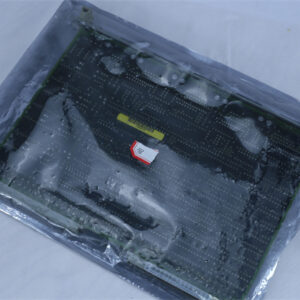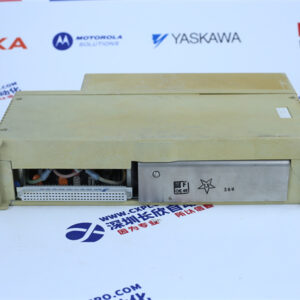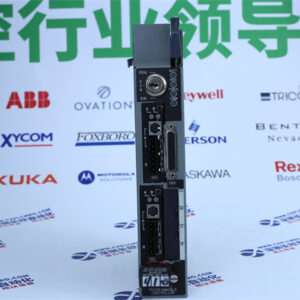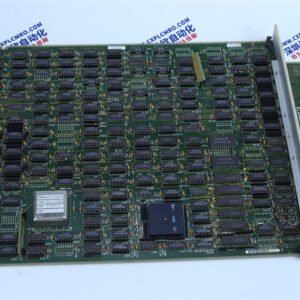
Technical Specifications
| Parameter Name | Parameter Value |
|---|---|
| Product Model | 315-2AG12 |
| Manufacturer | VIPA (part of Yaskawa) |
| Product Type | CPU 315SB/DPM central processing unit |
| Series / Platform | System 300S, SPEED7, hardware-compatible with Siemens S7-300 |
| Work Memory | 1 MB integrated (50% code / 50% data), expandable to max. 2 MB via MCC |
| Load Memory | 2 MB integrated, MMC card slot for project and firmware storage |
| Command Processing Time | Bit 0.01 μs, word 0.01 μs, double integer 0.01 μs, floating point 0.06 μs |
| Integrated Interfaces | MPI (9-pin SubD), PROFIBUS-DP/PtP (9-pin SubD), Ethernet PG/OP (RJ45) |
| PROFIBUS-DP | 1 integrated DP master, DP-V0/DP-V1, up to 12 Mbit/s, up to 125 slaves |
| PtP Serial Protocols | ASCII, STX/ETX, 3964R, USS, Modbus master (ASCII/RTU), RS485 potential-separated |
| Power Supply | DC 24 V, permitted 20.4–28.8 V, reverse polarity protected |
| Current Consumption | 200 mA no-load, 1 A rated, 5 A inrush, max. 2.5 A at backplane bus, power loss 6 W |
| Timers / Counters / Flags | 512 S7 timers, 512 S7 counters (remanence adjustable), 8192 flag bytes |
| Hardware Configuration | Max. 4 racks, 8 modules per rack in multi-rack, 32 in single-rack configuration |
| Real-Time Clock | Buffered, min. 6 weeks buffering, vanadium rechargeable lithium battery, max. 10 s deviation per day |
| Dimensions and Weight | Approx. 40 × 125 × 120 mm (W × H × D), approx. 0.3 kg, single-tier width |
| Operating Temperature | 0 °C to +60 °C, storage −25 °C to +70 °C, IP20 |
Main Features and Advantages
Execution speed that changes the scan budget: The SPEED7 core in the VIPA 315-2AG12 executes bit, word and double-integer instructions at 0.01 μs and floating-point arithmetic at 0.06 μs. On a machine with heavy analogue scaling, recipe arithmetic and closed-loop control, that difference is not academic — it shortens the cycle enough to absorb an extra axis or a second PID loop without touching the hardware list. Where an older 315-class CPU runs out of headroom, the 315-2AG12 usually still has margin.
One RS485 port, two very different jobs: The X3 interface is configurable either as a PROFIBUS-DP master or as a serial PtP channel. That flexibility matters in retrofit work, because the same spare part can serve a distributed I/O drop on one machine and a barcode reader, weighbridge or drive link over ASCII, 3964R or Modbus RTU on another. Fewer variants on the shelf, fewer part numbers to qualify — a real consideration when the installed base is a mix of machine vintages.
Memory handling that survives a power cut: Work memory is split 50/50 between code and data and can be doubled to 2 MB with an MCC card, while the 2 MB load memory and the MMC slot hold the project itself. In practice this means a failed VIPA 315-2AG12 can be swapped in the field: fit the card from the old unit, power up, and the CPU reloads the application without an engineer travelling with a laptop. The buffered real-time clock holds for a minimum of six weeks on its rechargeable vanadium lithium cell, so time-stamped alarm logs and scheduled tasks stay credible through a shutdown.
Diagnostics without a programming device: Front-panel LEDs report power, RUN/STOP, system fault, force status, MCC access and Ethernet link and speed, and the integrated PG/OP channel exposes an internal web page for status checks. Most fault triage on the 315-2AG12 is finished before the cabinet door is closed again.
Application Field
Machine builders and OEMs are the most common users of the VIPA 315-2AG12, particularly on packaging lines, assembly stations and press automation where the original controller was a Siemens S7-300 and the program already exists in STEP 7. Because the module is hardware-compatible with the S7-300 rack and accepts the same project structure, it is frequently specified as a like-for-like replacement when the original CPU is obsolete, over-priced or unavailable — the machine keeps its wiring, its I/O modules and its program logic.
Process applications benefit from the PROFIBUS-DP master. A water treatment skid or a batch mixing plant can hang distributed I/O, variable-speed drives and remote valve islands off one 12 Mbit/s segment with up to 125 slaves, while the MPI port serves the local HMI and the RJ45 port gives maintenance a service channel. The 315-2AG12 also fits material handling and warehouse conveyor systems, where the PtP option lets the CPU talk directly to barcode scanners, RFID readers and checkweighers over RS485 instead of through a separate serial module.
A fourth scenario is the maintenance spare itself. Plants running System 300S or mixed S7-300/300S racks keep the VIPA 315-2AG12 on the shelf because it covers three failure modes at once — CPU death, memory shortage and cycle-time overload — with a single part number. Where a production line cannot tolerate a long lead time on a discontinued controller, that spare is not an inventory cost, it is insurance priced against the hourly cost of a stopped line.