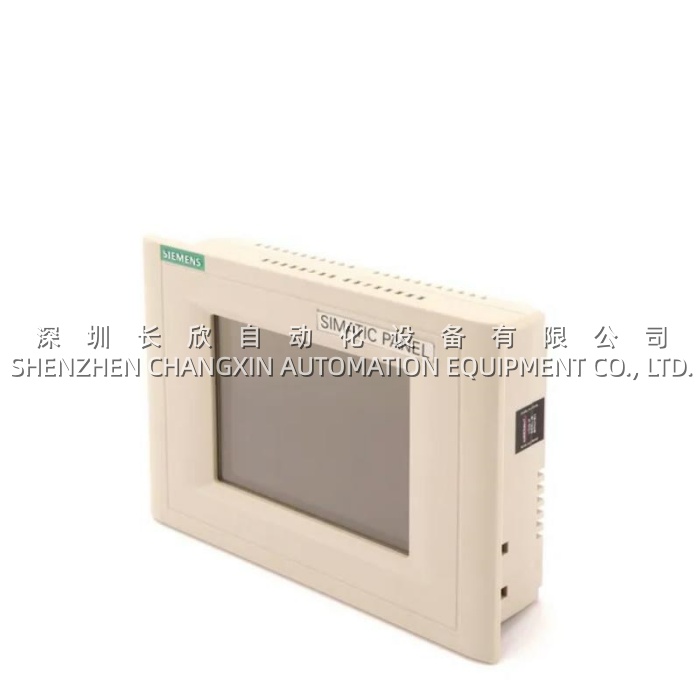
Application Scenarios
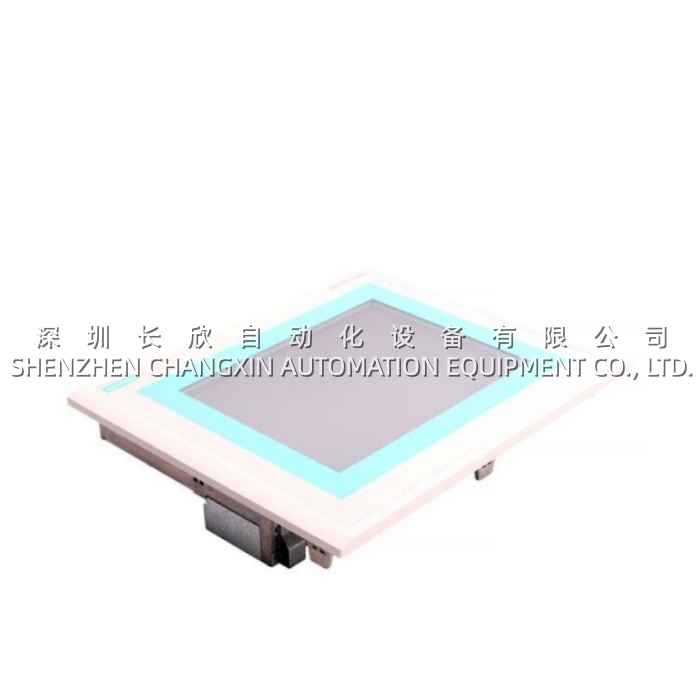
In a Tier-2 automotive stamping plant in the Midwest running three 1998-vintage 630-ton presses, each press had a 6AV6545-0CC10-0AX0 mounted at the operator station, talking MPI to an S7-400 rack that controlled the clutch/brake sequence, die-protection light curtains, and counterbalance pressure loops. After 22 years of three-shift operation, the CCFL backlights began flickering and one resistive touch foil developed “ghost touches” that occasionally triggered an unintended lube-cycle start—a nuisance fault that cost 45 minutes per occurrence. The integrator’s initial quote to retrofit all three presses to a modern KTP1200 (new cutout, new Profinet cable run, WinCC project rebuild) came to ~$28k per press. Instead, the plant sourced three functionally tested 6AV6545-0CC10-0AX0 units from surplus stock, cloned the ProTool project via the PC Card slot, and swapped each panel in under 20 minutes during a weekend PM—total cost under $3k. The 6AV6545-0CC10-0AX0 restored the original screen layout the operators already knew, avoided rewiring the MPI daisy-chain, and bought the plant another 5–7 years before a planned S7-400 → S7-1500 migration. For legacy lines, “keep it running as-is” often beats “modernize everything.”
Parameter
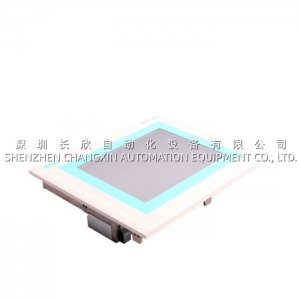
| Main Parameters | Value / Description |
|---|---|
| Product Model | 6AV6545-0CC10-0AX0 |
| Manufacturer | Siemens (SIMATIC HMI, TP 270 series) |
| Product Category | Touch Panel (Operator Interface) |
| Display | 10.4″ STN color, 256 colors |
| Resolution | 640 × 480 px (VGA) |
| Backlight | CCFL, MTBF ~60,000 h @ 25 °C |
| Touch Type | Analog resistive (finger / stylus) |
| Processor | Hitachi SH3, 32-bit RISC |
| Memory (Config) | 2 MB Flash (config/project storage) |
| RAM / User Memory | 4 MB RAM / 2,048 KB user data |
| Interfaces | 2 × RS-232, 1 × RS-422, 1 × RS-485, MPI/PROFIBUS DP (≤12 Mbit/s) |
| Expansion | 1 × CF card slot, 1 × PC Card slot |
| Supply Voltage | 24 V DC (19.2 … 28.8 V), typ. ~0.9 A / 15–20 W |
| Protection | IP65 front / IP20 rear |
| Config. Software | ProTool V6 SP3+ / WinCC flexible 2004+ |
| Operating Temp. | 0 … +50 °C |
Technical Principles and Innovative Values
- Innovation Point 1: Native MPI/PROFIBUS DP Without Gateway. Most modern Comfort/KTP panels default to PROFINET, forcing a gateway or new cable run when retrofitting into an S7-300/400 rack that still runs MPI. The 6AV6545-0CC10-0AX0 speaks MPI and PROFIBUS DP natively on the same 12 Mbit/s port, plugging straight into the existing S7 backplane cable. For plants sitting on stable S7-300 code they don’t want to touch, this is the difference between a 20-minute swap and a week-long migration.
- Innovation Point 2: PC Card + CF Dual-Expansion Architecture. The 6AV6545-0CC10-0AX0 includes both a PC Card (PCMCIA) slot and a CF card slot—rare even among peers of its era. Operators used PC Cards for fast project backup/restore on the shop floor without a laptop, while CF cards handled recipe expansion beyond the 64 KB integrated recipe memory. This made the TP 270 unusually field-service-friendly before USB became universal.
- Innovation Point 3: STN 256-Color Readability in Harsh Light. While TFT eventually superseded STN for color depth, the 6AV6545-0CC10-0AX0 STN panel maintains usable contrast in brightly lit stamping and glass shops where TFT backlight washout is a real issue. The 10.4″ VGA canvas fits 2,000 tags and 4,000 messages comfortably—enough for a mid-size machine without scrolling fatigue.
Application Cases and Industry Value
Case 1 – Plastic Injection Molding (Turkey, 2019). A plant running 14 Arburg 320S machines (S7-300 + TP 270) faced a dilemma: three 6AV6545-0CC10-0AX0 units had cracked overlays from mold-tool collisions. The OEM quoted €1,850 per new-old-stock unit with 12-week lead; the plant found tested-pulled units with fresh overlays for ~€420 each, pre-loaded with a clone of the original ProTool project via PC Card. Downtime per swap: 12 minutes. The plant manager noted that the operators refused to switch to a newer TFT panel “because the STN colors match the alarm screens we’ve known for 15 years”—a reminder that HMI familiarity has real OEE value.
Case 2 – Food Bottling Line (Mexico, 2021). A 2003-era bottle rinser/filler/ capper tri-block used a 6AV6545-0CC10-0AX0 for recipe select, CIP-status display, and fault ack. During a sanitation washdown, the panel’s CCFL finally dimmed beyond readability after ~18 years. Rather than rebuild the WinCC flexible project for a KTP700 (which would have required a new Profinet drop and panel cutout adapter), maintenance swapped in a tested 6AV6545-0CC10-0AX0 with a fresh CCFL lamp assembly, restored the CF card image, and had the tri-block back online before the evening shift. Total line downtime: 38 minutes vs. estimated 2 days for a modern retrofit.