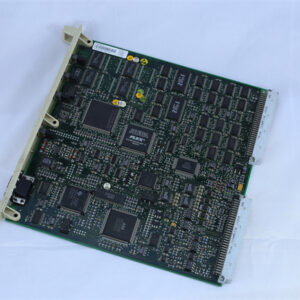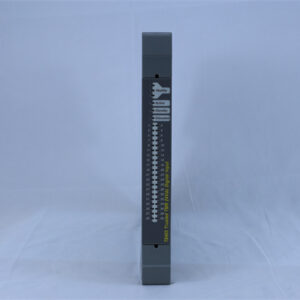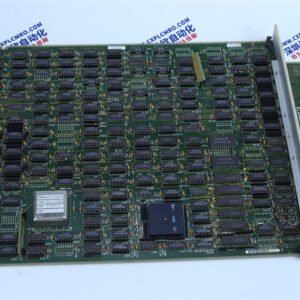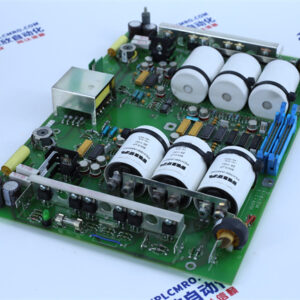
Technical Specifications
|
Parameter Name
|
Parameter Value
|
|---|---|
|
Product Model
|
3AI775.6
|
|
Manufacturer
|
B&R (Bernecker + Rainer, Austria; ABB Group)
|
|
Product Type
|
Analog Input Module, 8-Channel, System 2005 series
|
|
Input Signal
|
0–20 mA (4–20 mA compatible), differential input
|
|
Number of Channels
|
8
|
|
Resolution
|
12-bit
|
|
Conversion Time
|
< 1 ms (all 8 channels), < 1.5 ms with averaging enabled
|
|
Output Format (to CPU)
|
INT
|
|
Basic Accuracy
|
±0.1 % of FS @ 25 °C
|
|
Load / Input Impedance
|
50 Ω (current-loop receive)
|
|
Operating Modes
|
Cyclic measurement with optional averaging; direct software timing; software timing with time specification (2–65.535 ms)
|
|
Backplane Power
|
5 VDC @ 1.0 W + 24 VDC @ 3.5 W (total 4.5 W)
|
|
Isolation
|
Channel ↔ PLC: yes (per B&R); Channel ↔ Channel: no (common COM)
|
|
Status Indicators
|
Module status LED; converter LED (via software)
|
|
Terminal Block
|
1× TB170 required separately (20-pin, screw or push-in)
|
|
Operating Temperature
|
0 °C to +60 °C
|
|
Storage Temperature
|
-25 °C to +70 °C
|
|
Humidity
|
5–95 % RH, non-condensing
|
|
Protection Rating
|
IP20 (cabinet mount)
|
|
Certifications
|
CE, UKCA, UL cULus E115267
|
|
Dimensions
|
System 2005 single-width
|
Main Features and Advantages
8-channel 0–20 mA density in single-width 2005 profile:
The B&R 3AI775.6 packs eight differential current-loop inputs into the 2005 single-slot footprint, which matters because System 2005 racks were designed for compact cabinets — a typical 2005 PCC might be 8–12 slots total, hosting CPU + PSU + DI + DO + AI + AO + communication. The B&R 3AI775.6 being single-width means a 4-AI-card rack (32 loop points) only consumes 4 slots, leaving room for the AO and the Profibus/Powerlink comm module. For OEM machine builders (printing presses, baggers, thermoformers) who standardized on 2005 in the 2000s, the B&R 3AI775.6 was the default AI for tension transducer amps, dancer-pot 4–20 mA, nip-pressure load cells, and melt-pressure XTR loops — eight points covered one whole machine section.
12-bit + averaging for loop-transmitter realism:
12-bit (4096 counts) over 0–20 mA gives ~4.88 µA per LSB, which at 4–20 mA span (16 mA range) is ~2560 counts — more than enough for a pressure or flow loop where the transmitter itself is 0.1–0.2 % class. The B&R 3AI775.6 also offers a hardware averaging mode (extends conversion to <1.5 ms) that the PCC CPU can invoke per-channel through the B&R Automation Studio HW config — useful on noisy loops (VFD-adjacent thermocouple XTRs, pressure transmitters on a compressor skid sharing a bus with contactor chatter) where the 4–20 mA line picks up PWM ripple from a neighboring VFD feeder. The cyclic-measurement + software-timing mode on the B&R 3AI775.6 also lets the PCC task schedule the AI sample to align with the PID scan — no “sample jitter” complaints on a winder tension loop.
TB170 separate-terminal philosophy:
B&R’s 2005 mechanical convention — the B&R 3AI775.6 itself has a 20-pin male header on its front edge; the TB170 terminal block (screw-clamp 3TB170.9 or push-in 3TB170.91) carries the 20 field screws and a mating female header. The TB170 bolts to the DIN rail or cabinet sub-panel, field wires land on it, and the B&R 3AI775.6 slides onto the TB170 header from above. Result: when a B&R 3AI775.6 fails, the electrician pulls the module straight up off the TB170 — 16–24 field wires (8× +/- pairs) stay landed. Re-seat a fresh B&R 3AI775.6, and the 8 points are back. On a 3-shift packaging line where the 2005 PCC runs the former-filler and a tension-AI channel drifted, this “wire-once, swap-module” design turns a 45-minute re-termination into a 3-minute pull-and-seat. For MRO buyers, the corollary is: stock the TB170 too, but the TB170 almost never fails — the B&R 3AI775.6 is the wear item.
Differential input with channel↔PLC isolation:
Each of the 8 inputs on the B&R 3AI775.6 is differential (+, −, not just sink to COM), which rejects common-mode noise on long 4–20 mA homeruns — relevant when the transmitter is 50 m away across a machine hall and the 24 V DC loop supply sits at the PCC cabinet. The channel↔PLC isolation (per B&R: “Channel – PLC: Yes”) means a sustained over-voltage or a loop-supply fault on the field side doesn’t propagate into the 2005 backplane or the PCC CPU. Channel↔Channel is not isolated (the 8 loops share a reference), which is the cost trade-off of the compact density — if the application needs channel-independent galvanic isolation (e.g., eight different MCC earth domains), the B&R 3AI775.6 isn’t the right choice; B&R X20 (successor) or a separate isolator-bar would be. But for the vast majority of 2005 OEM skids where all 8 loops share the same 24 V DC PSU and the same MCC earth, the B&R 3AI775.6 common-COM is fine.
Software-timing flexibility:
The B&R 3AI775.6 supports three acquisition modes through B&R Automation Studio: (a) cyclic with averaging, (b) direct software timing (CPU triggers each conversion via function call), and (c) software timing with time-spec (2–65535 ms between triggers). Mode (c) is the interesting one — the PCC can stagger AI samples across a 20 ms window to avoid all 8 channels converting simultaneously and drawing a current spike on the 24 V backplane, or to align the AI sample with the arrival of a trigger pulse from a weigh-cell or a tacho. This is the kind of detail that made B&R PCC popular in printing and web-handling — the B&R 3AI775.6 isn’t just a scan-and-read; it’s a timed instrument that the CPU schedules.
Legacy but alive in spare channel:
System 2005 is OEM-discontinued (B&R migrated to X20, then X20 + APC/PPC panels, then the ACOPOSmulti / Power Panel generations), but the installed base is still large in central-European OEM machinery and in North-American retrofit lines where the 2005 PCC runs a 2004-vintage thermoformer that “still works, don’t touch it.” The B&R 3AI775.6 remains available through B&R’s legacy-support channel and through verified-pull/refurb stock. For spare-parts buyers, the decision is the same as with the Schiele PM DO in the prior entry: stock 1–2 cold spares per 2005 rack cluster while supply lasts, because a failed B&R 3AI775.6 on a Saturday shift on a film-extrusion line is a “pull the spare from the drawer” event, not a “wait 6 weeks for an X20 migration kit” event.