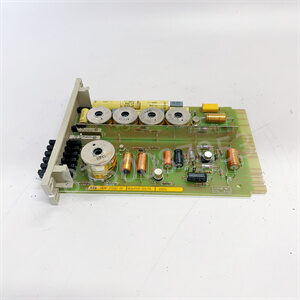
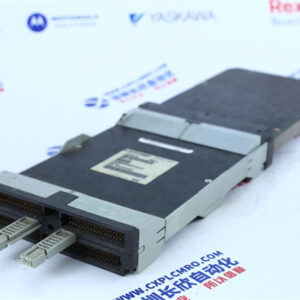
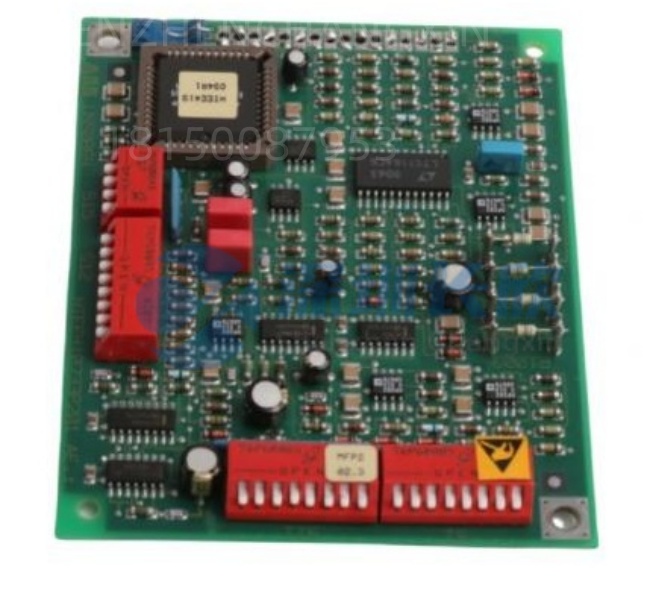
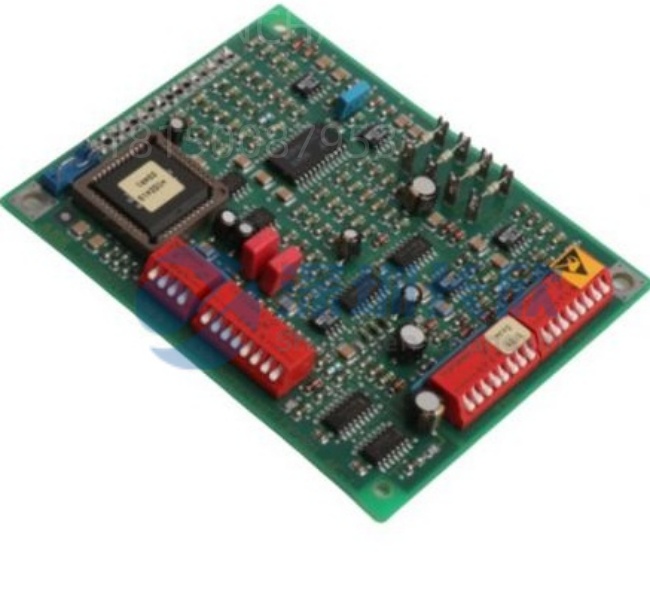
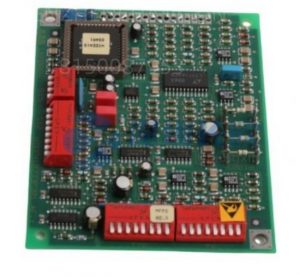
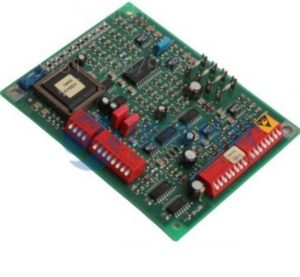
Application Scenarios
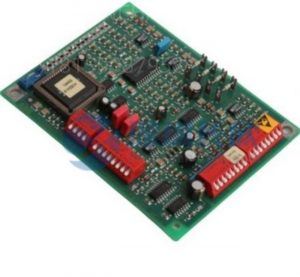
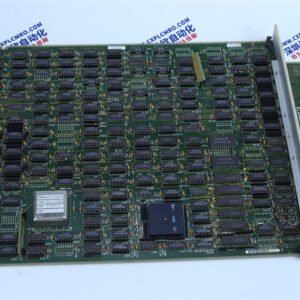
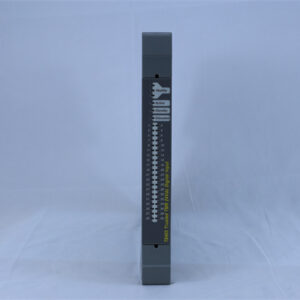
At a combined-cycle power plant in the Middle East, operators needed to replace aging controllers on their steam turbine bypass system. The legacy system suffered from slow scan times and frequent communication timeouts during grid disturbances. They selected the ABB UAC389 HIEE410506P104 as the new CPU for their AC 800M rack, leveraging its 32-bit RISC architecture and sub-10ms cycle time. Within weeks, the turbine response during load rejection improved by 40%, and data exchange with the 800xA operator station became rock-solid—even during 50°C ambient temperatures. “This wasn’t just an upgrade—it was a reliability reset,” said the plant’s automation lead. In such high-stakes environments, the ABB UAC389 HIEE410506P104 proves that processing power directly translates to operational resilience.
Technical Principles and Innovative Values
Innovation Point 1: Battery-Free Non-Volatile Memory
Unlike older PLCs that rely on lithium batteries to retain programs during power loss, the ABB UAC389 HIEE410506P104 uses flash-based storage with wear-leveling algorithms. This eliminates battery replacement cycles, reduces maintenance costs, and ensures program integrity over decades—critical for remote or hazardous sites.
Innovation Point 2: True Hardware Redundancy with Sub-100ms Switchover
When paired with a redundant UAC389 unit and optical synchronization cable, the system achieves <100 ms failover—fast enough to maintain closed-loop control during primary CPU failure. This is not software-based redundancy; it’s hardware-synchronized at the memory and I/O level.
Innovation Point 3: Deep 800xA Ecosystem Integration
The ABB UAC389 HIEE410506P104 isn’t just a standalone PLC—it’s a native node in the 800xA architecture. Engineering, HMI, alarm management, and asset optimization all share a single database. Changes made in Control Builder M are instantly reflected in the operator workplace, eliminating version mismatches.
Innovation Point 4: Built-In Cybersecurity Foundations
While not a firewall, the module supports secure boot, IP filtering, and MAC address binding when used with ABB’s network security modules. This provides a foundational layer of defense for OT networks increasingly targeted by cyber threats.
Application Cases and Industry Value
In a North Sea offshore oil platform, the ABB UAC389 HIEE410506P104 replaced obsolete controllers in the flare gas recovery system. The new CPU handled 3.200 I/O points—including emergency shutdown signals, pressure transmitters, and valve positioners—with a 15 ms scan cycle. Crucially, its redundancy feature prevented a potential $2M/day production loss when the primary CPU failed during a storm-induced voltage sag. The platform’s reliability engineer stated: “Zero process interruption during switchover—that’s why we specify UAC389.”
Similarly, a municipal water utility in Germany deployed the ABB UAC389 HIEE410506P104 to unify control of 12 pumping stations under one 800xA system. The CPU’s Modbus TCP interface polled VFDs and level sensors across fiber-optic links, while its onboard diagnostics flagged a failing pump motor two weeks before mechanical failure—saving €80K in repair and spill penalties.
Related Product Combination Solutions
ABB CI854: Profibus DP/PA communication module—extends ABB UAC389 HIEE410506P104 to field devices
ABB CI874: Foundation Fieldbus H1 module—enables advanced process control with smart instruments
ABB TK811V015: Standard AC 800M I/O baseplate—hosts UAC389 and up to 8 I/O modules
ABB TK811V015-HS: Hot-swap enabled baseplate—for zero-downtime maintenance with ABB UAC389 HIEE410506P104
ABB Control Builder M: Official engineering tool—used to program, simulate, and deploy logic to ABB UAC389 HIEE410506P104
ABB 800xA System: Full DCS platform—where ABB UAC389 HIEE410506P104 acts as the process control engine
ABB UAC390: Higher-end successor with more memory and faster processor—for larger applications
ABB DI810 / AI810: Digital and analog I/O modules—commonly used alongside ABB UAC389 HIEE410506P104
Installation, Maintenance, and Full-Cycle Support
Installing the ABB UAC389 HIEE410506P104 requires mounting it into a compatible TK811 baseplate with proper backplane alignment. Ensure adequate airflow—minimum 200 mm clearance above and below—and verify that the power supply meets the 5 V / ±15 V rail specifications. For redundant setups, connect the optical sync cable before powering on to avoid configuration mismatches. Commissioning is streamlined via Control Builder M: download the application, verify I/O mapping, and enable watchdog timers for critical tasks.
Maintenance is exceptionally low-effort. The module has no fans, batteries, or moving parts. Routine checks include reviewing diagnostic LEDs (green = OK, red = fault) and monitoring CPU load via 800xA. If replacement is needed, hot-swap capability (with HS baseplate) allows live extraction—though full redundancy is recommended for critical services. Firmware updates are delivered through ABB’s secure channels and validated against your application checksum. With lifecycle support confirmed through 2035+, the ABB UAC389 HIEE410506P104 remains a future-proof investment for long-term industrial operations.