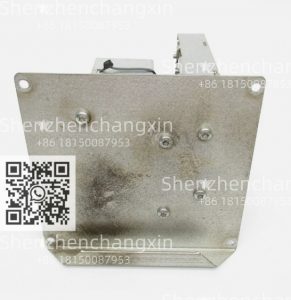
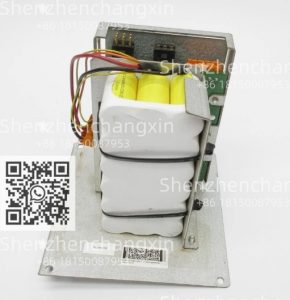
Application Scenarios
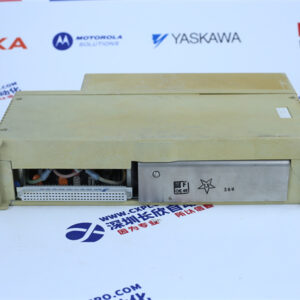
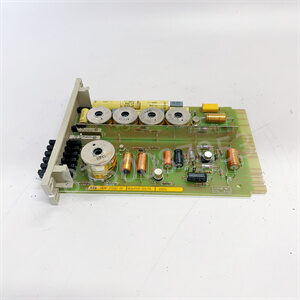
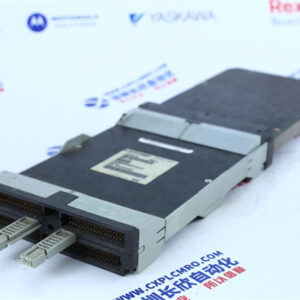
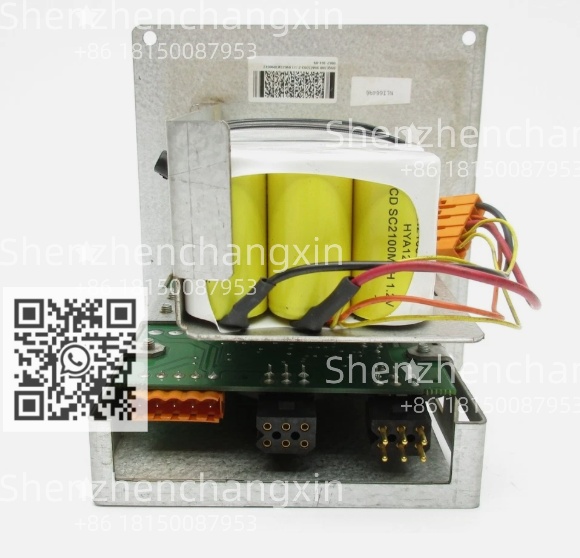
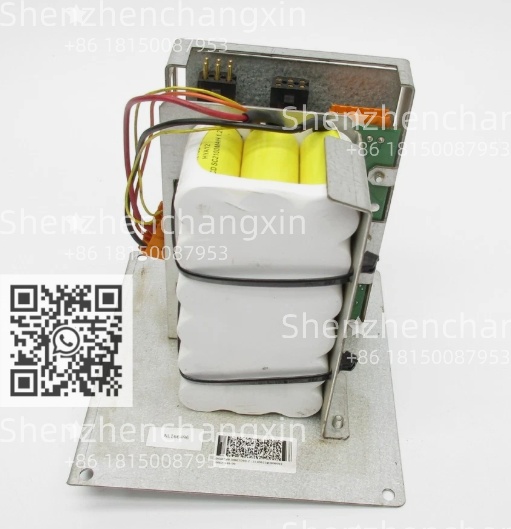
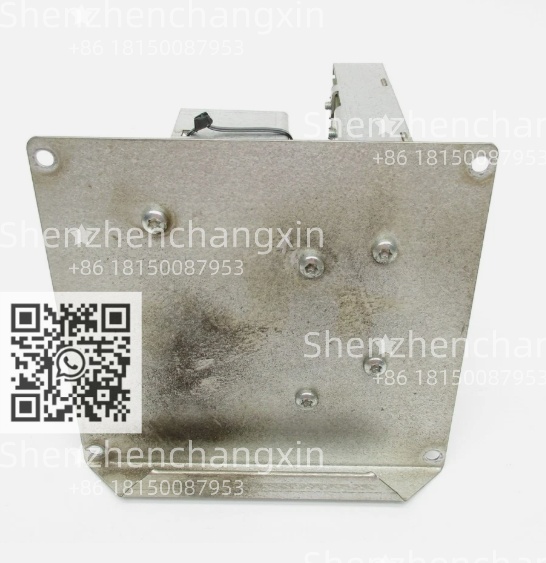
Imagine an automotive welding line where a massive IRB 6700 robot performs precise spot welding. The entire cell’s safety—protecting human technicians during maintenance, preventing collisions with other robots, and ensuring the process stops if a door is opened—hinges on a network of safety signals. Emergency stops, safety gate switches, and area scanners all generate critical signals. The ABB 3HAC5393-2-11 (DSQC508) module is the dedicated guardian of these signals within the IRC5 controller cabinet. It receives and processes all safety-rated inputs, implementing the safety logic that dictates an immediate Safe Torque Off (STO) or a controlled stop. When a technician opens a safety gate, the signal is processed by this module, which then commands the drive system to halt motion, ensuring absolute personnel protection. Without a fully functional 3HAC5393-2-11. the robot cannot be operated safely, halting the entire production line and underscoring its role as a non-negotiable component for safe, compliant automation.
Parameter
Technical Principles and Innovative Values
The ABB 3HAC5393-2-11 is more than a simple I/O card; it is a purpose-built safety gateway implementing a critical architectural principle in modern robotics: the separation of standard and safety control.
Innovation Point 1: Dedicated Safety Signal Processing Path. Unlike generic I/O modules, the DSQC508 provides a hardened, dedicated channel for safety-rated signals (e.g., dual-channel E-Stop, safety gates). This separation ensures that safety functions are processed independently from standard operational logic, a fundamental requirement for achieving Safety Integrity Level (SIL) or Performance Level (PL) ratings. This design prevents a fault in the standard control system from compromising safety functions.
Innovation Point 2: Certified PLC Integration Interface. The module standardizes and simplifies the often-complex connection between the robot controller and an external safety PLC or a main plant PLC. It handles the protocol translation and electrical interfacing, ensuring reliable and deterministic communication for both safety and non-safety signals. This innovation significantly reduces integration engineering time and commissioning risks for system integrators.
Innovation Point 3: Centralized Safety Management within the Controller. By housing this functionality inside the main computer unit, ABB created a more compact, reliable, and serviceable architecture. The 3HAC5393-2-11 consolidates safety I/O management, reducing external wiring and the number of potential failure points compared to systems using external safety relays. Its integrated status LEDs provide immediate diagnostic visibility directly at the controller’s core.
Application Cases and Industry Value
Case Study: Automotive Body-in-White (BIW) Line, North America. A major automotive manufacturer was experiencing intermittent production stoppages on a new BIW framing line. The issue was traced to unreliable communication between the plant’s safety PLC and the robots’ controllers, causing spurious safety faults. The root cause was incompatible signal conditioning on third-party interface cards. The solution was to standardize on the native ABB 3HAC5393-2-11 (DSQC508) modules within all IRC5 controllers. This ensured a perfectly matched, ABB-validated interface. The result was a dramatic 99% reduction in communication-based safety faults, increasing line uptime by an estimated 300 hours annually. The plant engineer noted that the stability provided by the genuine DSQC508 modules was crucial for meeting their aggressive production targets and simplified troubleshooting.
Case Study: Foundry Automation, Europe. In a harsh foundry environment with dust, vibration, and temperature swings, a robotic grinding cell suffered repeated failures of an external safety relay cabinet. The replacement and rewiring process was costly and caused extended downtime. The cell was redesigned to leverage the internal safety capacity of the robot controller via the 3HAC5393-2-11 module. This eliminated the external cabinet, moving the sensitive electronics into the protected controller enclosure. The change improved mean time between failures (MTBF) for the safety system by over 60% and reduced maintenance hours by 35%, validating the module’s robustness and the value of an integrated architecture in demanding conditions.
Related Product Combination Solutions
The ABB 3HAC5393-2-11 is a node within a larger ecosystem. Key related components include:
DSQC 652: A 16-channel Digital I/O DeviceNet module. While the DSQC508 handles high-level PLC/safety comms, the DSQC 652 manages discrete field I/O (solenoids, sensors) over a DeviceNet network, offloading this traffic from the main PLC link.
DSQC 1030: The main computer unit board for S4C+ controllers. The 3HAC5393-2-11 module typically connects to or is a crucial part of this main computer’s architecture.
Hazardous Location I/O Modules (e.g., for painting robots): In spray painting applications, specialized intrinsically safe or pressurized I/O modules interface with field devices, while the DSQC508 remains the main controller’s gateway to the cell’s safety PLC.
Robot Manipulator (e.g., IRB 6600): The physical arm whose motors are ultimately enabled or disabled by the safety commands processed through the 3HAC5393-2-11.
Drive Module (e.g., 3HAC14555-1): The power stage that receives the Safe Torque Off (STO) signal initiated by safety logic processed via the DSQC508. physically cutting power to the motors.
Teach Pendant (FlexPendant): The operator interface used to configure I/O and safety parameters that involve the DSQC508 module’s functions.
External Safety PLC (e.g., from Siemens or Allen-Bradley): A common companion device. The 3HAC5393-2-11 is the critical interface that allows this external safety controller to command and monitor the robot’s safety state.
Installation, Maintenance, and Full-Cycle Support
Installation of the ABB 3HAC5393-2-11 is a specialized task, as it involves working inside the robot controller’s main computer unit. It requires a complete system power-down (Lock Out, Tag Out) and strict electrostatic discharge (ESD) precautions. The physical replacement involves carefully removing the old module from its connector and seating the new one. The critical post-replacement steps are software-based: the robot system software may need to be reloaded or reconfigured, and the module’s parameters must be verified in the robot’s system configuration. Most importantly, all safety functions must be rigorously tested and validated by qualified personnel before returning the robot to production, as per applicable safety standards.
Routine maintenance for the module itself is primarily preventive, ensuring the controller cabinet environment is clean, cool, and dry to maximize component lifespan. Diagnostics are performed via the robot’s FlexPendant, checking for system errors related to I/O or PLC communication that might point to the module. Should a failure occur, error logs and status LED indicators on the module are the first diagnostic tools. We provide full-cycle support for the 3HAC5393-2-11. from initial identification and verification of the correct part number for your specific controller generation, to supplying 100% genuine ABB modules with traceable documentation. Our technical support can assist with integration questions and recommended procedures to ensure a smooth and safe replacement process, minimizing your system’s downtime.
Ensure your robotic cell’s safety and communication integrity with genuine ABB components. Contact us today for verification, sourcing, and technical support for the ABB 3HAC5393-2-11 DSQC508 module.