1756-L73 AB
PLC has the advantages of stability and reliability, cheap price, complete functions, flexible and convenient application, and easy operation and maintenance. This is the fundamental reason why it can persistently occupy the market. We will focus on several issues and study its development trend below.
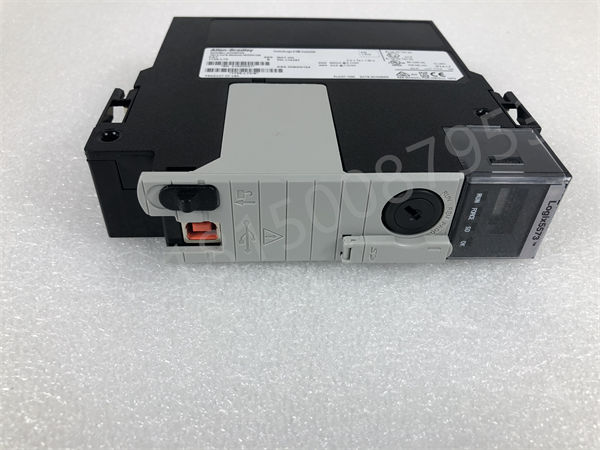
Large systems with a single machine supporting 300 loops and 65000 I/O points correspond to medium-sized PLCs or above, all using 16-32 bit CPUs. Micro and small PLCs originally used 8-bit CPUs, but according to communication and other requirements, some have also switched to 16-32 bit CPUs. Due to the fact that PLC sales below I/O 64 account for 47% of the total PLC sales, while those between 64 and 256 account for 31%, totaling 78% of the total PLC sales, more research should be conducted on micro and small PLCs.
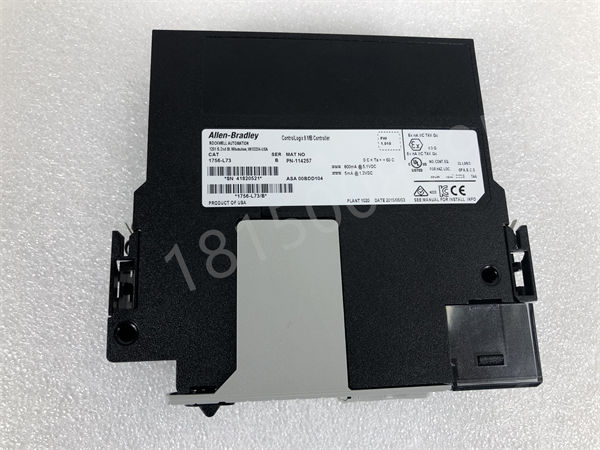
Hardware of PLC
The hardware of the PLC controller itself adopts a building block structure, and the product structures of various manufacturers are similar. Taking the Japanese Omron C200HE as an example, it has a bus template frame structure. The basic framework (CPU motherboard) is equipped with CPU templates, while other slots are equipped with I/O templates
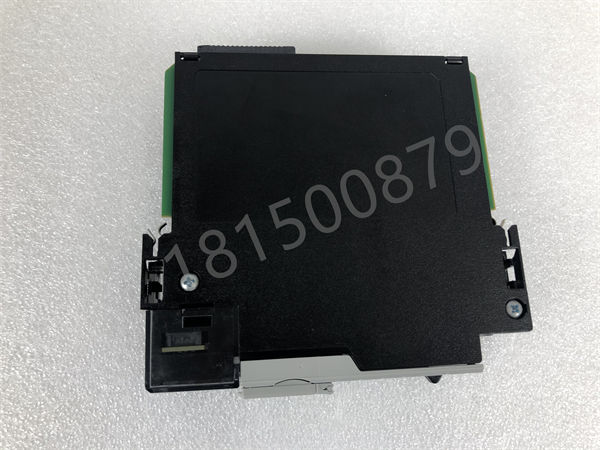
If there are many I/O templates, the CPU motherboard can be connected to the I/O expansion motherboard through an I/O expansion cable, and I/O templates can be installed on it; Another method is to equip remote I/O slave stations, etc. These all indicate that PLC manufacturers develop hardware components for users to choose from, and configure them into PLCs of varying scales
Moreover, the openness of this hardware configuration brings a lot of convenience to manufacturers, distributors (agents), system integrators, and end users, and greatly facilitates the sales supply chain. This is a great success experience.