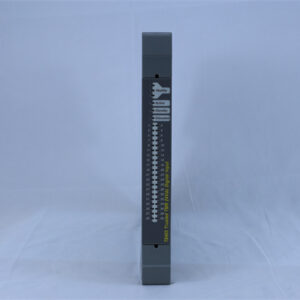
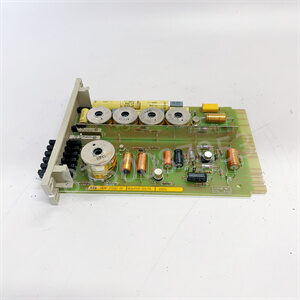
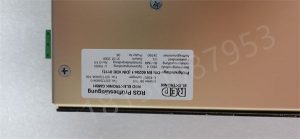
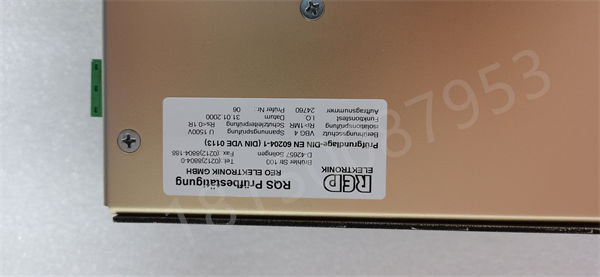
567LH-DP24 REOTRON
Because the control system is often a special system developed by different manufacturers, which has poor compatibility with each other, and lacks an effective communication interface with high-level commercial management software, the communication specification problem has become the bottleneck that restricts the control system from breaking through the “information silo”.
The appearance of OPC (OLE for Process Control) has established a set of communication interface specifications that meet the requirements of industrial control, so that the control software can efficiently and stably access data to hardware devices, and the application software can also flexibly exchange information, greatly improving the interoperability and adaptability of the control system
From a software perspective, OPC can be seen as a standard for a ‘software bus’. Firstly, it provides a channel standard for real-time data transmission between different applications (even between applications on different workstations connected through a network); Secondly, it also defines the format for transmission and exchange in channels for process control needs
The architecture of the OPC standard is a client/server model, which divides software into OPC servers and OPC clients. The OPC server provides necessary OPC data access standard interfaces; OPC customers access OPC data through this standard interface.

The software developed using the OPC standard is based on common data and interface standards, so it has strong universality with each other. This has very practical significance in the field of industrial control. OPC servers can be provided by different suppliers, and their code determines the way the server accesses physical devices, data processing, and other details.