
Application Scenarios
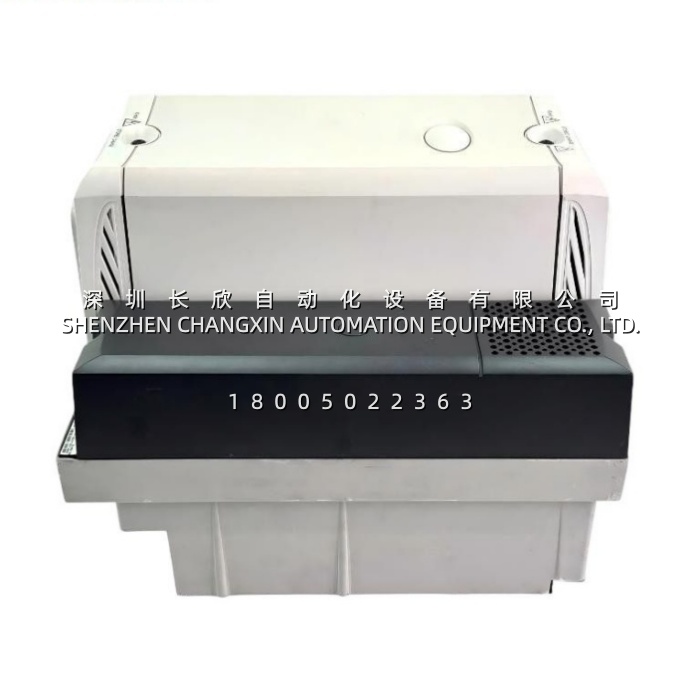
In a multi-inverter Unidrive SPM system where several SPMD modules share a common DC bus, the choice of front-end rectification directly determines both architecture reliability and maintenance cost. With an uncontrolled rectifier, every power-up sends an inrush current spike through the DC-link capacitor bank, progressively aging fuses, contactor tips, and the capacitors themselves. If the system requires parallel bus operation across multiple drives, an uncontrolled front end cannot actively regulate bus voltage to coordinate the shared link. The SPMC2402 addresses precisely this front-end bottleneck: its 677A AC line current and 758A DC link current ratings position it for multi-drive shared-bus configurations or high-power single-drive front ends . When an inverter module must be isolated for service, the SPMC2402’s controlled rectification and integrated soft-start allow the DC bus to be re-established without grid disturbance—avoiding a full drive-system shutdown triggered by a front-end issue alone.
Parameter
| Parameter | Value / Description |
|---|---|
| Product Model | SPMC2402 |
| Manufacturer | Emerson / Control Techniques (now Nidec) |
| Product Type | Controlled Input Rectifier Module (Half-Controlled Thyristor Bridge) |
| Series | Unidrive SPM Modular Drive System |
| Voltage Class | 400V class |
| AC Input | 380–480V AC ±10%, three-phase |
| Rectifier Topology | Dual-stage half-controlled thyristor bridge |
| Typical Input Current | 2 × 308 A |
| Maximum Input Current | 2 × 312 A |
| Typical DC Output Current | 2 × 345 A DC |
| Semiconductor Fuse | 450 A, IEC aR class |
| Series HRC Fuse | 400 A, IEC gG / UL J class |
| Maximum DC Bus Capacitance | 132 mF (supply short-circuit capacity < 25 kA) |
| Control Power Supply | External 24V / 3A DC, 4A slow-blow fuse per pole |
| Soft-Start | Built-in |
| Status Indicators | 2 LEDs (Status1 / Status0) |
| Maximum Loss | Approximately 1737 W |
Key parameter note: the 677A AC / 758A DC figures define this module’s position—it is not a small single-drive component, but a front end for multi-drive shared-bus or high-power systems. One detail easily overlooked during selection and commissioning is that the SPMC2402 requires an external 24V/3A control supply to operate; this cost and wiring should not be omitted from project planning .
Technical Principles and Innovative Values
- “Controlled” Means Regulated Bus Voltage, Not Passive Rectification: The SPMC2402’s half-controlled thyristor bridge allows active regulation of the DC bus voltage, which matters in multi-drive shared-bus systems. When one inverter module regenerates energy, the controlled front end can coordinate with the system to maintain bus stability, whereas an uncontrolled SPMU can only passively follow the input voltage .
- Built-In Soft-Start Eliminates External Charging Circuit: The SPMU series requires an external resistor-and-contactor arrangement for power-up soft-start, while the SPMC2402 integrates this function within the module. For cabinets with limited space or maintenance windows with tight schedules, this removes a set of external components subject to periodic contact-burnishing and resistor-aging inspections .
- Serves as External Charging Module in Regenerative Systems: In regenerative systems comprising multiple drives, the can be used directly as an external charging module—a function the SPMU cannot perform, since uncontrolled rectification lacks the active sequencing control required in regenerative architectures. For facilities already running regenerative SPM configurations, the is a critical spare for maintaining architectural integrity .
- Fault Interlock Must Be Wired into Drive Enable Circuit: The does not independently provide complete protection logic; its status relay output must be wired into the downstream drive enable circuit. If the rectifier faults and the drives are not disabled, fault current can continue feeding the DC bus. This interlock is a mandatory verification item during module replacement or cabinet modification, not an optional feature .