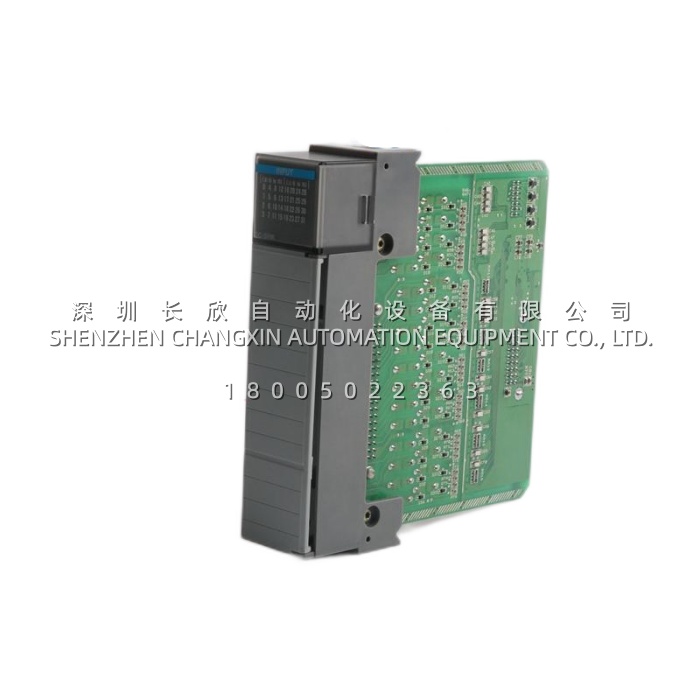
Technical Specifications
| Parameter Name | Parameter Value |
|---|---|
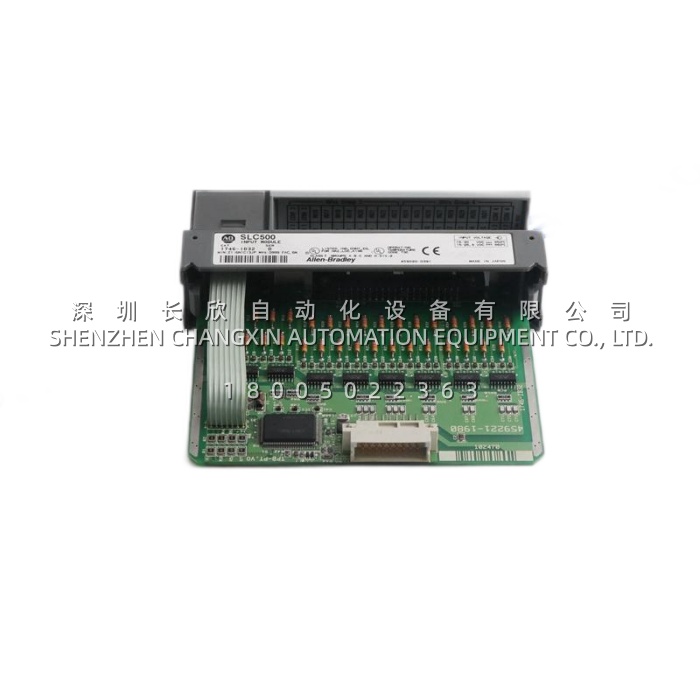
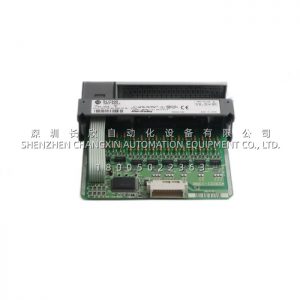
| Product Model | 1756-IM16I |
| Manufacturer | Allen-Bradley / Rockwell Automation |
| Product Type | ControlLogix AC Digital Input Module |
| Input Channels | 16, individually isolated |
| Input Voltage Range | 159–265 VAC, 47–63 Hz |
| Isolation | 250 V continuous between inputs |
| Backplane Current | 5 mA at 5V; 24 mA at 3.3V |
| Total Backplane Power | 0.58 W |
| Maximum Power Dissipation | 8.60 W at 60°C |
| Thermal Dissipation | 19.78 BTU/hr |
| Off-State Current | 2.5 mA maximum |
| On-State Current | 60 mA at 159 VAC; 13 mA at 265 VAC |
| Input Delay (Off-to-On) | 10 ms hardware + selectable 1 or 2 ms filter |
| Input Delay (On-to-Off) | 8 ms hardware + selectable 9 or 18 ms filter |
| Operating Temperature | 0°C to 60°C |
| Dimensions (W × H × D) | 38.1 × 300 × 111.25 mm |
| Terminal Block | 1756-TBCH or 1756-TBS6H (36-pin) |
| Lifecycle Status | Active |
Main Features and Advantages
True channel-to-channel isolation for AC control integrity: The 1756-IM16I distinguishes itself from many AC input modules by providing full isolation between every input point, not merely between the field and backplane. In practical terms, this means that a fault or transient on one AC control circuit cannot propagate through the module to disrupt other channels or the controller. For facilities where AC pilot devices are distributed across multiple panels or motor control centers with varying ground references, the 1756-IM16I eliminates a common source of nuisance trips and signal corruption that can plague non-isolated AC input designs.
Native AC voltage compatibility with selectable filtering: The 1756-IM16I operates directly on 159–265 VAC, covering both 120 VAC (at the upper end of its tolerance) and 240 VAC nominal circuits without external conditioning. The module offers user-selectable input filter times—1 or 2 ms for off-to-on transitions and 9 or 18 ms for on-to-off—allowing engineers to tune response speed against electrical noise. For example, a fast-responding pushbutton application might use the shorter filter, while a circuit subject to contact bounce or induced noise from adjacent AC wiring can benefit from the longer settings.
Timestamped input data for sequence-of-events diagnostics: When configured with the CST Timestamped communication format, the 1756-IM16I can capture the precise time that input state changes occur, using the ControlLogix Coordinated System Time reference. This feature supports fault analysis and sequence-of-events recording without additional hardware, enabling maintenance personnel to correlate AC input transitions with other controller events and identify the root cause of interlocks or trips that occur in rapid succession.
Application Field
The 1756-IM16I is most frequently deployed in retrofit and migration projects where existing 120/240 VAC control circuits must be integrated into a ControlLogix platform. Motor control centers represent a primary application: the module monitors auxiliary contacts, overload relays, and selector switch status across multiple starters, bringing AC pilot device data into the Logix controller for interlocking, alarming, and historical trending. Because the accepts these signals directly, engineers avoid the cost and panel space associated with interposing relays, while preserving the original AC control wiring that plant personnel already understand and maintain.
In power generation and utility substation environments, the is used to monitor breaker status, disconnect switch positions, and protective relay contacts—circuits that are often 125 VDC or 120 VAC and distributed across significant distances. The module’s per-point isolation and 250 V continuous rating provide margin against the ground potential differences and induced voltages that can appear on long control cables routed through switchyards or cable trays shared with power conductors. Water and wastewater treatment facilities also employ the for pump status monitoring and valve position feedback, where 120 VAC control circuits remain the standard and where reliable operation through humidity and temperature variations is essential.