Application Scenarios:
It is 02:40 at a fuels refinery running a TDC 3000 architecture. The operator console shows a “failed to energise” alarm on the fuel-gas shutdown solenoid of a fired heater. In the old days, that meant a rack power-down, a permit-to-work, a two-hour window and a unit trip — because the discrete output card feeding that solenoid had no hot-swap capability. With the 621-2100R in that slot, the maintenance technician walks to the I/O cabinet, confirms the slot address against the UCN point database, unseats the card with the rack still energised, and drops in a tested spare. The channel LEDs come back in order, the interlock re-arms, and the heater never leaves service.
That is the pain point the 621-2100R was designed around: in continuous process industries, the cost of an output module failure is not the module — it is the production lost while you are allowed to touch it. Beyond emergency sparing, the 621-2100R shows up in very ordinary places that carry very un-ordinary consequences: the 115 VAC solenoid that opens a deluge valve, the contactor coil that starts a lube-oil pump, the lamp that tells an operator a permissive is satisfied, the interlock relay that isolates a batch reactor. Typical installations include refinery and petrochemical DCS nodes, coal-fired and combined-cycle power plants (boiler auxiliary and burner management outputs), water and wastewater lift stations, pulp and paper machine drives, pharmaceutical batch skids and metals plants. In every one of them, the 621-2100R is the last mile between a control algorithm and something physically moving.
Parameter:
| Main Parameters | Value/Description |
|---|---|
| Product Model | 621-2100R (R suffix = removable/insertable under power; also seen as 621-2100RC where C = CE marked) |
| Manufacturer | Honeywell (Honeywell Process Solutions), USA origin |
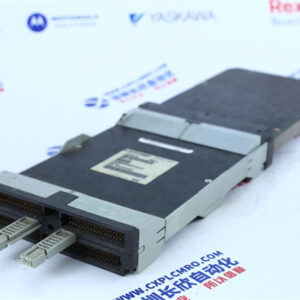
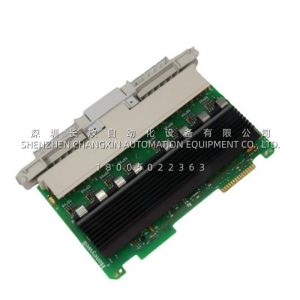
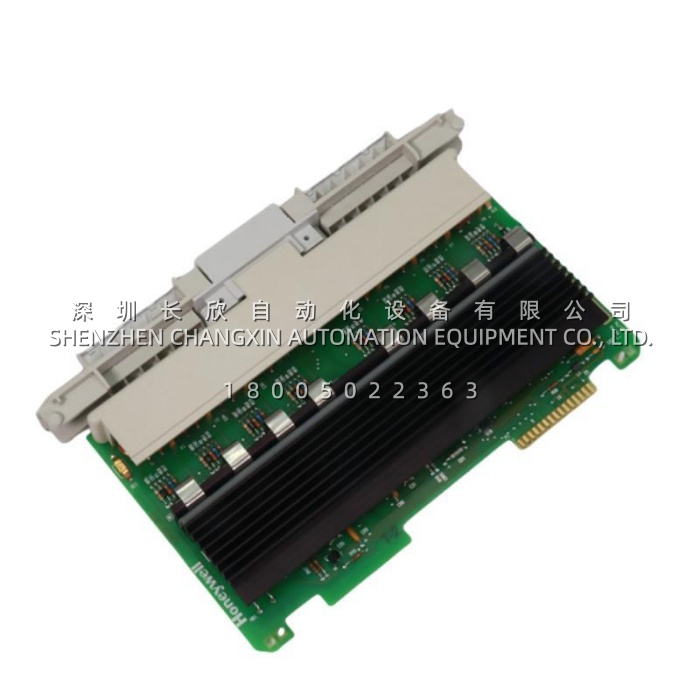
| Product Category | Digital / discrete AC output module, 621-series I/O (IPC 620 / IPC 621 / Logic Manager / UCN-based TDC 3000 nodes) |
| Output Channels | 8 points — one slot, eight independently commanded field circuits |
| Points per Common | 4 — two isolated common groups per card, letting you split supply phases or load classes |
| Nominal Output Voltage | 115 VAC nominal, 90–140 VAC operating window (tolerates brownouts and high-line plant supplies) |
| Current per Channel | 2 A continuous — enough for solenoid coils, contactor coils and indicator loads directly |
| Current per Common / per Module | 6 A per common group, 8 A per module — a three-tier thermal budget that keeps the card inside its dissipation limits |
| Surge Current | 15 A for 2 cycles (non-repetitive) — absorbs contactor and solenoid inrush without nuisance fuse blowing |
| Switching Method | Zero-crossing (turn-on at voltage zero crossing) — minimises EMI, inrush and contact erosion |
| Off-State Leakage Current | ≤ 5 mA typical — low enough that high-impedance lamps and small relays will not chatter or glow when “off” |
| On-State Voltage Drop | ≤ 2 VDC at 2 A — keeps usable voltage at the load and waste heat out of the cabinet |
| Backplane Current Draw | 80 mA at +5 VDC, plus 24 mA per energised output, 272 mA maximum — easy rack power budgeting |
| Fusing | 1 A per circuit, 3 A slo-blo — field-replaceable protection matched to inductive loads |
| Field Termination | Terminal block set 621-9949 required (8-point, 11-pin single block unit) |
| Isolation | Channel-to-channel and field-to-logic isolation — contains a field fault instead of propagating it to the backplane |
| Diagnostics | Per-channel LED status indication on the faceplate, plus module-level fault reporting to the controller database |
| Operating Temperature | −20 °C to +70 °C (storage −40 °C to +85 °C), 5–95 % RH non-condensing |
| Installation Method | Rack-mounted plug-in card for 621 I/O chassis; hot-swappable under power |
| Communication / Network | Honeywell 621 backplane bus, presented to the plant as UCN (Universal Control Network, 5 Mbps dual-redundant token-passing) points on TDC 3000 systems |
| Physical Dimensions | Approx. 26.5 × 17.8 × 3.3 cm (10.4 × 7.0 × 1.3 in); metal housing |
| Weight | Approx. 0.66 kg (1.5 lb) |
| Lifecycle Status | Legacy / mature platform — supplied as new-surplus, tested or repaired spare for life-extension programmes |
Technical Principles and Innovative Values:
- Innovation Point 1 — Zero-crossing firing instead of random-phase switching: the 621-2100R waits for the AC sine wave to pass through zero before turning the output on. Because the switching transient is launched at the lowest possible instantaneous voltage, conducted and radiated EMI are dramatically lower, solenoid and contactor coils see far less inrush stress, and neighbouring analogue input cards stay quiet. The trade is a maximum turn-on delay of one half cycle (about 8.3 ms at 60 Hz) — negligible compared with the mechanical response of any valve or contactor it drives.
- Innovation Point 2 — RIUP (Remove and Insert Under Power): the R suffix on the 621-2100R is not marketing decoration. The card’s edge connector, backplane drivers and sequencing logic are designed so a module can be withdrawn and replaced on a live rack without disturbing the other cards on the same bus. In redundant UCN/controller architectures this converts an output-card failure from a unit-level event into a five-minute cabinet task.
- Innovation Point 3 — A three-tier current budget instead of a single headline number: many competing cards advertise “8 × 2 A” and quietly overheat when all points are loaded. The 621-2100R publishes 2 A per circuit, 6 A per common and 8 A per module, which forces — and enables — correct thermal design. Load it inside those tiers and the card runs cool for decades.
- Innovation Point 4 — 15 A two-cycle surge tolerance: contactor coils, solenoid valves and indicator transformers draw several times their holding current for the first cycles. The 621-2100R absorbs that inrush rather than treating it as a fault, which is precisely why slo-blo fusing (3 A) is specified alongside the 1 A per-circuit fuse — fast enough to clear a short, slow enough to ride through a legitimate inrush.
- Innovation Point 5 — Low leakage and low on-state drop as reliability features: ≤ 5 mA off-state leakage means “off” really is off for high-impedance loads, and ≤ 2 VDC on-state drop at 2 A means less heat inside a sealed cabinet and more voltage at the coil. Over a 30-year installed life, those two small numbers are the difference between a card that drifts and a card that never gets talked about.
- Innovation Point 6 — Native UCN integration with no gateway tax: inside a TDC 3000 node, the 621-2100R appears to the control database as ordinary points. There is no protocol converter, no third-party driver, no separate configuration tool to keep in sync — the operator sees the same alarms, the same historised states and the same interlock logic as every other point in the system.