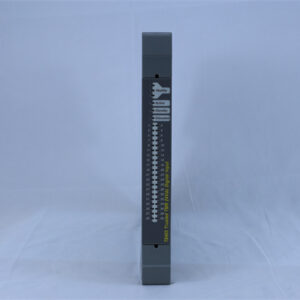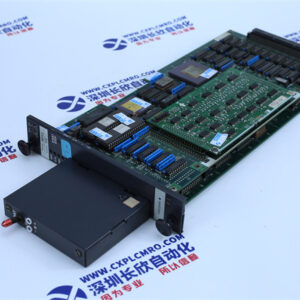
Technical Specifications
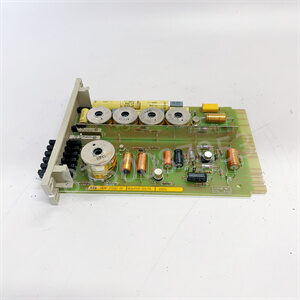
200-CICN
| Parameter Name | Parameter Value |
|---|---|
| Product Model | 200-CICN |
| Manufacturer | ABB |
| Product Type | ControlNet communication interface module |
| Host Platform | ABB Series 200 (SattCon 200, SattLine, Advant Controller 250) |
| Network Protocol | ControlNet, compliant with ControlNet International specification |
| Transmission Rate | 5 Mbit/s, fixed |
| Access Method | CTDMA (Concurrent Time Division Multiple Access) |
| Number of Channels | 1 |
| I/O Scanner Capacity | Up to 31 200-ACN remote I/O adapters, limit set by CPU type |
| Network Reach | 500–1000 m per segment; approx. 3000 m with repeaters |
| Physical Interface | BNC 75 Ω front connector via tap and 1 m drop cable |
| Electrical Isolation | Galvanic isolation via signal transformer on the ControlNet transceiver |
| Power Supply | From 200-PSMG master / 200-PSSG slave supply, 24 V DC system input |
| Internal Current Consumption | Max 0.5 A |
| Addressing and Diagnostics | Two rotary switches for node address; 1 green power LED, 3 bicolour LEDs |
| Dimensions (H × W × D) | 163 × 45 × 91 mm |
| Weight | 0.25 kg net, 0.33 kg packaged |
| Operating Temperature | +5 °C to +55 °C, storage −25 °C to +70 °C, max 90% RH non-condensing |
| Protection and Mounting | IP20, DIN rail on 200-BPN backplane, mechanical key code 8 |
| Compliance | Not RoHS 2 compliant; intended for repair, reuse and upgrade of installed base |
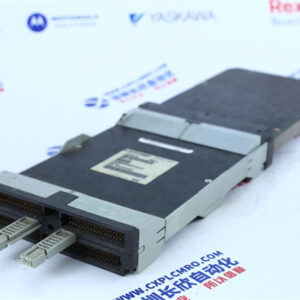
200-CIE
| Parameter Name | Parameter Value |
|---|---|
| Product Model | 200-CIE |
| Manufacturer | ABB |
| Product Type | Industrial Ethernet communication interface module |
| Host Platform | ABB Series 200 (SattCon 200, SattLine, Advant Controller 250) |
| Network Standard | IEEE 802.3 Ethernet |
| Transmission Rate | 10 Mbit/s class, physical rate set by the external MAU transceiver |
| Number of Channels | 1 |
| Physical Interface | 15-pin D-type AUI port to an external Ethernet transceiver |
| Supported Protocols | TCP/IP, Modbus TCP (server), FTP |
| Services | Programming download, online monitoring, file transfer, SCADA data access |
| Address Setting | Rotary switches or software configuration |
| Buffer Memory | Battery-backed buffer retained by backup battery |
| Power Supply | From Series 200 central supply via backplane bus, approx. 1.2 W typical |
| Status Indication | LED indication for power, network link and activity |
| Dimensions and Weight | Same mechanical footprint class as 200-CICN; confirm on nameplate |
| Operating Temperature | +5 °C to +55 °C typical; verify against the unit nameplate |
| Protection and Mounting | IP20, DIN rail on 200-BPN backplane, mechanical key coded |
| Compliance | Not RoHS 2 compliant; supplied for maintenance of existing installations |
Main Features and Advantages
Deterministic I/O scanning: The 200-CICN does not wait for a free slot on the wire. ControlNet uses CTDMA, where every node gets a scheduled time slice, so the scan cycle stays flat whether the segment carries three adapters or thirty. That predictability is the reason this module is still specified for remote drops on exothermic batch reactors, where jitter in the temperature loop is not an annoyance but a process risk. Five megabits per second sounds modest next to modern Ethernet, yet on a dedicated I/O segment it is more than enough, and it never degrades under load the way a shared CSMA/CD link can.
Rack-level serviceability: Both the 200-CICN and the 200-CIE mount as standard plug-in units on the 200-BPN backplane and take their power from the central supply, so there is no extra field wiring, no separate 24 V feed and no fuse coordination to argue about during a shutdown window. Mechanical key coding means a module physically refuses the wrong slot — a small detail that has saved more than one maintenance crew from a smoked board during a 2 a.m. callout. Node addressing on the 200-CICN is set with two rotary switches on the front panel, so a replacement can be configured without a laptop, a licence dongle or a service engineer on site.
Two networks, one controller: Installing the 200-CIE beside the 200-CICN in the same rack lets a legacy controller speak hard real-time I/O on one side and open TCP/IP on the other. The Ethernet side carries a Modbus TCP server and FTP, which is usually all a plant historian or a third-party SCADA needs, and the AUI port means you choose the medium — thick coax, twisted pair or fibre — by choosing the external transceiver rather than by replacing the module. Practically, that turns a connectivity upgrade into a cabling decision instead of a controller migration, and it keeps the capital cost inside a maintenance budget.
Diagnostics you can read from the aisle: One green LED for internal power plus three bicolour LEDs for unit status and channel A/B condition give enough front-panel information to separate a network fault from a module fault before anyone opens a cabinet. Combined with battery-backed buffering and a buffered Ethernet stack on the 200-CIE, routine troubleshooting rarely escalates beyond the panel door.