Application Scenarios
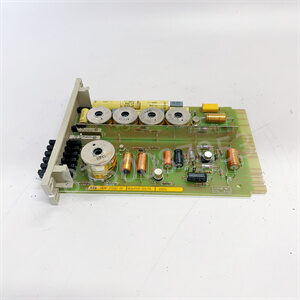
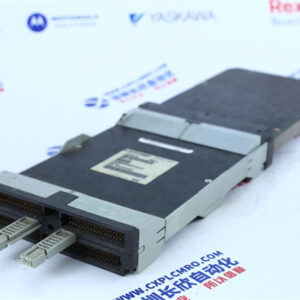
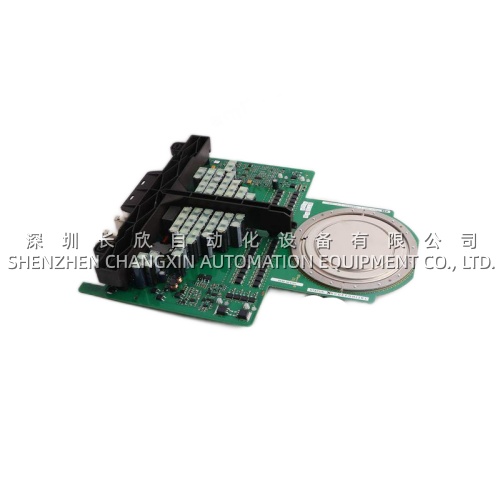
Consider a large automotive manufacturing plant operating hundreds of robots and conveyor systems powered by an aging MNS low-voltage switchgear lineup. The maintenance team was constantly in the dark about the health of individual motor feeders—breaker trips caused unexpected production line stoppages, and troubleshooting required manually inspecting each drawer unit . By retrofitting the ABB 1TGE102009R1001 modules across key feeder sections, the plant gained real-time visibility into each circuit’s load profile and trip history. When a robot welding cell began experiencing intermittent overcurrent alarms, the mLINK module immediately flagged the event through the SCADA system, allowing engineers to proactively service the motor before a full failure occurred .
This scenario highlights a critical pain point: without intelligent communication, a modern switchgear is essentially a “dumb” distribution cabinet. The 1TGE102009R1001 addresses this by providing the digital nervous system that turns static power panels into predictive, data-driven assets—reducing unplanned downtime by enabling condition-based maintenance instead of reactive repair.
Parameters
| Main Parameters | Value/Description |
|---|---|
| Product Model | ABB 1TGE102009R1001 (MLink Version 2) |
| Manufacturer | ABB |
| Product Category | MNS mLINK Communication Interface Module |
| Supply Voltage | 24 V DC (operating range: 19–33 V DC) |
| Typical Power Consumption | 1000 mA typical; 1700 mA maximum |
| Communication Protocols | Modbus RTU/ASCII, Profibus DP (varies by hardware version) |
| Physical Interface | RS-485 for Modbus; Ethernet RJ45 for optional TCP protocols |
| Maximum Addresses (Slaves) | Up to 247 (Modbus) / 126 (Profibus) |
| Operating Temperature | -25°C to +70°C |
| Storage Temperature | -40°C to +85°C |
| Protection Rating | IP20 (protection against solid objects >12 mm) |
| Mounting Method | Direct plug-in on MNS drawer rear rail / DIN rail |
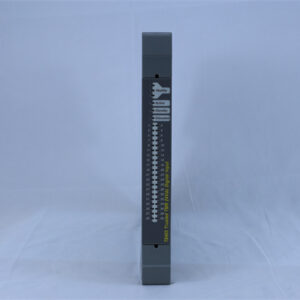
| Dimensions (Varies by Source) | Approx. 35 × 90 × 65 mm (module) or 120 × 265 × 165 mm (packaging) |
| Weight | Approx. 1.1 kg to 2.0 kg |
Technical Principles and Innovative Values
Innovation Point 1: Native Integration with MNS Switchgear Architecture
Unlike generic third-party protocol gateways, the ABB 1TGE102009R1001 is designed specifically for the MNS intelligent switchgear bus . This means the module’s internal protocol stack, electrical interface, and physical form factor are factory-matched to ABB’s Ekip and Emax2 trip units, motor controllers, and other smart devices. The result is plug-and-play integration requiring zero custom scripting—simply insert the module into the dedicated compartment and the MNS bus automatically recognizes the new device. This level of system matching ensures superior data stability and communication reliability compared to solutions cobbled together from generic parts .
Innovation Point 2: Real-Time Data Aggregation and Predictive Maintenance Enablement
The 1TGE102009R1001 continuously polls every intelligent device on its internal bus, collecting detailed operational parameters such as instantaneous current, voltage harmonics, power consumption, and counts of operations. This data is formatted and transmitted upstream, effectively turning every circuit breaker into a “smart sensor” capable of revealing hidden usage patterns. The availability of this granular data enables a shift from routine time-based maintenance to condition-based maintenance—a documented strategy that has been shown to reduce maintenance costs by up to 25–40% while increasing system availability .
Innovation Point 3: Multi-Protocol Flexibility and Redundancy Support
Depending on the specific hardware version, the 1TGE102009R1001 supports Modbus RTU, Modbus TCP, and Profibus DP communication, allowing seamless integration with a wide range of plant control systems . Furthermore, the MNS iS platform supports “Slave Redundancy” configurations where two MLink modules are used simultaneously—a primary module handling read/write operations and a backup module in read-only standby mode. If the primary module fails, the backup automatically takes over, ensuring continuous data communication for mission-critical applications such as data centers and hospitals .
Innovation Point 4: Hot-Swap Capability and Minimal Downtime
The 1TGE102009R1001 supports hot-swap functionality, allowing modules to be inserted or removed without de-energizing the switchgear . This feature is invaluable for facilities that cannot tolerate power interruptions—maintenance personnel can swap a faulty communication module in minutes without affecting the availability of the power supply itself, delivering a tangible improvement in overall equipment effectiveness (OEE).