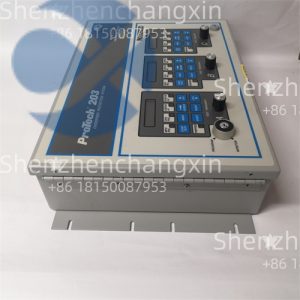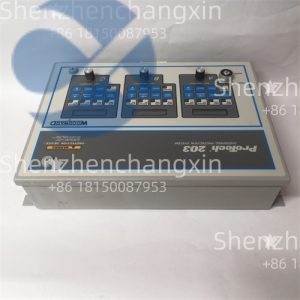
WOODWARD 9907-162 Speed/Position Interface Module: Precision Engineering for Industrial Control Systems
In the realm of industrial automation, the WOODWARD 9907-162 Speed/Position Interface Module stands as a cornerstone for high-precision control applications. Designed as part of Woodward’s 505/505E digital controller series, this module bridges analog sensors and digital control systems, enabling real-time monitoring and adjustment of speed and position parameters in steam turbines, turbo generators, and other critical machinery. Its robust architecture and advanced features make it indispensable for industries demanding high reliability and efficiency, such as power generation, manufacturing, and aerospace.
The Role of the 9907-162 Module in Industrial Control
The 9907-162 module serves as a specialized interface between physical sensors and digital control platforms, converting analog signals like speed, position, and temperature into digital data for precise system management. Its 16-bit resolution and ±0.1% accuracy ensure that even minor fluctuations in sensor output are captured, providing a granular view of equipment health. For instance, in a power plant, the module might monitor the rotational speed of a turbine generator. A sudden deviation from the norm could indicate an impending mechanical failure, allowing maintenance teams to intervene before a catastrophic event occurs. This capability is crucial for predictive maintenance, where the goal is to anticipate issues based on real-time data rather than waiting for visible symptoms.
Woodward’s design philosophy emphasizes durability and adaptability. The 9907-162 features a robust construction that withstands extreme environmental conditions, including high vibrations and temperature fluctuations. This resilience is particularly valuable in industrial settings where sensors are often exposed to harsh elements. Additionally, its compact size and versatile connectivity options enable seamless integration into existing systems, whether in a power distribution network or a discrete manufacturing line.
How the 9907-162 Enhances System Performance
The 9907-162 module transforms maintenance from a reactive to a proactive discipline by enabling continuous data sampling. Traditional methods rely on scheduled inspections, which may miss early-stage faults. In contrast, the module’s real-time monitoring allows for the detection of anomalies as they arise. For example, consider a scenario in an oil refinery where the 9907-162 monitors the position of a valve in a pipeline. A gradual shift in position could signal a blockage or leak, prompting immediate action to prevent a spill. This shift not only reduces the risk of unplanned downtime but also extends the lifespan of critical assets.
The integration of the 9907-162 with advanced analytics platforms amplifies its impact. By feeding sensor data into cloud-based systems, facilities can leverage machine learning algorithms to identify patterns and predict failures. A user in the energy sector reported that after implementing this solution, their maintenance costs dropped significantly due to fewer emergency repairs. Experts advise that combining the module with digital twins—virtual replicas of physical systems—can further enhance diagnostics. Digital twins provide a contextual environment for analyzing sensor data, making it easier to simulate scenarios and optimize maintenance schedules.
Industry Applications and Case Studies
The versatility of the 9907-162 shines through its applications in multiple industries. In manufacturing, the module helps monitor assembly line sensors, ensuring that deviations in temperature or pressure are flagged instantly. This prevents defects in products and maintains production flow. A case study from a car manufacturer illustrates how the 9907-162’s real-time monitoring reduced quality control issues by enabling early intervention.
In the energy sector, the module plays a vital role in power distribution networks. It monitors voltage and current sensors, providing data that helps prevent overloads and blackouts. For instance, during a peak load period, the 9907-162’s high-resolution readings allowed operators to adjust supply dynamically, avoiding a potential grid failure. Similarly, in aviation, the module’s可靠性 is critical for监测 aircraft systems, where even minor sensor faults can have major安全 implications.