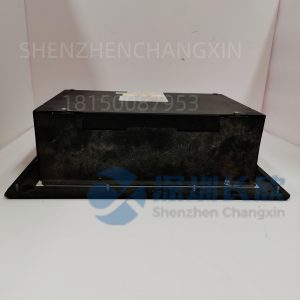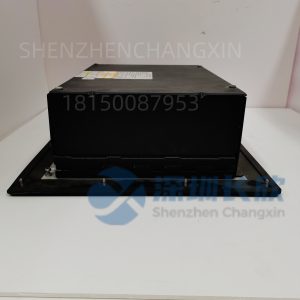
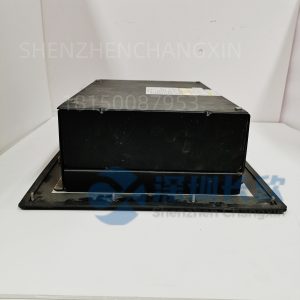
In the high-stakes environment of power generation—where a single mis-synchronization event can result in catastrophic equipment damage, extended outages, and safety hazards—the precision and reliability of the synchronization process are non-negotiable. The WOODWARD 8237-1369 Generator Auto-Sync Unit with Sync-Check Relay Function stands as a critical safeguard in this domain, offering an integrated, fail-safe solution for automatically matching generator voltage, frequency, and phase angle to the utility grid before closing the main circuit breaker. More than just an automation convenience, this unit embeds robust protective logic that actively prevents unsafe closure attempts, acting as a final gatekeeper between the generator and the grid. Designed for seamless integration into both new and retrofit control systems, the 8237-1369 ensures smooth, compliant, and above all, safe grid interconnection—every time.
The High Cost of a Poor Synchronization
Synchronizing a generator to the grid is not simply about matching nominal voltage and frequency. Even minor mismatches in phase angle or rate of change can induce massive transient currents—often exceeding 20 times the rated current—that stress windings, damage couplings, and trip protective relays. In islanded microgrids transitioning to grid-tied mode, or in industrial plants using backup generators during utility restoration, manual synchronization is error-prone and slow. Automated solutions are essential, but they must be intelligent enough to distinguish between “closeable” and “dangerous” conditions.
This is where the dual functionality of the WOODWARD 8237-1369 proves indispensable. It combines two traditionally separate functions—automatic synchronization and sync-check protection—into a single, compact module. The auto-sync function continuously calculates the optimal closing window based on real-time measurements of generator and line parameters. Simultaneously, the built-in sync-check relay acts as an independent watchdog: if the auto-sync logic fails or is bypassed, the relay will still block breaker closure unless all three parameters (voltage difference, frequency difference, and phase angle) fall within pre-defined safe limits. This redundancy is not optional—it’s a fundamental layer of defense required by modern grid codes and insurance underwriters.
Real-World Reliability: Preventing Disasters Before They Happen
A striking example of the WOODWARD 8237-1369’s value occurred at a wastewater treatment plant in California that operates a 4.5 MW biogas-fueled generator. During a planned maintenance test, the plant’s legacy synchronizing relay failed silently, allowing the operator to manually close the breaker while the generator was 8 degrees out of phase with the grid. The resulting mechanical shock tripped the unit and damaged the coupling between the engine and alternator, leading to a three-week outage and over $150.000 in repairs.
Following this incident, the facility upgraded its control system with the WOODWARD 8237-1369. During commissioning, engineers intentionally simulated a phase mismatch scenario. The unit not only refused to issue a close command from its auto-sync function but also de-energized its internal sync-check output contact, physically preventing the breaker’s close coil from being energized—even when the operator pressed the manual close button. “It didn’t just warn us,” noted the plant’s electrical supervisor. “It made it impossible to make the same mistake twice.”
Another case comes from a remote mining camp in Australia, where diesel generators frequently connect to a weak local grid. Voltage fluctuations and frequency swings are common. The 8237-1369’s adaptive window logic dynamically adjusts its closing tolerance based on the rate of change of frequency (df/dt), ensuring synchronization only occurs during stable grid conditions. Since installation, the site has achieved 100% successful auto-sync attempts with zero mechanical transients.
Technical Architecture: Precision Meets Protection
The WOODWARD 8237-1369 leverages high-speed digital signal processing to deliver both performance and safety:
Dual-Function Core: Integrated auto-synchronizer and ANSI C50.1-compliant sync-check relay in one enclosure.
Measurement Accuracy: Voltage and frequency accuracy better than ±0.1%; phase angle resolution of 0.1 electrical degrees.
Adjustable Limits: User-configurable settings for maximum allowable voltage difference (typically 5%), frequency difference (±0.2 Hz), and phase angle (±5°–20°).
Closing Prediction: Advanced algorithms predict the exact moment of phase coincidence, compensating for breaker operating time to achieve near-zero slip closure.
Fail-Safe Output: Sync-check relay output is a normally open, force-guided contact that only closes when all sync conditions are met—providing positive-breaker interlock.
Communication & Diagnostics: RS-485 Modbus RTU interface for remote monitoring of sync status, measured parameters, and event logs; front-panel LEDs indicate ready-to-close, sync OK, and fault conditions.
Environmental Resilience: Rated for -40°C to +70°C operation; conformal-coated PCB for resistance to humidity and contaminants.
Unlike software-based sync functions running on general-purpose controllers, the 8237-1369 is a dedicated hardware device with deterministic response and hardwired safety logic—ensuring protection remains active even if upstream communication fails.
Expert Recommendations for Safe Implementation
Industry veterans emphasize several best practices when deploying the WOODWARD 8237-1369:
“Your sync-check relay should be the last thing between your breaker coil and ground—not buried in a PLC program.”
— Senior Protection Engineer, Independent Power Producer
Independent Wiring: Wire the sync-check output contact directly in series with the breaker’s close coil circuit, bypassing any programmable logic controller (PLC) to maintain true hardware-level interlock.
PT Polarity Verification: Confirm correct phase rotation and polarity of both generator and line potential transformers (PTs) before commissioning—reversed PTs are a common cause of sync failure.
Breaker Time Calibration: Accurately measure and input the main breaker’s closing time into the 8237-1369 to enable precise predictive closing.
Regular Functional Testing: Perform annual sync-check tests using a relay test set to verify pickup and dropout thresholds, ensuring the protective function hasn’t degraded.
Redundancy for Critical Sites: In mission-critical applications (e.g., hospitals, data centers), consider a second independent sync-check relay as a backup layer—though the 8237-1369’s integrated design often satisfies single-point reliability requirements.
The Strategic Imperative of Intelligent Interconnection
As distributed energy resources proliferate and grid interconnection standards tighten (such as IEEE 1547-2018), the role of intelligent, fail-safe synchronization devices like the WOODWARD 8237-1369 becomes increasingly strategic. It transforms grid connection from a risky manual procedure into a reliable, auditable, and code-compliant automated sequence.
For plant operators, system integrators, and asset owners, this unit is more than a component—it is an insurance policy against one of the most destructive events in power generation. By embedding both intelligence and hardwired protection into a single platform, the WOODWARD 8237-1369 Generator Auto-Sync Unit with Sync-Check Relay Function ensures that every connection to the grid is not just timely, but fundamentally safe. In an industry where prevention is always cheaper than repair, it stands as a quiet guardian at the threshold of the grid.