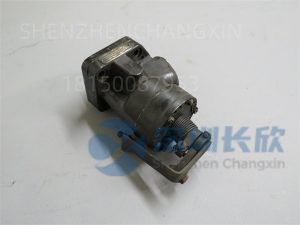
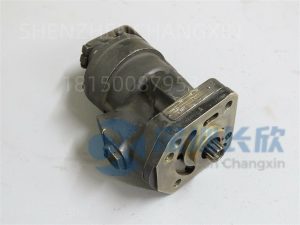
Woodward 775008 Replacement Module: Optimized for Woodward 505 & MicroNet Systems
In the high-stakes world of turbine and engine control, where a single actuator fault can cascade into a costly trip or even equipment damage, the reliability of every component in the control loop is non-negotiable. Among these critical elements, the Woodward 775008 replacement module stands out as a purpose-built electro-hydraulic interface engineered specifically to deliver seamless compatibility, robust performance, and long-term support within legacy and modern Woodward ecosystems—particularly the widely deployed Woodward 505 and MicroNet control platforms. Far more than a simple spare part, this module serves as the vital bridge between digital command signals and physical valve movement, ensuring that fuel, steam, or gas actuators respond with precision, speed, and unwavering consistency under the most demanding operational conditions.
The Critical Interface Between Logic and Motion
At its core, the Woodward 775008 functions as a digital servo controller or electro-hydraulic transducer. It receives a low-power analog signal—typically 4–20 mA—from the main turbine controller (such as a Woodward 505 governor or a MicroNet TMR system) and converts it into a proportional hydraulic pressure output capable of driving high-force servo valves or pilot actuators. This conversion is not merely mechanical; it involves precise signal conditioning, feedback monitoring, and dynamic response tuning to ensure the final control element moves exactly as commanded, without lag, overshoot, or instability.
What distinguishes the 775008 in the context of replacements is its strict adherence to Woodward’s original form, fit, and function specifications. Unlike generic alternatives that may claim compatibility but lack calibrated internal parameters or ruggedized construction, a genuine Woodward 775008 replacement module integrates flawlessly into existing terminal boards, maintains identical I/O mapping, and preserves the nuanced control dynamics that plant engineers have tuned over years of operation.
Real-World Validation: Minimizing Downtime in Mission-Critical Assets
A compelling case study emerged from a midwestern U.S. paper mill that relies on a 15 MW back-pressure steam turbine for both process steam and electrical generation. The facility’s Woodward 505-controlled turbine had been operating reliably for over two decades, but a sudden failure in its original electro-hydraulic module caused an uncontrolled overspeed event, triggering a full emergency shutdown. Production halted, costing over $200.000 per day in lost output and penalties.
The maintenance team faced a dilemma: wait weeks for an OEM backorder or risk installing a third-party “compatible” unit with unknown firmware behavior. They opted for a verified Woodward 775008 replacement module, which arrived within 48 hours and installed directly onto the existing terminal strip without rewiring or reconfiguration. After a brief bump test to confirm linearity, the turbine was returned to service. Over the following year, the module demonstrated identical performance to the original—maintaining speed stability within ±0.1% during load swings and enabling smooth synchronization with the plant grid. “It wasn’t just a fix,” said the mill’s controls lead. “It was a restoration of trust in our control backbone.”
Similarly, in a marine LNG carrier powered by dual gas turbines governed by a MicroNet SIL3 system, the 775008 modules manage fuel rack positioning. During a scheduled dry-dock, aging units were proactively replaced with new 775008 spares. Post-installation sea trials confirmed zero degradation in transient response during rapid load changes—a critical safety requirement in open-ocean navigation.
Technical Excellence: Built for Legacy Systems, Engineered for the Future
The Woodward 775008 replacement module excels through a combination of heritage design and modern manufacturing rigor:
Signal Fidelity: Accepts standard 4–20 mA input with high-resolution analog-to-digital conversion, ensuring minimal quantization error in valve positioning.
Hydraulic Robustness: Outputs proportional pilot pressure capable of driving ISO 4401 size 03 or 05 servo valves, with built-in pressure relief and filtration ports.
Environmental Hardening: Encased in a die-cast aluminum housing with conformal-coated PCBs, rated for operation from -40°C to +85°C and resistant to salt spray, oil mist, and vibration.
Diagnostic Capability: Features front-panel status LEDs for power, output activity, and fault indication (e.g., open circuit, short circuit), enabling rapid troubleshooting.
Backward Compatibility: Maintains pin-for-pin compatibility with legacy terminal boards used in 505. 505E, and early MicroNet chassis, eliminating costly panel modifications.
Deterministic Response: Sub-10 ms update rate ensures the actuator reacts before mechanical resonances or load transients destabilize the system.
Critically, the module retains the same calibration curves and gain settings as original production units, meaning no re-tuning of PID loops in the host controller is required—a major advantage over non-OEM substitutes that often necessitate extensive re-commissioning.
Expert Guidance: Best Practices for Replacement and Integration
Seasoned turbine controls engineers emphasize several key considerations when sourcing and installing a Woodward 775008 replacement module:
“Compatibility isn’t just about the connector—it’s about the control dynamics inside the box.”
— Senior Field Service Engineer, Global Power Solutions Provider
Verify Firmware/Revision Level: Ensure the replacement module matches the revision level (e.g., -001. -002) of the failed unit, as internal filtering or gain may vary slightly between batches.
Inspect Hydraulic Lines: Before installation, flush and inspect associated servo oil lines for particulate contamination, which is a leading cause of premature module failure.
Perform Bump Tests: After installation, conduct a controlled “bump test” by stepping the output 5–10% and observing valve position via LVDT feedback to confirm linearity and absence of stiction.
Maintain Spares Inventory: Given the long lifecycle of 505 and MicroNet systems (often 20+ years), keeping at least one tested 775008 spare per critical turbine is a prudent risk-mitigation strategy.
Source from Authorized Channels: Counterfeit or remanufactured modules lacking proper calibration can introduce hidden instability. Always procure from trusted suppliers with traceable documentation.
Strategic Value in an Era of Extended Asset Life
As industrial facilities worldwide extend the operational life of proven turbine assets—delaying capital-intensive upgrades to newer platforms—the need for reliable, authentic replacement components like the Woodward 775008 has never been greater. It represents more than a hardware fix; it is an enabler of operational continuity, allowing plants to leverage their existing Woodward 505 and MicroNet investments while maintaining the highest standards of safety and performance.
For operators in power generation, oil & gas, marine propulsion, and heavy industry, the Woodward 775008 replacement module is not merely a spare part—it is a guarantee of control integrity. In the delicate balance between digital command and mechanical action, it ensures that when the controller speaks, the valve listens—precisely, instantly, and without fail.