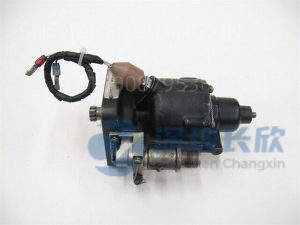
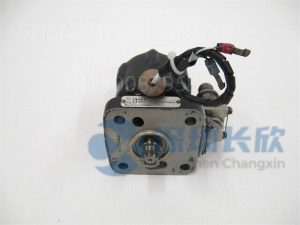
Woodward 774300: Ensuring Stable Frequency & Load Control in Power Generation
In the intricate ecosystem of modern power generation—whether driven by gas turbines, diesel engines, or steam-driven prime movers—maintaining precise frequency and balanced load distribution is not merely a performance metric; it is a cornerstone of grid stability, equipment protection, and operational continuity. At the heart of this critical function lies the Woodward 774300. a high-performance digital governor controller engineered to deliver exceptional speed regulation, responsive load control, and seamless integration across a wide range of rotating machinery. Designed for both standalone and parallel-operated generator sets, the 774300 combines decades of Woodward’s control expertise with advanced digital signal processing to ensure that power plants—from remote microgrids to industrial cogeneration facilities—operate with unwavering reliability under dynamic load conditions.
The Critical Role of Governor Control in Power Stability
Frequency in an AC power system is directly tied to the rotational speed of the generator’s prime mover. In isolated (islanded) grids or during utility outages, any imbalance between mechanical input power and electrical load causes immediate speed deviation—resulting in frequency drift that can damage sensitive equipment or trigger protective relays. Traditional mechanical governors offer basic speed control but lack the precision and adaptability required for today’s complex loads, which include variable-frequency drives, large motor startups, and intermittent renewable sources.
The Woodward 774300 addresses these challenges through a fully digital, microprocessor-based architecture that continuously monitors engine speed via magnetic or optical pickups and adjusts fuel or steam valve position in real time. Operating in either isochronous mode (constant frequency regardless of load) or droop mode (proportional speed-load response for parallel operation), the controller ensures stable output even during rapid load transients. Its PID-based control algorithms are finely tunable, allowing engineers to optimize response for specific engine characteristics—minimizing overshoot, eliminating hunting, and achieving settling times under one second in many applications.
Real-World Performance: From Data Centers to Offshore Platforms
A striking example of the 774300’s impact emerged at a Tier III data center in Texas, where uptime is non-negotiable. The facility relies on four 2 MW natural gas generators as backup during grid failures. During commissioning tests, legacy analog governors exhibited unacceptable frequency swings—up to ±1.2 Hz—when switching from utility to generator power, causing UPS systems to momentarily flag “poor input quality.” After upgrading to Woodward 774300 controllers, frequency deviation was reduced to less than ±0.1 Hz during full-load transfers. “The difference wasn’t incremental—it was transformative,” said the facility’s lead electrical engineer. “We now meet IEEE 1547 Class A requirements for islanded operation without additional filtering.”
Similarly, on an offshore oil platform in the North Sea, the 774300 manages three diesel generator sets powering drilling and processing systems. Harsh environmental conditions—salt spray, vibration, and temperature extremes—had previously degraded analog control components, leading to erratic load sharing. Since installing the 774300. the platform has achieved consistent ±2% real power balance across all units, even during crane operations that impose sudden 800 kW step loads. Maintenance calls related to governor instability have dropped by over 70%, a significant gain in a location where technician mobilization costs tens of thousands of dollars per trip.
Technical Capabilities Built for Demanding Environments
The Woodward 774300 is engineered for both performance and resilience:
Speed Sensing: Accepts inputs from up to two independent speed sensors (magnetic or Hall-effect), enabling redundancy and fail-safe operation.
Control Outputs: Provides multiple analog (4–20 mA, 0–10 V) and PWM outputs to interface with electronic actuators, servo motors, or legacy hydraulic governors.
Load Management: Integrated load-sharing functionality supports up to 32 units via a dedicated communication bus, with automatic synchronization and breaker closure sequencing.
Protection Features: Built-in overspeed, underspeed, and rate-of-change detection with configurable trip delays to prevent nuisance shutdowns.
Environmental Hardening: Operates reliably from -40°C to +70°C; conformal-coated circuit board resists moisture, dust, and corrosive atmospheres.
User Interface: Front-panel display and keypad allow local configuration, diagnostics, and real-time monitoring of speed, load, and alarm status—no laptop required for basic adjustments.
Unlike generic PLC-based solutions, the 774300 is purpose-built for prime mover control, with deterministic scan rates under 10 milliseconds and hardware-level fail-safes that ensure safe shutdown even in the event of software anomalies.
Expert Recommendations for Optimal Deployment
Industry veterans stress several best practices when implementing the Woodward 774300:
“A governor is only as good as its speed signal. Garbage in equals garbage out.”
— Senior Controls Specialist, Independent Power Producer
Sensor Quality: Use high-resolution, shielded speed pickups with proper air gap calibration. Avoid routing sensor cables near VFDs or high-voltage conductors.
Actuator Matching: Ensure the final control element (e.g., fuel rack actuator or steam valve servomotor) has sufficient bandwidth to respond to the 774300’s output—slow actuators will bottleneck performance.
Tuning Protocol: Perform field tuning under actual load conditions. Factory defaults are starting points; optimal PID gains depend on engine inertia, turbo lag, and load profile.
Redundancy Strategy: For critical applications, configure dual speed sensors and enable the 774300’s sensor voting logic to maintain control during single-sensor failure.
Firmware Updates: Regularly check for firmware enhancements that improve transient response or add diagnostic features—Woodward frequently refines algorithms based on field data.
The Strategic Value of Precision in an Unpredictable Grid
As power systems grow more decentralized and dynamic—with distributed generation, battery storage, and volatile loads—the need for intelligent, responsive prime mover control intensifies. The Woodward 774300 meets this challenge not with complexity, but with focused engineering: it does one job—governing speed and load—and does it exceptionally well.
For plant managers, controls engineers, and system integrators, selecting the 774300 is an investment in operational certainty. It transforms generators from passive backup assets into active, intelligent participants in power stability. In environments where every hertz matters and every kilowatt-hour counts, the Woodward 774300 stands as a trusted guardian of frequency integrity—ensuring that when the lights must stay on, they do, without flicker, without fail, and without compromise.