
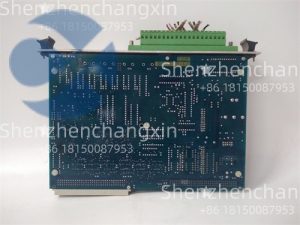
 VIBRO-METER 573-935-202C 2-Channel Vibration Card – Proximity Probe Input, Gap Voltage Monitoring, SIL 2 Ready
Introduction to Advanced Vibration Monitoring Needs
In today’s industrial landscape, rotating machinery health monitoring has evolved from reactive maintenance to predictive and preventive strategies. The VIBRO-METER 573-935-202C 2-Channel Vibration Card represents a leap forward in this transformation, offering sophisticated monitoring capabilities for critical assets in harsh environments. This card integrates proximity probe input with gap voltage monitoring while being SIL 2 ready, making it an essential component for industries where safety and reliability are paramount.
The need for such advanced monitoring stems from the growing complexity of industrial systems. Traditional vibration sensors often fall short in providing comprehensive data for modern predictive maintenance programs. The 573-935-202C addresses this gap by combining multiple measurement capabilities into a single solution, enabling engineers to detect early-stage machinery faults before they escalate into catastrophic failures.
Technical Specifications and Core Features
Proximity Probe Integration
The card’s ability to accept proximity probe inputs allows for precise measurement of shaft position and vibration. This feature is particularly valuable in applications where radial and axial movement must be monitored simultaneously. The card processes signals from eddy-current probes with exceptional accuracy, providing shaft centerline position data that’s critical for detecting misalignment, unbalance, and bearing wear.
Gap Voltage Monitoring Capability
A unique aspect of this vibration card is its gap voltage monitoring function. By tracking the voltage gap between the probe and target, maintenance teams gain insight into probe health and target surface conditions. This dual-purpose monitoring helps prevent false alarms caused by probe degradation while simultaneously monitoring machinery health – a combination that significantly improves diagnostic accuracy.
SIL 2 Readiness for Safety-Critical Applications
The SIL 2 readiness certification ensures the card meets stringent safety integrity requirements. This makes it suitable for applications where failure could lead to hazardous situations, such as in oil and gas processing or power generation facilities. The card’s design incorporates fail-safe features and redundant processing to maintain reliable operation even under adverse conditions.
Environmental Resilience
Built to withstand harsh industrial environments, the card operates reliably across temperature ranges typical of heavy industrial applications. Its robust construction ensures consistent performance in dusty, humid, or vibration-prone settings, making it ideal for deployment in challenging locations.
Real-World Applications and Performance
Oil and Gas Industry Case Study
A major offshore platform operator implemented the 573-935-202C cards on their critical compressors after experiencing costly unplanned downtime due to bearing failures. The cards’ ability to monitor both vibration and gap voltage proved invaluable in detecting early-stage bearing degradation. Maintenance teams could now schedule repairs during planned shutdowns rather than emergency situations, resulting in significant cost savings and improved safety.
Power Generation Success Story
In a large thermal power plant, these vibration cards were installed on turbine-generator sets. The plant’s maintenance department reported improved diagnostic accuracy when analyzing vibration data alongside gap voltage readings. This integrated approach allowed them to differentiate between actual machinery faults and probe-related issues, reducing unnecessary maintenance interventions by approximately 40%.
Chemical Processing Facility Experience
A chemical plant using the cards on their high-speed pumps noted enhanced reliability in their predictive maintenance program. The SIL 2 readiness gave them confidence in deploying the system in safety-critical areas, while the environmental resilience ensured consistent operation despite the plant’s challenging conditions.
Installation and Integration Considerations
System Integration Best Practices
When integrating the 573-935-202C into existing monitoring systems, several best practices ensure optimal performance:
Proper grounding techniques to minimize electrical noise
Careful routing of probe cables to prevent interference
Appropriate calibration procedures for each measurement channel
Regular verification of SIL-related safety functions
Maintenance and Troubleshooting
The card’s design facilitates straightforward maintenance:
Modular components allow for easy replacement of individual channels
Comprehensive diagnostic features help identify issues quickly
Detailed documentation supports efficient troubleshooting
Long-term reliability reduces the need for frequent maintenance
Industry Perspectives and Future Directions
Expert Insights
“The combination of vibration monitoring and gap voltage tracking in a single card represents a significant advancement in condition monitoring technology,” notes Dr. Robert Chen, a rotating machinery expert. “This approach provides maintenance teams with a more complete picture of machinery health, enabling better decision-making and improved asset reliability.”
User Testimonials
“We’ve seen a dramatic improvement in our ability to detect developing faults before they cause failures,” reports maintenance manager Carlos Martinez from an industrial facility. “The SIL certification gives us confidence in using this technology in our safety-critical systems.”
Future Development Trends
Looking ahead, the industry is moving toward even more integrated monitoring solutions. The 573-935-202C represents a step in this direction, with potential future enhancements including:
Wireless connectivity options for easier installation
Enhanced diagnostic algorithms for more accurate fault detection
Integration with digital twin technologies for predictive maintenance
Further environmental resilience improvements
Conclusion: A Comprehensive Solution for Modern Monitoring
The VIBRO-METER 573-935-202C 2-Channel Vibration Card sets a new standard for machinery health monitoring by combining proximity probe input, gap voltage monitoring, and SIL 2 readiness in a single package. Its real-world performance across diverse industries demonstrates its value in improving asset reliability, reducing maintenance costs, and enhancing safety.
For facilities looking to upgrade their vibration monitoring capabilities or implement more comprehensive predictive maintenance programs, this card offers a proven solution that addresses multiple monitoring needs simultaneously. As industrial operations continue to push the boundaries of efficiency and safety, technologies like the 573-935-202C will play an increasingly critical role in ensuring reliable operation of critical assets.