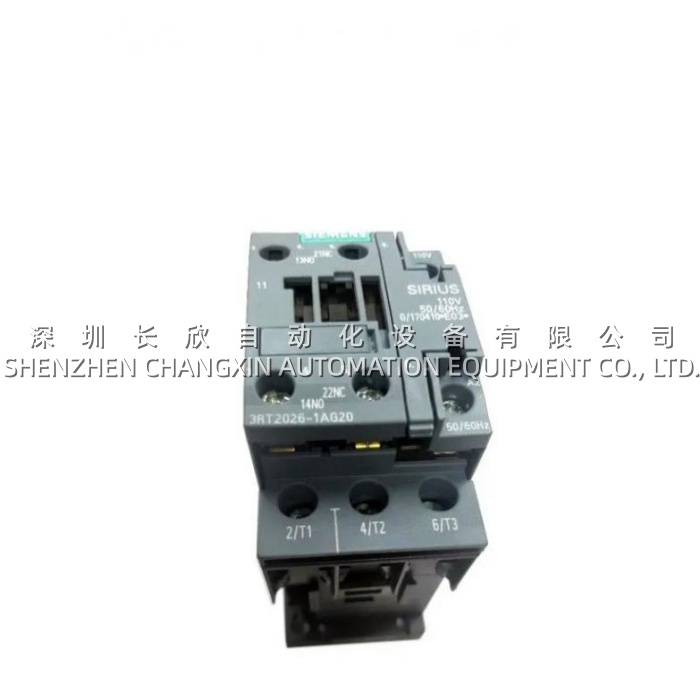
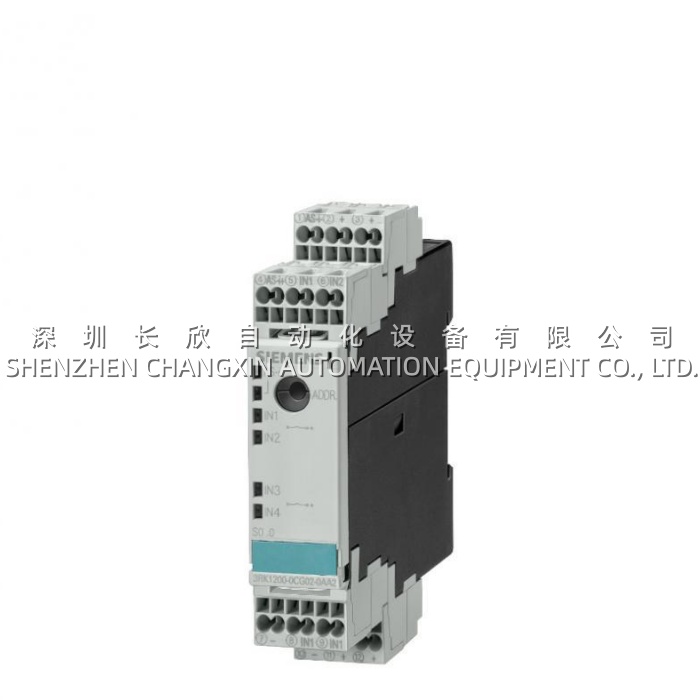
Application Scenarios
Consider a packaging line where conveyor motors, solenoid valves, and optical sensors are scattered across a 50-meter production floor—traditional point-to-point wiring would require hundreds of meters of cable, multiple junction boxes, and countless engineering hours for troubleshooting. By deploying the Siemens 3RK1402-0BE00-0AA2 as an AS-i slave module, engineers connect sensors and actuators directly to the AS-Interface network using a simple two-wire cable that carries both power and data. The module’s two relay outputs drive contactors and small motors without external interposing relays, while the two digital inputs capture sensor status from photoelectric or proximity switches mounted near the process. The Siemens 3RK1402-0BE00-0AA2 transforms this sprawling control challenge into a clean, modular architecture—reducing wiring costs by up to 60% and simplifying maintenance for plant electricians who can quickly locate and replace a faulty module by its visual status indication.
Parameters
| Main Parameters | Value/Description |
|---|---|
| Product Model | Siemens 3RK1402-0BE00-0AA2 |
| Manufacturer | Siemens |
| Product Category | AS-i SlimLine Digital I/O Module |
| Slave Type | Standard Slave (not A/B addressing) |
| I/O Configuration | 2 inputs / 2 outputs (Relay outputs) |
| Width | 22.5 mm — Slim design for space-saving installation |
| Height | 102 mm |
| Depth | 86 mm |
| Mounting | 35 mm standard rail or wall mounting with push-in lugs |
| Connection | Screw-type terminals (1 x 0.5-4 mm² or 2 x 0.5-2.5 mm²) |
| Operating Voltage (AS-i) | 26.5…31.6 V DC |
| Operating Temperature | -25°C to +70°C — Suitable for wide ambient conditions |
| Storage Temperature | -40°C to +85°C |
| Protection Class | IP20 (for control cabinet installation) |
| Approvals | CE, UL, CSA, RCM |
| Product Status | Phased-out product (replacement recommended) |
Technical Principles and Innovative Values
Innovation Point 1: AS-Interface Simplification with a Two-Wire Network
The Siemens 3RK1402-0BE00-0AA2 operates on the AS-Interface protocol, a global standard for industrial sensor-actuator communication (IEC 62026-2). The module receives both power (26.5-31.6V DC) and communication over the same two-wire yellow AS-i cable, eliminating the need for separate power supplies or complex wiring harnesses. This reduces installation costs and simplifies expansion—adding another 3RK1402-0BE00-0AA2 simply requires tapping into the existing AS-i cable and assigning a new address via the front socket.
Innovation Point 2: Relay Outputs for High-Current Switching
Unlike solid-state output modules that require external contactors for higher loads, the Siemens 3RK1402-0BE00-0AA2 uses relay outputs capable of switching up to 6A per channel. This allows direct control of contactors, small motors, pilot lamps, and solenoid valves without additional interposing hardware. The galvanic isolation inherent to relay outputs also protects the AS-i network from field-side surges and transients, a critical reliability feature in high-inductance environments like conveyor systems and hydraulic valve banks.
Innovation Point 3: Robust Environmental Specification for Industrial Endurance
The module is designed for the demanding conditions of industrial control cabinets. With an operating temperature range spanning -25°C to +70°C and storage capability down to -40°C, the Siemens 3RK1402-0BE00-0AA2 withstands the thermal extremes found in foundries, cold storage facilities, and outdoor enclosures. The screw-type terminals accept solid wires up to 4 mm² or two fine-stranded conductors with end sleeves, ensuring secure, vibration-resistant connections over years of service.
Innovation Point 4: Planned Replacement Path for Legacy Installations
As a phased-out product, the Siemens 3RK1402-0BE00-0AA2 has a defined upgrade pathway to the new SlimLine Compact series. The recommended replacement is the 3RK2402-2ME00-2AA2 (or 3RK2402-2MG00-2AA2 for spring-type terminals), offering 4 inputs and 2 relay outputs with A/B slave capability. This transition path ensures that existing AS-i networks can continue to be serviced while giving engineers the option to migrate to newer technology when system expansions occur.