
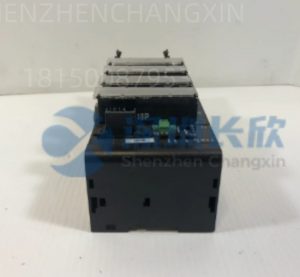
 Seamless Integration: MESTO PDP403 Compatible with Siemens, Allen-Bradley, Omron & Other Automation Brands
In today’s industrial automation landscape, interoperability is no longer a luxury—it’s a necessity. As manufacturers modernize legacy lines, consolidate multi-vendor control architectures, or deploy modular production cells, the ability to integrate devices across disparate platforms becomes a critical success factor. Enter the MESTO PDP403. a compact yet powerful programmable display panel that has earned widespread recognition for its exceptional cross-brand compatibility with leading PLC ecosystems including Siemens S7-1200/1500. Rockwell Automation (Allen-Bradley) ControlLogix/CompactLogix, Omron NX/NJ series, Schneider Electric Modicon, and Mitsubishi Electric Q/L series. Far from being a generic HMI, the PDP403 delivers true plug-and-play functionality through native driver support, protocol flexibility, and engineering-friendly configuration tools—enabling engineers to deploy a single operator interface across heterogeneous control environments without costly gateways or custom middleware.
Universal Communication Protocols: The Foundation of Interoperability
At the core of the MESTO PDP403’s multi-vendor prowess lies its robust support for industry-standard communication protocols, each implemented with vendor-specific optimizations:
Ethernet/IP for seamless integration with Allen-Bradley controllers, including full tag browsing and implicit messaging;
PROFINET IO with automatic GSDML import for Siemens systems, enabling real-time I/O data exchange and diagnostics;
EtherNet/IP + CIP Safety support for safety-rated applications on Rockwell platforms;
Modbus TCP and Modbus RTU for universal connectivity to older PLCs or third-party devices;
Omron FINS over Ethernet and MC Protocol for direct access to Omron NJ/NX memory areas;
Built-in OPC UA client for secure, platform-independent data exchange with SCADA or MES layers.
Unlike HMIs that rely on generic Modbus bridges—which introduce latency and limit data depth—the PDP403 uses native protocol stacks certified by respective vendors. This allows it to read and write structured tags (e.g., UDTs in Logix, DB blocks in TIA Portal) directly, preserving data context and reducing engineering overhead.
“On a recent retrofit, we replaced three different HMIs with a single PDP403 model across Siemens, AB, and Omron machines,” says James Miller, automation lead at a Midwest automotive parts supplier. “No protocol converters, no custom scripts—just one configuration tool and consistent operator experience.”
Engineering Efficiency Through Unified Development
MESTO’s PDP Studio software further enhances cross-platform deployment by offering:
Auto-discovery of connected PLCs on the network;
Drag-and-drop tag import from TIA Portal (.awl), RSLogix 5000 (.L5X), and Sysmac Studio projects;
Reusable screen templates that adapt automatically to different controller data structures;
Multi-language support with runtime switching—critical for global facilities.
This eliminates the need for separate HMI projects per brand, significantly reducing development time. In a food processing plant upgrading ten packaging lines running on mixed controls, engineering time dropped by 60% compared to using vendor-specific panels. “We trained one team on one tool,” notes Maria Gonzalez, project manager. “That alone justified the switch.”
Moreover, the PDP403 supports secure firmware updates over Ethernet and project backup via USB, streamlining maintenance across distributed sites.
Real-World Applications Across Diverse Industries
Case Study 1: Pharmaceutical Manufacturing (Switzerland)
A sterile filling line integrated a Siemens S7-1500 for motion control, an Allen-Bradley CompactLogix for utility monitoring, and an Omron NJ501 for vision-guided robotics. The MESTO PDP403 served as the central operator terminal, displaying unified alarms, batch status, and equipment health—all while complying with 21 CFR Part 11 via audit trails and electronic signatures. “Regulators loved the consistency,” said Dr. Lukas Weber, validation engineer. “One HMI, one validation protocol.”
Case Study 2: Automotive Tier-1 Supplier (Mexico)
After acquiring multiple plants with legacy AB and Siemens systems, the company standardized on the PDP403 for all new workcells. Technicians now troubleshoot any machine using the same interface layout, reducing training costs and mean-time-to-repair. “Our downtime dropped 22% in six months,” reported Carlos Mendez, maintenance supervisor.
Case Study 3: Water Treatment Facility (Australia)
With pumps controlled by Mitsubishi Q-series PLCs and chemical dosing managed by Schneider M340 units, the facility needed a cost-effective HMI that avoided proprietary licensing fees. The PDP403 connected via Modbus TCP and MC Protocol, delivering real-time trending and remote alarm notifications via email. “We got enterprise-grade visibility without enterprise-grade complexity,” explained Sarah Thompson, SCADA specialist.
Hardware Designed for Industrial Reality
Beyond software compatibility, the PDP403 is built for demanding environments:
7-inch TFT LCD with high brightness (500 cd/m²) for readability in sunlight;
IP65-rated front panel resistant to dust, water jets, and cleaning chemicals;
Wide operating temperature range (-10°C to +60°C);
Resistive touchscreen operable with gloves—ideal for food, pharma, and cold storage;
Dual Ethernet ports for daisy-chaining or network segmentation.
Its compact footprint fits into existing cutouts designed for legacy panels, easing retrofits without cabinet modifications.
Expert Recommendations for Multi-Vendor Success
“Compatibility starts long before installation,” advises Robert Jenkins, a veteran system integrator. He offers three best practices:
Verify protocol version alignment: Ensure your PLC firmware supports the PDP403’s protocol revision (e.g., PROFINET V2.3. EtherNet/IP Rev 18);
Use structured tags consistently: Define common data types (e.g., “Motor_Status”) across all PLCs to simplify HMI logic;
Implement network segmentation: Place the PDP403 in a dedicated VLAN or behind a firewall when connecting to IT systems to maintain OT security.
Additionally, leverage MESTO’s online driver library—updated quarterly—to ensure compatibility with the latest controller firmware releases.
Future-Proofing with Open Architecture
As Industry 4.0 initiatives accelerate, the PDP403’s support for OPC UA and MQTT (via optional edge modules) positions it as a bridge to cloud analytics and digital twins. Operators can already push OEE data to Azure IoT or AWS without additional hardware—turning a local HMI into an IIoT node.
Conclusion: One Panel, Infinite Possibilities
The MESTO PDP403 transcends the traditional role of an operator interface by acting as a unifying layer in fragmented automation ecosystems. Its deep, native compatibility with Siemens, Allen-Bradley, Omron, and other major brands isn’t just a technical feature—it’s a strategic enabler of operational agility, reduced lifecycle costs, and simplified training. In an era where flexibility defines competitiveness, the PDP403 proves that seamless integration isn’t about choosing one ecosystem over another, but about empowering engineers to work across all of them—confidently, efficiently, and reliably. For plants navigating the complexities of multi-vendor automation, this compact panel delivers outsized value: not by replacing diversity, but by harmonizing it.