
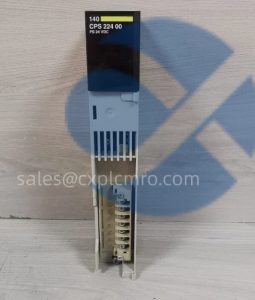
Schneider 140CPU67160 Modicon Quantum Redundant CPU for Oil, Gas & Power Applications
Introduction: The Critical Role of Redundant CPUs in High-Stakes Industries
In the demanding environments of oil and gas extraction, power generation, and critical infrastructure, system downtime is not an option. Schneider Electric’s 140CPU67160 Modicon Quantum Redundant CPU emerges as a cornerstone solution for ensuring continuous operation in these high-risk sectors. This advanced processor module is specifically engineered to deliver unparalleled reliability through its hot standby redundancy architecture, making it indispensable for applications where failure could lead to catastrophic consequences.
Understanding Redundancy: Why It Matters in Oil & Gas
Redundancy in industrial control systems is not merely a feature—it’s a necessity. Consider a deep-sea oil platform where a single PLC failure could disrupt extraction operations for hours, costing millions in lost production. The Quantum 140CPU67160 addresses this through its dual-CPU configuration:
Active/Standby Pair: Two identical CPUs operate in parallel, with one taking over instantly if the primary fails
Seamless Switchover: Transition occurs within milliseconds, preventing process interruptions
Synchronized Memory: Both units maintain identical program states through real-time data exchange
Industry experts emphasize that redundancy isn’t just about backup—it’s about maintaining process integrity during transitions. “In our offshore gas processing facility, the Quantum system prevented what would have been a 12-hour shutdown during a CPU failure,” reports a senior automation engineer at a major energy company.
Technical Specifications: Built for Extreme Conditions
Core Processing Power
Dual-core Architecture: Simultaneously executes control loops and communication tasks
266 MHz Clock Speed: Handles complex mathematical models for predictive maintenance
4 MB RAM: Stores extensive process data for trend analysis
Communication Infrastructure
Dual Ethernet Ports: Supports Modbus TCP/IP and EtherNet/IP protocols
USB Programming Interface: Enables secure remote diagnostics
EGD (Ethernet Global Data): Facilitates real-time data sharing between redundant units
Environmental Resilience
-40°C to +70°C Operating Range: Tested in Arctic drilling sites and desert power plants
Vibration Resistance: Meets MIL-STD-810G standards for mobile rig applications
Humidity Protection: 95% non-condensing rating for coastal installations
Real-World Applications Across Energy Sectors
Oil & Gas Extraction
At a North Sea platform, the Quantum system controls:
Wellhead Pressure Regulation: Redundant CPUs ensure precise control during blowout preventer testing
Pipeline Monitoring: Simultaneously processes data from 200+ sensors across 50km of subsea lines
FPSO Operations: Manages complex separation processes with zero tolerance for errors
Power Generation
In a combined-cycle gas plant, the solution:
Synchronizes Generators: Maintains grid frequency during unit trips
Manages Emissions Control: Prevents costly non-compliance events
Optimizes Heat Recovery: Maximizes efficiency through real-time adjustments
Nuclear Power Case Study
A leading nuclear facility implemented the system to:
Replace aging relay-based controls: Achieved 99.999% availability
Reduce maintenance windows: Cut inspection downtime by 60%
Enable predictive maintenance: Uses trend data from both CPUs for failure forecasting
Implementation Best Practices
Configuration Guidelines
Hardware Layout: Maintain minimum 15cm spacing between CPUs for heat dissipation
Power Supply: Use dual independent sources with automatic transfer switches
Grounding: Implement separate ground paths for each CPU
Programming Considerations
Redundancy Manager: Utilize the built-in Unity Pro redundancy toolkit
Watchdog Timers: Configure heartbeat monitoring between CPUs
Failover Testing: Conduct monthly simulated failure exercises
Industry Perspectives
“Switching to Quantum redundancy reduced our unplanned outages by 85%,” states the maintenance manager of a major refinery. Control systems integrators highlight its adaptability: “We’ve deployed these in everything from LNG terminals to wind farm substations.”
Future-Proofing Your Investment
The system’s architecture allows for:
Gradual Upgrades: Add new I/O modules without disrupting redundancy
Protocol Evolution: Support for emerging standards like OPC UA over TSN
Cybersecurity Integration: Built-in features for defense-in-depth strategies
Conclusion: A Strategic Investment in Reliability
For oil and gas operators, power utilities, and critical infrastructure providers, the Schneider 140CPU67160 represents more than hardware—it’s a risk mitigation strategy. By eliminating single points of failure through its innovative redundancy design, this solution delivers measurable business value through increased uptime, enhanced safety, and improved operational efficiency. As energy demands grow and environmental regulations tighten, investing in such robust automation foundations becomes not just advisable, but essential for sustainable operations in the new energy era. (AI生成)