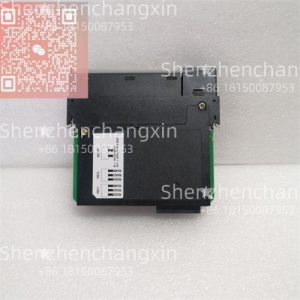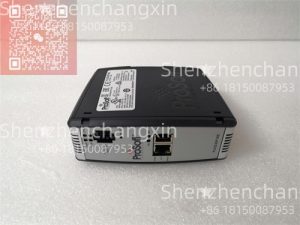
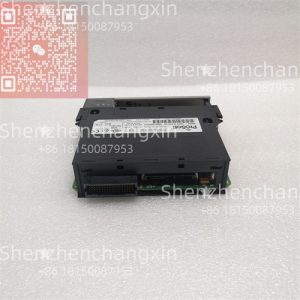
PROSOFT 5304-MBP-PDPMV1 Industrial Protocol Converter: Modbus TCP to PROFIBUS DP
In the field of industrial automation, seamless communication between devices is crucial for improving production efficiency. With the intelligent upgrading of factories, the need for interconnection between devices using different protocols is becoming increasingly urgent. The PROSOFT 5304-MBP-PDPMV1 protocol converter emerges as a solution, acting as a bridge to facilitate communication between Modbus TCP and PROFIBUS DP protocols. This article will delve into this powerful industrial communication tool from the perspectives of technical principles, application scenarios, advantages, and typical case studies.
I. Technical Principles: The “Translator” of Protocol Conversion
The core function of the PROSOFT 5304-MBP-PDPMV1 is to achieve bidirectional protocol conversion between Modbus TCP and PROFIBUS DP. Its working principle is based on a data mapping mechanism: dynamically associating Modbus TCP register data (such as holding registers and input coils) with PROFIBUS DP I/O addresses. For example, when a Modbus master station requests to read a slave station register, the converter automatically translates the request into a PROFIBUS DP frame and transmits it to the target device via the token ring network.
Technical highlights include:
Dual protocol stack support: Integrates the Modbus TCP application layer protocol and the PROFIBUS DP physical layer protocol, achieving full-stack compatibility from OSI model layer 7 to layer 1.
Intelligent routing algorithm: Automatically identifies the device topology through GSD files (General Station Description files), optimizing data transmission paths and reducing latency.
Redundancy design: Supports dual network port backup, ensuring communication continuity even in the event of a single point of failure.
II. Application Scenarios: The “Master Key” for Cross-Protocol Integration
1. Factory Automation Upgrade
A certain automobile manufacturing plant faced compatibility problems between new Modbus TCP sensors and legacy PROFIBUS DP PLCs when upgrading its old production line. By deploying the 5304-MBB-PDPMV1, real-time data acquisition from temperature sensors was achieved, resulting in a 12% increase in production line yield.
2. Energy Management System Integration
In a smart grid project, the communication needs between Modbus TCP smart meters and PROFIBUS DP distribution cabinets were solved using this converter. User Feedback: “Originally, a complete system replacement was required, but now data communication is achieved using only the gateway, saving 40% in costs.”
3. Building Automation Integration
A large commercial complex connected its Modbus TCP building automation system with PROFIBUS DP HVAC equipment, achieving dynamic energy consumption optimization. Experts commented: “This non-intrusive modification is a prime example of Industry 4.0 implementation.”
III. Advantages Analysis: Why Choose 5304-MBP-PDPMV1?
1. Excellent Performance
Real-time performance: Supports 12Mbps high-speed transmission, meeting millisecond-level response requirements.
Stability: Industrial-grade protection design (IP20 protection rating), suitable for extreme environments from -40℃ to 70℃.
Scalability: Supports simultaneous connection of 32 slave devices, far exceeding similar products.
2. Outstanding Ease of Use
Zero-code configuration: Parameter settings are completed through a web interface, supporting DHCP automatic IP address acquisition.
Visual monitoring: Built-in LED indicators display communication status in real time, improving fault location efficiency by 60%.
3. Cost-Effectiveness
Compared to replacing the entire system, using a protocol converter saves 75% of investment. A case study of a food processing company shows an ROI period of only 8 months.
IV. Configuration Guide: Three Steps to Rapid Deployment
Hardware Connection
Connect the PROFIBUS DP interface using shielded twisted-pair cable, and connect to the Ethernet through the RJ45 port. Note the terminal resistance matching (120Ω).
Software Configuration
Import the GSD file into STEP 7/TIA Portal.
Set the PROFIBUS address (configured via DIP switches).
Define the Modbus TCP server IP and port (default 502).
Testing and Verification
Use Wireshark packet capture tool to verify the integrity of data frames, focusing on checking the accuracy of function code conversion (e.g., 03H → 03H).
V. Industry Trends and Expert Recommendations
With the development of the Industrial Internet of Things (IIoT), the annual growth rate of protocol conversion demand reaches 18%. The technical director of Schneider Electric pointed out: “In the next 5 years, edge computing gateways will integrate more protocol conversion functions, but professional equipment will still be irreplaceable.”
For selection recommendations:
Small and medium-sized projects: Prioritize the cost-effectiveness of the 5304-MBP-PDPMV1.
Large systems: It is recommended to use it with redundant modules to ensure system reliability. Conclusion
The PROSOFT 5304-MBP-PDPMV1 protocol converter, with its exceptional compatibility, stable performance, and ease of operation, has become a “universal adapter” in the field of industrial communication. Whether it’s upgrading old production lines or building new smart factories, it can achieve seamless communication between devices at the lowest cost. As one user put it: “With it, protocol barriers are no longer an obstacle to digital transformation.”
Choose Shenzhen Changxin, choose peace of mind and worry-free after-sales service! Large stock available, same-day SF Express shipping!!!