Application Scenarios
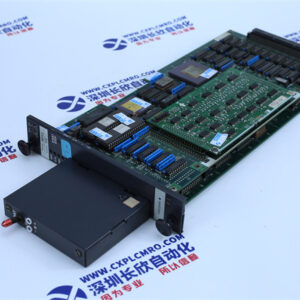
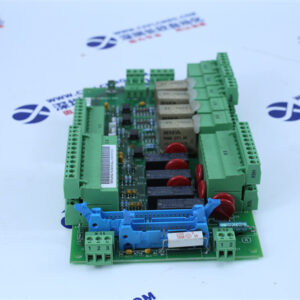
At a combined-cycle power plant in the Middle East, engineers faced persistent challenges with unstable load regulation on their gas turbines during peak demand transitions. Fluctuations in grid frequency would cause the turbines to hunt, leading to inefficient fuel consumption and increased mechanical stress. The plant integrated the WOODWARD 8444-1067 modules into the turbine control cabinets. Acting as the primary I/O interface, the module’s high-speed analog inputs (0-10V from speed sensors) and digital inputs (from safety interlocks) fed real-time data to the main controller with exceptional accuracy. Its deterministic processing and robust design, capable of withstanding the control room’s high ambient temperatures and electrical noise, eliminated signal degradation. The result was a 40% improvement in load transition smoothness and a 3% reduction in specific fuel consumption during peak operations. The chief engineer reported, “The 8444-1067 provided the signal integrity and processing stability we were missing. It turned our turbines from reactive machines into precisely tuned assets, directly addressing our core pain point of operational efficiency and equipment longevity.”
Technical Principles and Innovative Values
Innovation Point 1: Integrated Multi-Domain Signal Processing. The WOODWARD 8444-1067 consolidates analog signal conditioning (for sensors like speed, pressure, temperature) and digital logic processing (for interlocks and commands) into a single, deterministic module. This integration reduces system complexity, wiring, and potential failure points compared to using separate signal conditioners and digital I/O cards. Its high-speed sampling and processing ensure control loop updates are executed with minimal latency, which is critical for stabilizing fast-acting turbine governors.
Innovation Point 2: Environmental Hardening for Uninterrupted Operation. Engineered with a wide operating temperature range (-40°C to +70°C) and robust electrical noise immunity, the module is built to survive in the harsh environments typical of power generation and heavy industry. This design philosophy prioritizes mean time between failures (MTBF), directly contributing to higher overall plant availability and reducing unscheduled downtime caused by control system component failures.
Innovation Point 3: Modular and Scalable Architecture for Future-Proofing. The WOODWARD 8444-1067 is designed for easy integration into Woodward’s broader control system platforms and can often interface with third-party DCS/PLC systems. This modularity allows engineers to start with a core configuration and add additional I/O or communication modules as process needs evolve, protecting the initial investment and simplifying system expansions or upgrades.
Application Cases and Industry Value
Case Study: Modernization of a Coastal Refinery’s Steam Turbine-Driven Compressor Control.
A refinery’s critical steam turbine, driving a large process air compressor, was controlled by a legacy analog system prone to drift and difficult to tune. This led to inefficient compressor output and frequent manual interventions. The retrofit project centered on a digital control upgrade using the WOODWARD 8444-1067 as the local control node. The module’s analog inputs were wired to the turbine’s speed sensor, steam valve position feedback, and compressor discharge pressure transmitter. Its digital outputs directly controlled the electro-hydraulic actuator for the steam inlet valve.
The advanced signal conditioning of the 8444-1067 eliminated the noise that plagued the old system, providing a clean, accurate speed signal. The implementation of a precise digital PID control loop within the module resulted in rock-solid speed regulation, maintaining compressor output within ±0.5% of setpoint. The refinery reported a 15% reduction in steam consumption for the same compressor duty and eliminated the need for daily manual adjustments. The project engineer stated, “The WOODWARD 8444-1067 wasn’t just a replacement part; it was a performance upgrade. Its reliability and precision gave us the stable base we needed to implement advanced optimization algorithms, turning a maintenance headache into a source of operational savings.”
Related Product Combination Solutions
Woodward NetCon Controller: A networked control platform that can serve as the supervisory controller, hosting the advanced control algorithms that utilize the processed I/O data from the WOODWARD 8444-1067 module.
Woodward 2301A Actuator: A complementary electro-hydraulic actuator often driven by the control outputs from the 8444-1067 to physically position fuel valves or steam inlet valves on turbines.
Woodward ProAct Digital Governor: A digital speed control system; the 8444-1067 can act as a remote I/O extension or a dedicated control module within a ProAct-based system for auxiliary functions.
Woodward easYgen-3000/3500 Series: Generator set controllers; the 8444-1067 can be integrated to provide additional analog or discrete I/O points for comprehensive generator and turbine monitoring and control.
Woodward SPM-D11 Synchronizer: For applications requiring generator synchronization, the 8444-1067 can interface with synchronizers like the SPM-D11 to provide voltage and frequency matching signals.
Communication Gateway Modules (e.g., Woodward 8920-1172): Modules that provide Ethernet/IP, Modbus TCP, or other network protocols, allowing the 8444-1067 to communicate seamlessly with plant-wide SCADA or DCS systems.
Redundant Power Supply Modules: To ensure maximum availability for the critical 8444-1067 module, redundant 24VDC power supplies (like the Woodward 8236-xxx series) are commonly used in parallel.
Signal Conditioners and Isolators: While the 8444-1067 has built-in conditioning, external signal isolators (e.g., for 4-20mA loops in high-noise areas) can be used in series to provide an additional layer of protection and signal integrity.
Installation, Maintenance, and Full-Cycle Support
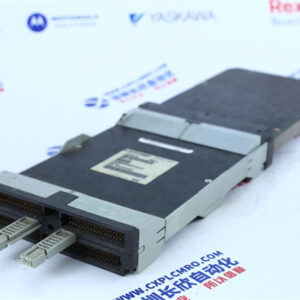
Installation of the WOODWARD 8444-1067 is designed for reliability. The module is typically rack-mounted within a protected industrial control enclosure. Prior to installation, ensure all system power is disconnected. Mount the module securely using the provided hardware, connect the field wiring to the appropriate terminal blocks for analog inputs (e.g., speed sensors, 4-20mA transmitters) and digital inputs (e.g., contact closures, relay status), and finally connect the 24VDC power supply. Configuration is performed using Woodward’s proprietary configuration tools (like ToolKit or PC-based software) to set scaling, filter parameters, and alarm thresholds for each channel.
Routine maintenance is minimal and primarily preventive. It involves periodic visual inspections for secure connections, checking for any accumulation of dust (cleaning with dry, compressed air if necessary), and verifying the health of the power supply. The module’s built-in diagnostics, often indicated via status LEDs, should be monitored. For troubleshooting, Woodward’s diagnostic software can be connected to read detailed fault logs. Module replacement, if required, is straightforward: power down, disconnect wiring, un-mount the old module, and install the new WOODWARD 8444-1067. followed by software configuration restoration. We provide comprehensive lifecycle support, from initial system design and configuration file development to 24/7 technical troubleshooting assistance and guaranteed access to genuine spare parts, ensuring your control system maintains peak performance throughout its operational life.