Parameter
| Main Parameters | Value/Description |
|---|---|
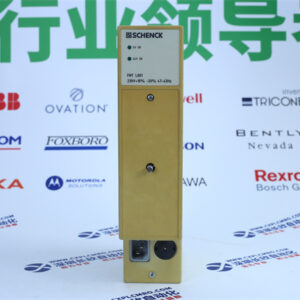
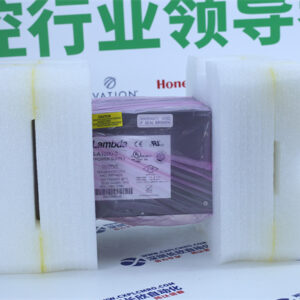
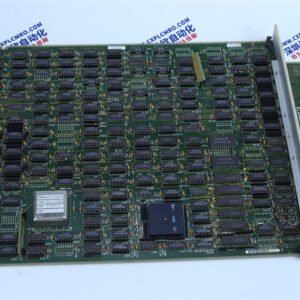
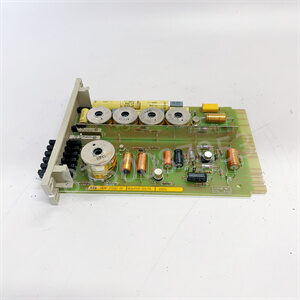
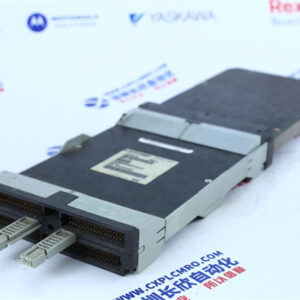
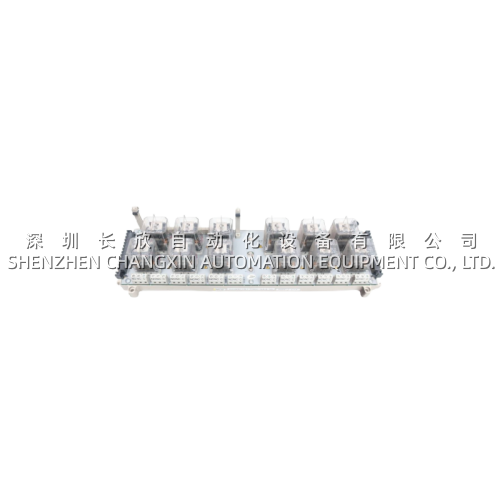
| Product Model | 1C31222G01 (module) / 5A26458G05 (termination base) |
| Manufacturer | Westinghouse (Emerson Automation Solutions, Ovation™ DCS) |
| Product Category | Analog Output Module with Fast HART |
| Output Channels | 8 channels, independently configurable |
| Output Signal | 4–20 mA (software-selectable 0–20 mA) |
| Load Capability | ≤ 750 Ω @ 24 VDC external supply |
| Resolution / Accuracy | 16-bit D/A; ±0.1% of span |
| Refresh Rate | 8 ms (full 8-channel update) |
| HART Support | HART 5 / 6 / 7. digital passthrough superimposed on 4–20 mA |
| Isolation | Channel-to-channel & channel-to-backplane, 500 VDC |
| Protection (via 5A26458G05) | Per-channel fuse + TVS snubber; short on one channel does not trip neighbors |
| Operating Temp / Mount | 0°C to +60°C; plugs into Ovation standard I/O rack (hot-swappable) |
Technical Principles and Innovative Values
Innovation Point 1: True “Fast HART” Dual-Stack Architecture. Most DCS AO modules strip the HART digital layer or require an external HART modem per loop. The 1C31222G01 + 5A26458G05 combo keeps the HART FSK (1200/2200 Hz) carrier alive on all eight 4–20 mA outputs simultaneously. This means your AMS Device Manager or Emerson Field Communicator can read valve positioner diagnostics, burst mode PV, and event flags without extra wiring — a critical advantage when you have 200+ smart positioners on a single turbine skid.
Innovation Point 2: 8 ms Full-Bank Refresh with 16-bit Sigma-Delta DAC. The 1C31222G01 uses a per-channel 16-bit DAC fed by a shared high-speed backplane DMA, achieving an 8 ms “all-eight-channels-done” scan. Compare this to generic Ovation AO (often 30–40 ms) — the difference matters on fast loops like steam turbine governor valves, where a 40 ms lag can push you outside the stability envelope during load rejection tests.
Innovation Point 3: Fault-Containment Design via the 5A26458G05 Base. The 5A26458G05 isn’t just a passive terminal block — it carries a PTC/fuse + TVS on every channel, plus HART coupling transformers. If a field wire shorts to 48 VDC (common when instrument techs mislabel loops), only that channel’s fuse opens; the other seven 1C31222G01 channels keep driving. The base also has a metal shield that suppresses EMI from nearby VFD trays — a frequent killer of bare AO cards in retrofitted boiler decks.
Innovation Point 4: Hot-Swap with Automatic Relearn. In a redundant Ovation controller pair, pulling a faulted 1C31222G01 live is supported — the 5A26458G05 holds the last-output “safe hold” value via its local capacitor bank while the new module boots, then the DCS pushes the active output vector down in < 2 seconds. No need to force the turbine to manual.
Application Cases and Industry Value
Case 1 – Combined-Cycle Gas Plant, Middle East. The fuel-gas control skid on Frame 9F gas turbines used legacy 6-channel AO cards that couldn’t drive both the 4–20 mA position demand and carry HART to the Masoneilan Camflex positioners — the plant had to run a separate 4–20 mA + HART multiplexer rack, doubling marshalling points. Swapping to 1C31222G01 + 5A26458G05 collapsed the panel footprint by 40%. The lead C&I engineer noted: “We killed two panels and the HART data finally showed up in AMS without a second wire pull. The 8 ms scan also tightened our fuel split bias loop — we shaved 0.15% on heat rate during the validation run.”
Case 2 – Pulp & Paper Recovery Boiler, Scandinavia. The smelt-spout water-injection valves needed micro-adjustments (0.1% of stroke) to avoid “snowball” salt buildup, but the old AO cards had ±0.25% repeatability — operators resorted to manual trim every shift. After installing the 1C31222G01 (±0.1% FS) with 5A26458G05 bases, the auto-loop held setpoint through three consecutive campaigns without manual override. Maintenance also appreciated that when one spout’s solenoid shorted and blew the 5A26458G05 channel fuse, the other seven spout valves kept running — previously a single short took the whole 8-channel card offline.