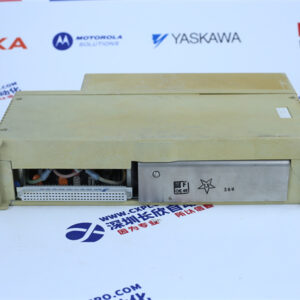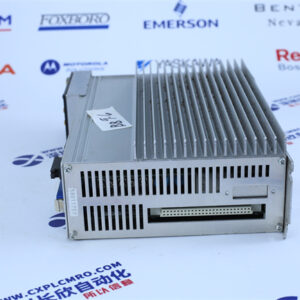
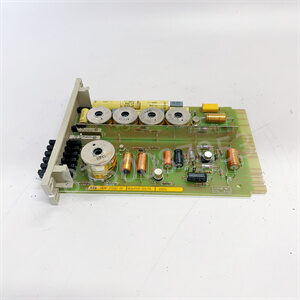
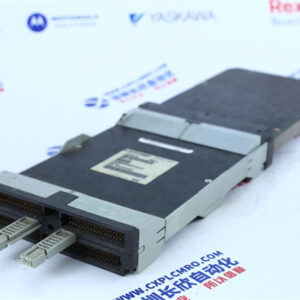
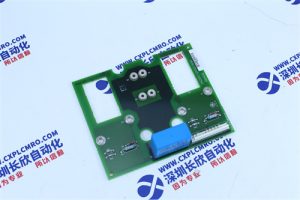

TP854 3BSE025349R1
Product Name
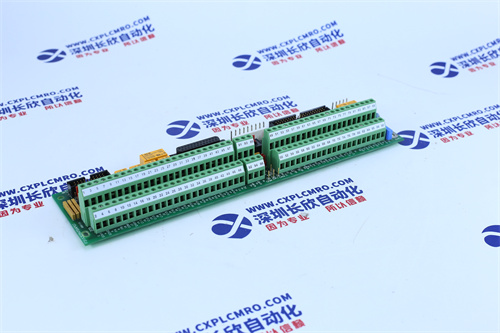
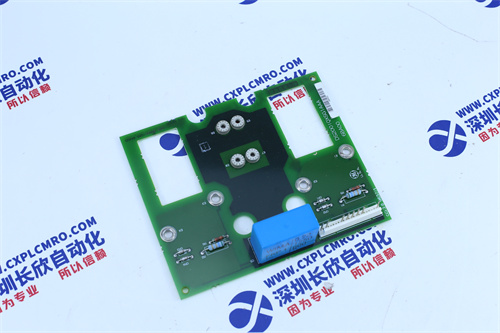
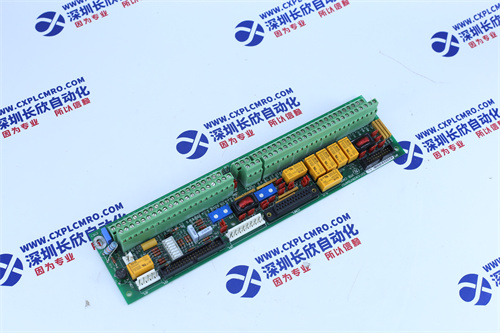
ABB Symphony Plus Series Profinet IRT Communication Interface Module (Model: TP854; Part Number: 3BSE025349R1)
(Model & Part Number Interpretation:
- TP854 (Model):
- TP: Core product line prefix for ABB Symphony Plus “Terminal Processor” modules, denoting its role as a communication gateway between the DCS controller and external networks/devices (distinguishing from I/O modules like 216VC62A or AI835).
- 854: Hardware configuration code; “8” specifies compliance with Symphony Plus’ high-performance communication architecture (supporting 1 Gbps data rates), “54” indicates dual Profinet IRT ports, redundant network capability, and compatibility with up to 128 distributed I/O nodes.
- 3BSE025349R1 (Part Number):
- 3BSE: ABB’s standard part code prefix for industrial automation modules, confirming membership in the Symphony Plus product family.
- 025349R1: Revision and compliance code; “025349” specifies firmware revision R1 (optimized for low-latency data transfer), “R1” also verifies compliance with Profinet IRT V2.3 standards, IEC 61131-2, and ATEX hazardous area requirements.
- Core Positioning: The “Profinet IRT gateway for Symphony Plus DCS,” enabling seamless, real-time communication between central controllers and distributed I/O systems—critical for scaling automation networks while maintaining deterministic control performance. )
2. Product Description
The TP854 3BSE025349R1 is a dedicated communication interface module developed by ABB for the Symphony Plus Distributed Control System, a flagship platform in mission-critical process automation. It integrates dual Profinet IRT ports, redundant network topology support, high-speed data transfer, and advanced diagnostics to address three key challenges of industrial communication systems:
- Deterministic Real-Time Data Exchange: Supports Profinet IRT (Isochronous Real-Time) with cycle times as low as 1 ms and jitter ≤100 µs, ensuring synchronized data transfer between Symphony Plus controllers and distributed I/O racks (e.g., CI854A) or smart field devices (e.g., Rosemount 3051 pressure transmitters with Profinet). This is critical for time-sensitive processes like turbine speed regulation or boiler feedwater control, where latency >5 ms could cause process instability.
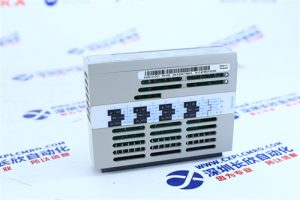
- Redundant Network Resilience: Features dual Profinet IRT ports (Primary/Secondary) and supports “ring” or “line” network topologies with automatic failover (≤100 ms). If the primary network path is disrupted (e.g., cable damage, switch failure), the module seamlessly switches to the secondary path—eliminating single-point communication failures and ensuring 99.999% network availability (critical for 24/7 operations like nuclear power generation or continuous chemical processing).
- Scalable Device Integration: Can manage up to 128 Profinet IRT-enabled devices (distributed I/O racks, drives, sensors) per module, enabling the Symphony Plus DCS to scale across large facilities (e.g., a 2 km-wide refinery) without compromising performance. It also supports ABB’s “Hot Add” feature, allowing new devices to be added to the network without shutting down the DCS—reducing maintenance-related downtime by 60% compared to non-scalable interfaces.
Key advantages also include compliance with IEC 61508 SIL 2 (for communication in safety-related loops) and compatibility with ABB Control Builder M software for intuitive network configuration, device mapping, and fault monitoring. It also supports Profinet CBA (Component-Based Automation) for modular process design, simplifying system expansion and reconfiguration.