Technical Specifications
| Parameter | Value |
|---|---|
| Product Model | 6EP1931-2DC42 |
| Manufacturer | Siemens |
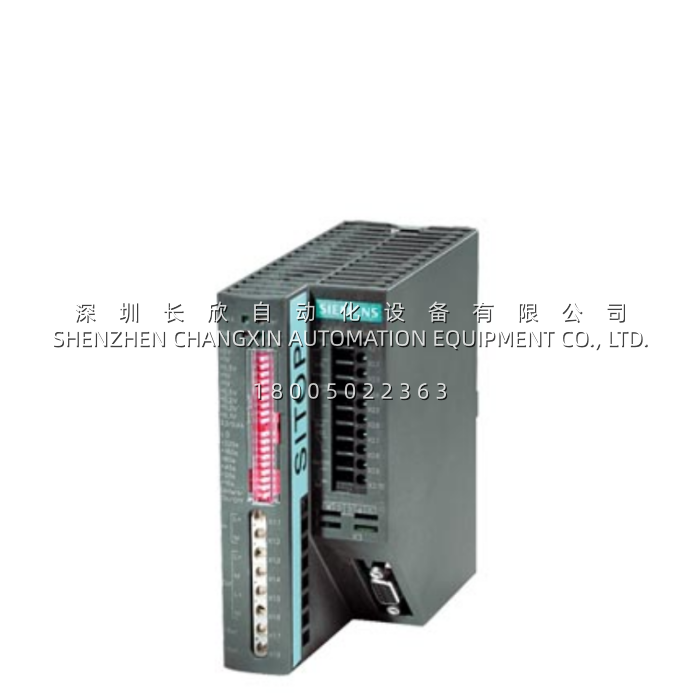
| Product Type | SITOP DC-UPS Module, 24 V DC / 6 A, with USB Interface |
| Input Voltage Range | 22 … 29 V DC |
| Input Current | 6 A rated @ 24 V + ≈0.6 A when battery empty |
| Output Voltage | 24 V DC (normal), 19 … 28.5 V DC (buffering) |
| Output Current | 6 A continuous, 6.3 A peak |
| Rated Power | 144 W |
| Buffer Threshold | Preset 22.5 V, adjustable 22 … 25.5 V in 0.5 V steps |
| Startup Delay | ≈ 1 s |
| Voltage Rise Time (output) | ≈ 60 ms |
| Charging Current | 0.2 A / 0.4 A selectable (factory 0.4 A) |
| Efficiency | ≈ 95 % (mains mode), ≈ 94.5 % (battery mode) |
| Interface | USB 2.0 Full-Speed (12 Mbit/s, self-powered), +5 V from UPS |
| Status Contacts | 3× floating relay: “Bat/OK”, “Alarm/Bat”, “Bat >85 %” (DC 60 V/1 A or AC 30 V/1 A) |
| Protection Class | Class III (no galvanic isolation in/out), IP20 |
| Operating Temperature | –25 … +60 °C (natural convection) |
| Dimensions (W×H×D) | 50 × 125 × 125 mm |
| Weight | ≈ 0.45 kg |
| Approvals | CE, cULus, EAC, ABS, DNV GL |
| MTBF @ 40 °C | 904,159 h |
Main Features and Advantages
USB-enabled remote control for IPC graceful shutdown. The headline feature of the 6EP1931-2DC42 versus the serial-only -2DC31 is the USB 2.0 Full-Speed port that enumerates as an FTDI device (VID_0403 & PID_E0E0, FTD2XX driver). A SIMATIC IPC or any Windows/Linux host can open the COM-style handle and send “R” (Remote Timerstart) when the OS begins shutdown—the 6EP1931-2DC42 arms its DIP-switch timer (Sw-2 through Sw-7 on the lower DIP bank) and, when the timer expires, kills the 24 V DC output so the IPC powers off with file systems already synced. An “S” (Shutdown) command does the same but latches the module off (red Alarm LED on) until the 24 V DC input is interrupted ≥ 1 s—this is the pattern Siemens documents for automated restart cycles where the UPS forces a clean power-off then waits for mains return. The USB also streams 5-character status strings every ~75 ms (±20 %), letting a custom daemon parse “DC_OK”, “BAT”, “BA>85”, “BUFRD”, “ALARM” states without polling relays.
Three floating relay contacts for panel-level alarming. Even without USB, the 6EP1931-2DC42 gives three independently useful dry contacts: “Bat/OK” (NO side closes when input > buffer threshold, i.e., PSU healthy), “Alarm/Bat” (alarm: buffer standby missing, or battery replacement required—red LED flashing ~0.25 Hz when battery EOL detected), and “Bat >85 %” (NO closes when battery charge > 85 % of remaining capacity). These land on a DI card or annunciator panel so the control room knows “UPS is healthy / buffering / battery dead” without opening the cabinet. For marine and offshore panels with ABS/DNV GL oversight, this relay visibility is often contractually required for UPS surveillance.
Adjustable buffer threshold and charge current. The 6EP1931-2DC42 lets the engineer tune the voltage at which buffer kicks in: preset 22.5 V, but adjustable 22–25.5 V in 0.5 V steps via DIP or the USB config tool. On panels where the upstream SITOP PSU is adjusted to 28.8 V (cable-drop compensation) and the 24 V rail sees mild sag under load, raising the buffer threshold to 24.0 V or 24.5 V prevents nuisance buffer entries during normal load swings. The battery charge current is switchable 0.2 A / 0.4 A—0.4 A factory default for faster recovery on larger BAT2500 units, 0.2 A for smaller or longer-life preference. Both adjustments are tool-free on the DIP bank.
High efficiency and low loss in a compact DIN footprint. At 95 % efficiency in normal pass-through mode and 94.5 % on battery, the 6EP1931-2DC42 wastes only ~7 W at full 6 A load, rising to ~8 W on battery. That keeps the 50 mm-wide module cool enough for zero side clearance—it can sit flush against a SITOP PSU, an S7-1500 CPU, or a PSE202U redundancy module without thermal derating, provided top/bottom 50 mm convection gaps are observed. At 0.45 kg the module is light enough that DIN-clip retention isn’t an issue even in vibration-prone machine-mount panels.
Battery-agnostic at the module level, ecosystem-locked at the system level. The 6EP1931-2DC42 itself has no internal cells; it expects a SITOP BAT2500 battery module (2.5 Ah / 7 Ah / 14 Ah sealed lead-acid, maintenance-free, 3–5 year service life) hung on its 24 V battery screw terminals. The module handles charging profile, deep-discharge cut-off, and >85 % / <85 % capacity reporting back to the LED and relay set. This separation means a failed battery is a 2-minute BAT2500 swap, not a UPS-module RMA—important for plants that want spares granularity.
Ruggedized approvals for IPC duty anywhere. Between cULus (UL 508 file E197259), ABS, and DNV GL, the 6EP1931-2DC42 lands on panels that leave the clean factory floor—marine IPC cabinets on tugboats and OSVs, offshore skid PLC/RTU auxiliaries, water-treatment SCADA huts with unreliable mains, and food-line IPC nodes where a mains blip costs a batch. The –25 °C cold-start rating also matters for outdoor telecom/infrastructure IPC enclosures in northern climates.