Technical Specifications
| Parameter | Value |
|---|---|
| Product Model | 6DS1832-8AA |
| Manufacturer | Siemens |
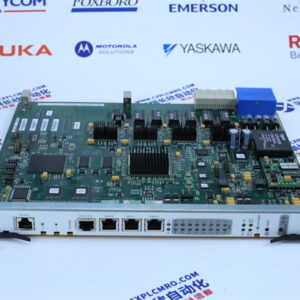
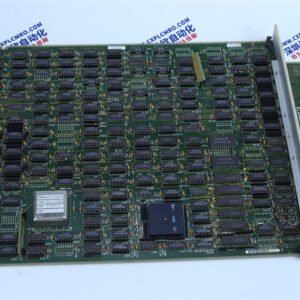
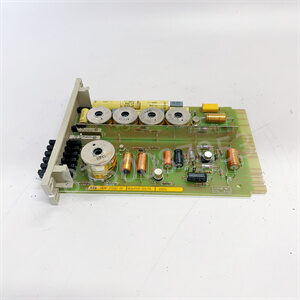
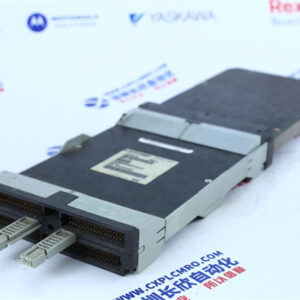
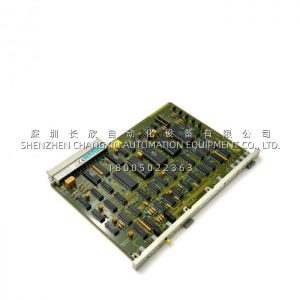
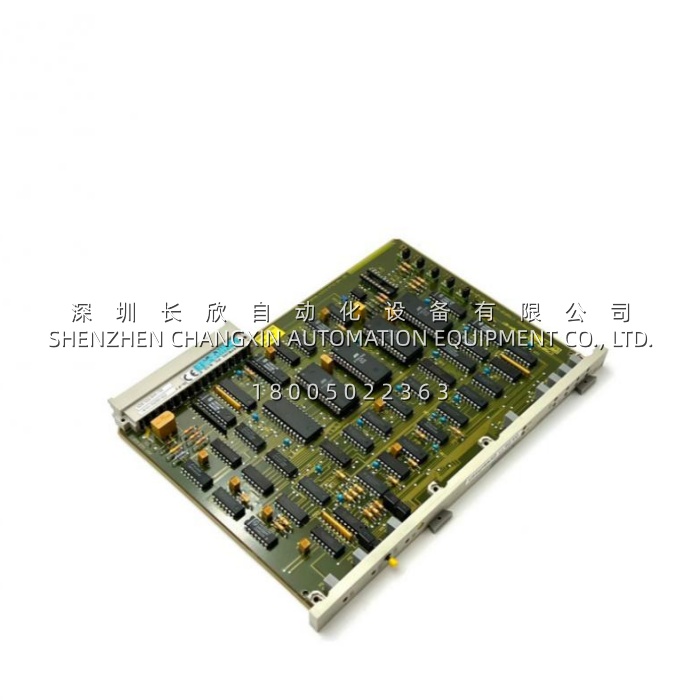
| Product Type | EEPROM Memory Submodule for CPU (Teleperm M/ME) |
| Storage Technology | EEPROM (Electrically Erasable Programmable ROM) |
| Typical Capacity | 128 KB class (firmware/CPU dependent; 64–256 KB range across variants) |
| Supply Voltage | 5 V DC (supplied from CPU module, no external feed) |
| Interface | Parallel, Teleperm CPU proprietary bus |
| Endurance | >100,000 erase/write cycles |
| Data Retention | >10 years (within specified temperature range) |
| Operating Temperature | 0 °C to +60 °C (recommended ≤ 40 °C for max retention) |
| Storage Temperature | –25 °C to +70 °C |
| Humidity | 5 % to 95 % RH, non-condensing |
| Dimensions (H×W×D) | ≈ 25.4 × 20.3 × 2.5 cm |
| Weight | ≈ 0.30 kg |
| Mounting | Plugs into Teleperm M CPU dedicated memory slot (AS220 / AS230 / AS235) |
| Compatibility | Siemens Teleperm M/ME DCS CPUs, 6DS rack ecosystems |
| Protection | IP20 (dependent on CPU/module housing) |
Main Features and Advantages
Battery-free non-volatile integrity. The defining advantage of the 6DS1832-8AA is that it retains user program, PID tuning, and I/O mapping without a lithium backup cell. In plants where a DCS rack may sit powered down for weeks during a turnaround, or where backup-battery discipline has lapsed on decades-old Teleperm M cubicles, an EEPROM submodule eliminates “logic lost after shutdown” scenarios that force emergency re-downloads from archive laptops—often under time pressure and with version-control risk.
Golden-copy disaster recovery. Maintenance teams routinely pull a verified 6DS1832-8AA after a successful commissioning or post-retrofit download, label it as the “golden copy,” and shelve it. If a CPU rack gets hit by a surge event, a corrupted download, or a technician误操作 overwrites live logic, swapping back to the golden submodule restores the last-known-good state in minutes. For plants not yet migrated to PCS 7, this is the cheapest insurance policy in the spare-parts budget.
Deterministic zero-latency read on the Teleperm backplane. Siemens process automation sells on scan-cycle predictability, and the 6DS1832-8AA is tuned to the proprietary CPU–memory bus so that logic fetching and I/O mapping lookups don’t add jitter to the execution window. In AS230/AS235 loops handling turbine protection or FCCU interlock trees, that determinism is why the platform still carries mandate in power and refining.
Robust write endurance and retention for process duty. Rated >100 k cycles and >10 year retention, the 6DS1832-8AA is over-spec for typical Teleperm M duty, where online logic changes are infrequent and most writes happen during planned downloads rather than cyclic execution. The EEPROM cells tolerate the vibration, EMI, and thermal cycling of a control-room environment without the bit-rot that cheaper flash substitutes can show over a 15–20 year DCS lifespan.
Bit-level diagnostics via the Teleperm OS. Although the submodule itself carries no independent LEDs, the CPU propagates EPROM/EEPROM health into the Teleperm diagnostic stack—LOAD/RUN/ERROR states on the CPU front, and bit-level error codes reachable through the engineering station. Maintenance crews can distinguish “submodule not seated,” “checksum mismatch,” and “write failure” without pulling the CPU, which keeps MTTR low during outage windows.
Legacy-platform lifecycle resilience. Siemens Teleperm M/ME has been in “mature/obsolete” status for years, yet thousands of assets still run it because a full PCS 7 or T3000 migration is a seven-figure CAPEX decision. The 6DS1832-8AA is part of the verified-legacy supply chain that lets owners defer that spend—each working submodule extends the economic window of a DCS that still meets its SIL and availability targets.
Application Field
The 6DS1832-8AA is specified wherever a Siemens Teleperm M/ME CPU needs reliable, battery-independent program and parameter storage.
In fossil and combined-cycle power plants running Teleperm M AS230/AS235 application stations, the 6DS1832-8AA holds the AP-program (application program) for balance-of-plant loops—feedwater, combustion control, turbine auxiliaries, and interlock logic trees. During planned outages where racks are depowered for cabinet work, the EEPROM ensures that when 24 V DC returns, the CPU boots straight into validated logic without a laptop reconnect. In several nuclear-support and hydro plants that kept Teleperm M for unit auxiliaries, the 6DS1832-8AA is treated as a controlled spare: every download is mirrored to a spare submodule stored in a static-shielded tube, creating a physical golden copy that survives even a total engineering-station loss.
Chemical and refining complexes—FCCUs, reformer trains, ethylene skids—that staged their DCS migration in phases often run Teleperm M on older process units while PCS 7 covers newer trains. The 6DS1832-8AA here stores PID faceplate tuning, sequence logic (SFC steps), and I/O mapping for legacy marshalling that hasn’t been re-terminated to ET 200M remote I/O yet. In one refinery pattern, the DCS engineer keeps three labeled submodules per CPU: “as-built,” “post-turnaround,” and “hotfix,” all 6DS1832-8AA units, so any rollback is a physical swap rather than a version-archive hunt.
For system integrators doing Teleperm M life-extension projects, the 6DS1832-8AA also appears in spare-parts bills alongside 6DS power supplies, 6DS1618 binary input cards, and AS230 CPUs. Because the submodule is CPU-slotted rather than rack-slotted, a failed 6DS1832-8AA can be swapped without disturbing adjacent I/O wiring—a meaningful advantage during a running-plant intervention where only a narrow maintenance window exists.
Brownfield migration staging is another use case: as plants cut over rack-by-rack to PCS 7 or T3000, the 6DS1832-8AA stays in the “keep-alive” Teleperm racks that haven’t been retired yet, preserving the ability to make small logic tweaks on the old platform while the new one ramps up. Having tested 6DS1832-8AA stock on hand prevents a single-submodule failure from forcing an accelerated cutover.