Application Scenarios
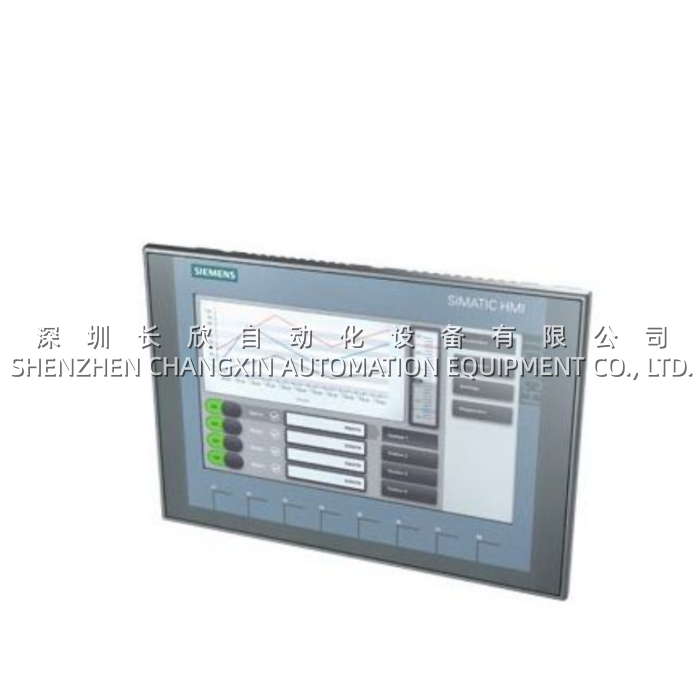
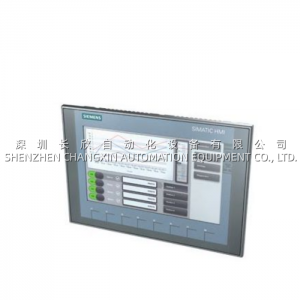
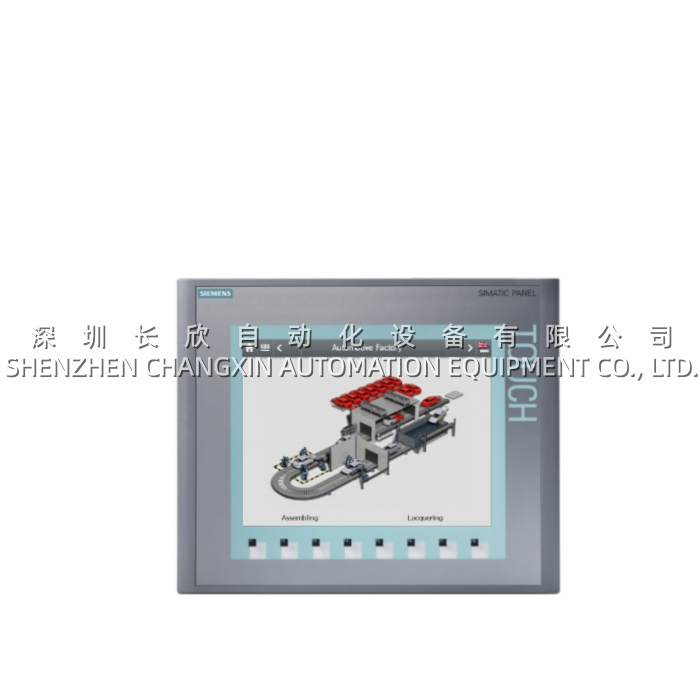
A snack-food packaging OEM in Dongguan, China, builds ~120 vertical-form-fill-seal (VFFS) machines annually, each controlled by an S7-200 SMART CPU and historically shipped with a 2-line text display for setpoints and fault codes. Customers—county-level biscuit factories and frozen-dumpling workshops—kept calling the OEM because “error 003” on the text panel told them nothing about which photo-eye or sealing-bar thermocouple had drifted, and the OEM’s service engineer had to travel 600 km to plug in a laptop each time. The OEM switched the standard HMI to the 6AV6648-0AE11-3AX0 SMART 1000: the 10.2″ widescreen now shows real-time bag-length trend, sealing-temperature 4-channel strip chart, and categorized alarm history (200 alarms / 32 levels) with plain-text Chinese/English descriptions. The PPI link to the S7-200 SMART needed no extra gateway—just the existing RS485 daisy-chain. Result: field service calls dropped 38 % in the first year, and the OEM stopped carrying laptops on routine commissioning trips. The 6AV6648-0AE11-3AX0 didn’t need Ethernet, didn’t need TIA Portal licenses, and didn’t need IT department approval at the end-user site—it just worked, which is exactly why thousands of China-built OEM machines still specify it today.
Parameter
| Main Parameters | Value / Description |
|---|---|
| Product Model | 6AV6648-0AE11-3AX0 |
| Manufacturer | Siemens (SIMATIC HMI, SMART Panel series) |
| Product Category | Touch Panel (SMART 1000) |
| Display | 10.2″ widescreen TFT, 256 colors |
| Resolution | 800 × 480 px (16:9) |
| Backlight | LED, ~40,000 h MTBF @ 25 °C |
| Touch Type | 4-wire resistive (analog) |
| Processor / Memory | ARM 400 MHz / 64 MB DDR SDRAM + 8 MB Flash |
| User Data Memory | 1,024 KB |
| Tags / Screens / Alarms | 500 tags / 50 screens / 200 alarms (32 categories) |
| Interface | 1 × RS422/485, PPI up to 187.5 kbit/s |
| Supply Voltage | 24 V DC (19.2 … 28.8 V), typ. 0.14 A / 3.4 W |
| Protection | IP65 front / IP20 rear |
| Operating Temp. | 0 … +50 °C (vertical mount) |
| Cutout / Bezel (W×H) | 259 × 201 mm / 288 × 222 mm |
| Config. Software | WinCC Flexible 2008 China SP2 + HSP |
| Lifecycle | PM500 Discontinued (Oct 1, 2014, no replacement) |
Technical Principles and Innovative Values
- Innovation Point 1: China-Localized “Right-Sized” HMI for S7-200. The 6AV6648-0AE11-3AX0 was co-developed by Siemens Nanjing for the China OEM market—meaning it speaks PPI natively to S7-200 / S7-200 SMART without a DP coupler or Ethernet switch, and the WinCC Flexible 2008 China HSP adds S7-200 SMART-specific address helpers (V-memory, M-bit, AIW/AQW drag-drop). For the thousands of machines exported from China to Southeast Asia, Africa, and Latin America, this “no-IT-infrastructure” design is a feature, not a limitation.
- Innovation Point 2: Built-In Multilingual + Dictionary. The 6AV6648-0AE11-3AX0 supports 32 project languages with 5 switchable online—and uniquely includes a system dictionary + user dictionary with auto-translate import/export. For OEMs shipping the same VFFS or blow-molding machine to 12 countries, this avoids maintaining 12 separate project files; one
.hmiserves all markets. - Innovation Point 3: Pack & Go Field Maintenance. Through WinCC Flexible’s “Pack & Go” function, the 6AV6648-0AE11-3AX0 project can be updated remotely—the OEM emails a packed file, the end user drops it on a USB stick (via a PC, then transferred to the panel over RS485 using the WinCC Flexible OS update utility). No TIA Portal license, no engineering station on-site. In markets where the “plant engineer” is actually a mechanic with a multimeter, this matters.
Application Cases and Industry Value
Case 1 – PET Preform Blow Molding (Zhejiang, 2016–2023). A blow-molding OEM standardized the 6AV6648-0AE11-3AX0 across its 4-cavity and 6-cavity rotary machines mated to S7-200 SMART CPU SR60. The HMI displays heater-zone temperatures (16 zones), oven-follow cam position, and blow-pressure curve on a single 10.2″ screen. With 5 online-switchable languages (Chinese/English/Spanish/Portuguese/Arabic), the same machine SKU ships to 18 countries. Seven years on, the OEM still buys tested-pulled 6AV6648-0AE11-3AX0 units as spares because migrating to KTP1000 would require re-cutting the door (different cutout), adding an Ethernet switch to machines that sit in rural bottling plants with no network, and retraining 40+ service techs on TIA Portal. The “discontinued” status hasn’t hurt them—they just keep a 20-unit spare bank and rotate.
Case 2 – Textile Cone Winding (Tamil Nadu, 2019). A winding-machine builder paired the 6AV6648-0AE11-3AX0 with an S7-200 driving 12 spindle inverters over Modbus RTU on the RS485 port (yes, the same port does PPI to the S7-200 and Modbus to drives—time-sliced). The 10.2″ screen shows spindle-speed trend per lane and yarn-break alarm history. The OEM chose the SMART 1000 over a KTP because the KTP’s Profinet-native design would have forced a CM1241 comm module on the S7-200 .