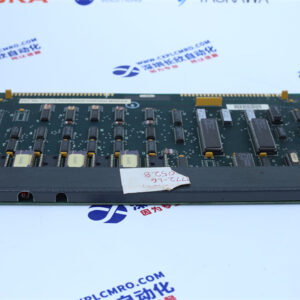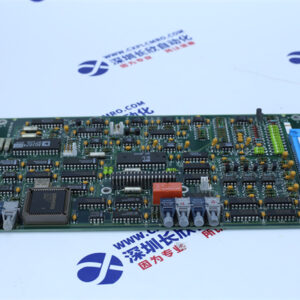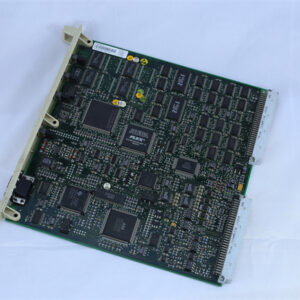
Application Scenarios
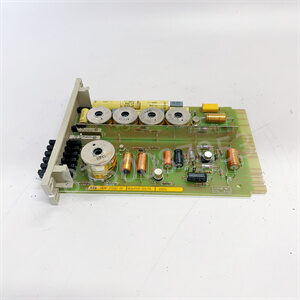
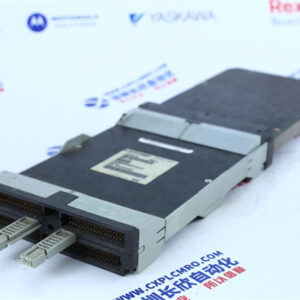
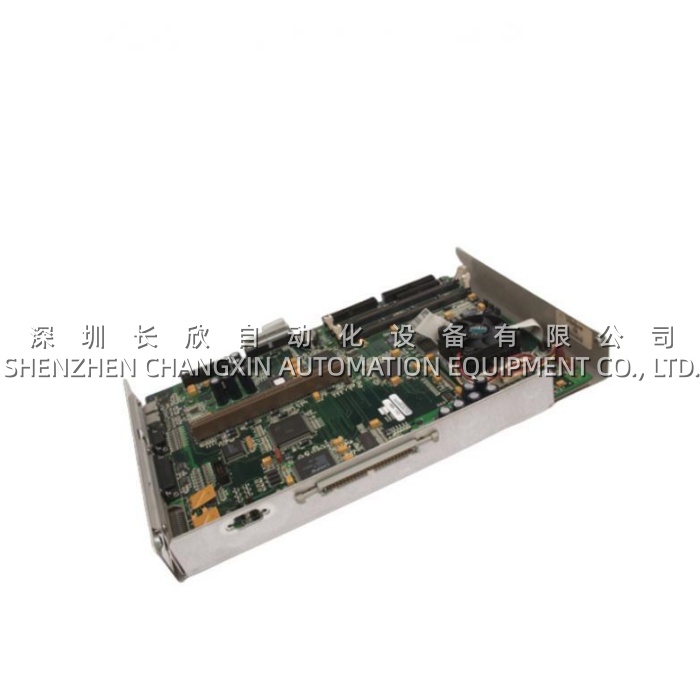
In an automotive stamping plant in the Midwest United States, a 15-year-old SIMATIC IPC panel running the plant’s press control HMI began exhibiting random blue-screen crashes during the night shift—typically three to four times per week. Each crash caused the press line to halt, requiring a 45-minute reboot and recovery process that cost the plant over $10,000 in lost production per incident. After extensive diagnostics, the maintenance team traced the issue to a failing Siemens 3-424-2283A02 motherboard with degraded capacitors on the CPU power regulation circuit. Replacing the aged board with a tested Siemens 3-424-2283A02 restored system stability immediately. The plant has since operated for six months without a single unplanned reboot, and the controls engineer noted, “We learned the hard way that industrial PCs need industrial boards—commercial replacements just don’t survive the vibration and heat of a stamping plant.”
This case illustrates the Siemens 3-424-2283A02‘s essential role in maintaining plant visibility and control. In chemical plants, power stations, water treatment facilities, and food processing lines, this board ensures that operator displays, alarm systems, and data logging functions remain online continuously. Its built-in watchdog timer automatically resets the system if the software hangs, while the wide input voltage range (12-24 VDC) protects against brownouts that would trip standard PC power supplies . By addressing the core pain points of PC-based control—unreliability, short product lifecycles, and poor environmental tolerance—the Siemens 3-424-2283A02 provides the foundation for true industrial digitalization.
Parameters
| Main Parameters | Value/Description |
|---|---|
| Product Model | Siemens 3-424-2283A02 (also cataloged as 3-424-2283A02PC) |
| Manufacturer | Siemens AG (SIMATIC IPC Division) |
| Product Category | Industrial Embedded Motherboard / CPU Board |
| Processor | Intel Celeron J1900 / Core i3 / i5 / i7 (configuration-dependent) |
| Memory Support | DDR3L SO-DIMM, up to 16 GB |
| Communication Interfaces | 2× Gigabit Ethernet (RJ45), 2-4× RS-232/485 (configurable), USB, Parallel (25-pin EPP/ECP), Serial (9-pin 16550-compatible) |
| Storage Interfaces | 1× mSATA, 1× 2.5″ SATA (or M.2 SATA) |
| Video Output | DisplayPort + DVI-I (or HDMI, variant dependent) |
| Supply Voltage | 12-24 VDC, with reverse polarity protection |
| Operating Temperature | 0°C to +50°C (standard) / -25°C to +70°C (industrial variant) |
| Protection Features | Watchdog Timer, TPM 2.0 (Trusted Platform Module, optional), power failure auto-restart |
| Dimensions (approx.) | 35 cm × 23 cm × 3.6 cm / 250 mm × 200 mm × 50 mm (variant dependent) |
| Bus Interface | SMP16 Bus (96-pin per DIN 41694), EIDE/UDMA33, I/CPCI expansion |
Technical Principles and Innovative Values
Innovation Point 1: Industrial Validation from BIOS to Application Layer
Unlike commercial motherboards that use off-the-shelf components, the Siemens 3-424-2283A02 undergoes comprehensive validation at the firmware level. The BIOS includes custom extensions for watchdog timer configuration, power failure recovery policies, and diagnostic telemetry. This means that when the system is deployed, it doesn’t just run Windows or Linux—it runs with Siemens-specific hardware health monitoring through the SIMATIC IPC DiagBase tool, enabling remote hardware status checks without requiring physical access to the plant floor .
Innovation Point 2: Protocol-Agnostic Connectivity for Legacy and Modern Systems
The Siemens 3-424-2283A02 features an exceptionally rich I/O portfolio: dual Ethernet ports, multiple RS-232/485 serial ports with hardware flow control, USB, and legacy parallel interfaces. This allows a single board to simultaneously connect to modern PROFINET networks (via the dual Ethernet ports with MRP redundancy support), legacy Modbus RTU devices over RS-485, and even older printers or data loggers over the parallel port . In brownfield plant upgrades, this eliminates the need for additional protocol converters or gateway devices.
Innovation Point 3: Long-Term Availability Commitment
Siemens guarantees critical component availability for the Siemens 3-424-2283A02 for up to 10 years after product discontinuation, recognizing that industrial production lines often have lifecycles of 15 years or more. This long-term support ensures that plant operators can procure replacement boards for aging panels without being forced into a costly full-system migration, providing a clear total-cost-of-ownership advantage over commercial-grade alternatives .
Innovation Point 4: OT-Centric Security Architecture
Select variants of the Siemens 3-424-2283A02 include an onboard TPM 2.0 security chip, enabling secure boot, hardware-based encryption, and identity validation for connected devices. This addresses the growing cybersecurity requirements in critical infrastructure—from power utilities to pharmaceutical manufacturing—where unauthorized firmware or OS modifications could compromise safety or product quality .