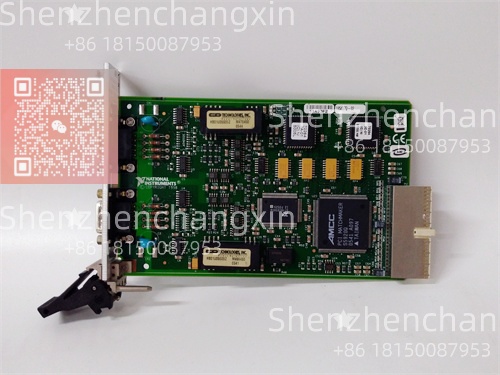
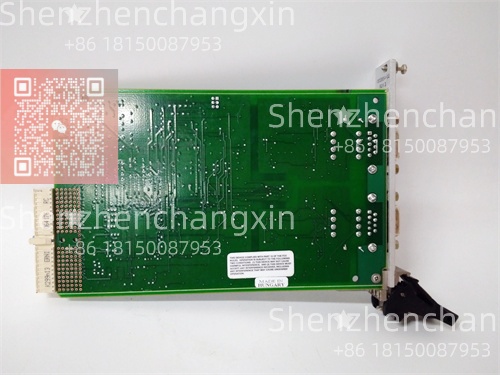
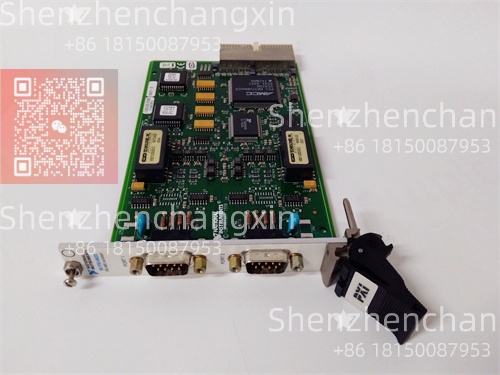
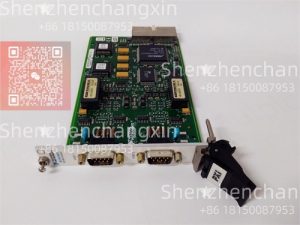
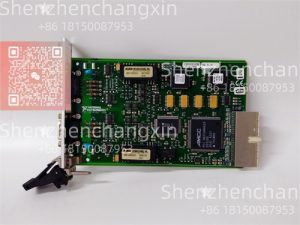
Application Scenarios:
In an automotive component validation test cell, a PXI-based test system must communicate reliably with over a dozen different devices: programmable load banks, environmental chamber controllers, digital multimeters, and custom sensor nodes, all using RS-485 interfaces. Electrical noise from high-power actuators and long cable runs pose a significant challenge. By integrating the NI PXI-8423 module, engineers create a stable communication backbone. The module’s 2500 Vrms channel-to-bus isolation protects the sensitive PXI controller from ground loops and voltage transients common in such environments. Its ability to handle data rates up to 3 Mbaud allows for rapid data collection from multiple devices on a single, daisy-chained network, streamlining the test sequence. This setup replaces a cumbersome collection of individual USB/Serial adapters, solving key pain points of reliability, synchronization, and system integration, thereby accelerating test cycles and improving data integrity.
Technical Principles and Innovative Values:
Innovation Point 1: Robust Multi-Port Isolation. Unlike basic serial cards, the NI PXI-8423 incorporates 2500 Vrms of isolation on every port, both from the PXI backplane and from each other. This is a critical innovation for industrial and test environments. It eliminates ground loops that cause data corruption, protects the central PXI controller from damaging voltage spikes originating from field wiring or machinery, and allows communication with devices at different ground potentials, ensuring network stability and hardware safety.
Innovation Point 2: High-Density, High-Speed Architecture. The module condenses eight fully isolated serial ports into a single PXI slot. Each port is driven by a dedicated ASIC with deep 128-byte FIFO buffers. This architecture prevents data loss during high-throughput communication or when the PXI host processor is busy handling other tasks. The ability to achieve a combined data rate of up to 3 Mbaud makes it suitable for demanding applications involving fast, multi-point data logging or control.
Innovation Point 3: Seamless Software Integration & Advanced Control. The PXI-8423 is not just a hardware component; it is fully integrated into NI’s software ecosystem. It uses the industry-standard NI-VISA driver layer, ensuring compatibility across NI’s application software like LabVIEW and LabWindows/CVI, as well as third-party environments. Software can programmatically configure each port for RS-485 or RS-422 mode, control transceiver direction for half-duplex RS-485 networks, and access advanced diagnostics, dramatically simplifying system configuration and control logic development.
Application Cases and Industry Value:
A renewable energy systems manufacturer needed to perform end-of-line functional testing on their commercial solar inverters. Each test involved communicating with the inverter’s internal controller (via RS-485) to set parameters, read status, and log performance data, while simultaneously controlling a grid simulator. Their old system used a mix of USB-to-serial converters, which were prone to disconnections, driver conflicts, and synchronization issues, slowing down production. They deployed a PXI test chassis with an NI PXI-8423 module as the communication hub. One port connected to the inverter, while others controlled peripheral equipment. The robust isolation eliminated communication dropouts caused by inverter switching noise. Using LabVIEW, they created a unified, synchronized test sequence. The result was a 40% reduction in test time per unit and the virtual elimination of communication-related test failures. The production manager noted, “The reliability of the PXI-8423 turned a constant troubleshooting headache into a non-issue. Our test line throughput and first-pass yield improved significantly.” This demonstrates the module’s value in boosting manufacturing efficiency, improving data reliability, and reducing test system maintenance.
Related Product Combination Solutions:
NI PXIe-8880 Controller: A high-performance PXI Express embedded controller. The PXI-8423 installs into this chassis, and the controller runs the test/control software, executing communication commands sent to the module.
NI PXI-6259 Multifunction DAQ Card: A high-density analog and digital I/O card. In a complete test system, the PXI-8423 handles serial communication, while a card like the PXI-6259 acquires analog sensor voltages and digital signals, providing a comprehensive data acquisition and control solution.
NI SCB-68A Shielded Connector Block: A terminal block used with the PXI-8423. The module’s VHDCI connectors attach to cables that terminate on a shielded block like the SCB-68A, providing robust, screw-terminal connections for field wiring to RS-485 devices.
NI PXI-2564 Relay Module: A high-voltage switching module. In a system controlling multiple devices, the PXI-8423 communicates with instruments, while the PXI-2564 routes signals between the PXI system and the unit under test.
NI PCI-8422: The PCI bus equivalent of the PXI-8423. It offers the same 8-port, isolated RS-485/422 functionality for desktop or industrial PC-based systems, providing a solution for different form factors.
NI PXI-8433/8: An 8-port RS-232 isolated interface module. It complements the PXI-8423; where the 8423 is used for robust, multi-drop industrial networks (RS-485), the 8433/8 is used for point-to-point connections to legacy instruments with RS-232.
LabVIEW Professional Development System: The primary software environment for configuring, programming, and debugging systems that use the PXI-8423. leveraging its NI-VISA drivers for maximum productivity.
Installation, Maintenance, and Full-Cycle Support:
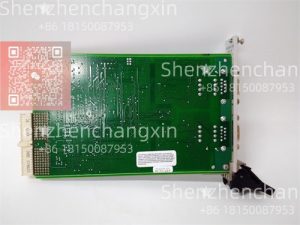
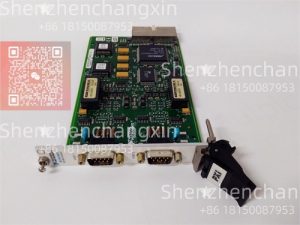
Installation of the NI PXI-8423 is straightforward for PXI systems. Power down the chassis, insert the module into any available peripheral slot, and secure it with the mounting screw. The primary consideration is cabling: the two 68-pin VHDCI ports require appropriate shielded cables (like NI SHC68-68-EPM) that connect to terminal blocks (e.g., SCB-68A) for field wiring. Proper grounding of the terminal block shield is crucial for noise immunity. Configuration is software-driven; upon power-up, the module is automatically detected by NI Measurement & Automation Explorer (MAX), where it can be assigned a logical VISA resource name for use in application software.
Maintenance is minimal due to the solid-state design. The most common points of failure are external: cabling and connectors. The integrated ±15 kV ESD protection safeguards the ports from typical handling discharges. If a module fails, it is a simple slot replacement procedure. National Instruments provides long-term driver support for its hardware. We supply fully tested and verified NI PXI-8423 modules. Our technical support can assist with driver compatibility verification for your operating system and application software, ensuring seamless integration into your existing PXI or CompactPCI test, measurement, or control system.
Contact us for your NI PXI-8423 requirements and for expert support in integrating robust serial communication into your automated systems.