-1.jpg)
-1-300x300.jpg)
-1-300x300.jpg)
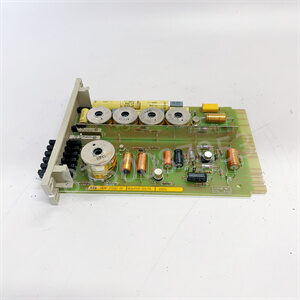
-1.jpg "MITSUBISHI BN624A96IG52A Mitsubishi spindle driver PCB")
Application Scenarios:
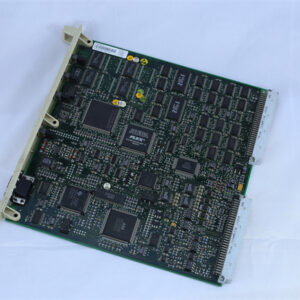
In a high-precision automotive parts machining center, maintaining consistent spindle speed under varying cutting loads is crucial for surface finish quality and tool life. The existing spindle drive control board began exhibiting intermittent faults, causing the spindle to occasionally “cog” or lose synchronization during heavy milling operations, leading to scrapped parts and downtime. The maintenance team replaced the faulty control card with a new MITSUBISHI BN624A96IG52A (SF-CA) board. After installation and parameter tuning, the spindle’s speed regulation became exceptionally stable. During a subsequent production run involving a difficult-to-machine alloy, the spindle maintained its commanded RPM within a 0.05% tolerance despite significant load variations, resulting in a perfect surface finish and eliminating part rejection. The plant engineer noted that the BN624A96IG52A “restored the machine’s precision and reliability, directly addressing our core issue of unstable spindle control under load” .
Technical Principles and Innovative Values:
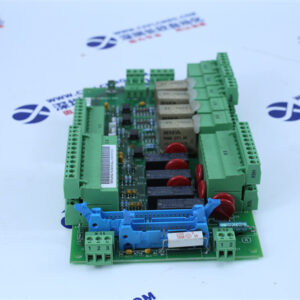
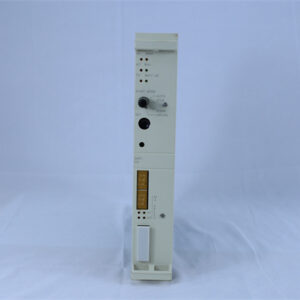
The MITSUBISHI BN624A96IG52A delivers its performance through a sophisticated integration of real-time processing, robust power electronics interfacing, and adaptive control algorithms tailored for demanding spindle applications.
Innovation Point 1: High-Performance Motion Control Engine. The board incorporates a dedicated digital signal processor (DSP) or a high-speed microcontroller that runs Mitsubishi’s proprietary spindle control firmware. This engine calculates precise pulse-width modulation (PWM) patterns for the inverter’s insulated-gate bipolar transistors (IGBTs) in real-time, enabling features like smooth acceleration/deceleration (S-curve), constant surface speed control for lathes, and rigid tapping synchronization with the machine’s axis drives.
Innovation Point 2: Advanced Sensor Fusion and Diagnostics. The board processes multiple feedback signals simultaneously, typically from a high-resolution encoder or resolver mounted on the spindle motor. It fuses this data with current sensors from the power stage to implement vector control or direct torque control (DTC) algorithms for superior low-speed torque and dynamic response. Furthermore, it continuously monitors system health—checking for overloads, overheating, encoder faults, and ground leaks—providing detailed alarm codes to the operator for rapid troubleshooting .
Innovation Point 3: Seamless System Integration Architecture. The SF-CA board is designed as part of Mitsubishi’s integrated automation ecosystem. It communicates seamlessly with higher-level CNC controllers (like Mitsubishi Meldas or other brands via standard interfaces) and can be networked with servo drives for synchronized multi-axis motion. This integration simplifies system wiring, parameter setup, and centralized diagnostics, reducing machine commissioning time and complexity.
Application Cases and Industry Value:
A major aerospace subcontractor specializing in machining titanium components for aircraft landing gears faced a critical challenge. Their legacy spindle drives could not maintain the ultra-low speeds required for precise boring operations without vibration and torque ripple, compromising hole quality. Upgrading entire drives was cost-prohibitive.
The solution involved retrofitting the spindle drives in two key machining centers with the latest MITSUBISHI BN624A96IG52A control boards, while retaining the existing power modules and motors. The new board’s enhanced control algorithms, particularly its advanced current regulation and vibration suppression functions, were activated. During the qualification test, the spindle achieved buttery-smooth rotation at 50 RPM, a speed previously unusable. The bore quality improved dramatically, reducing subsequent honing time by 70%. The engineering manager stated, “This board upgrade was a fraction of the cost of a new drive system and gave us the precision we needed for our most critical operations, extending the life of our capital equipment.” This case highlights the board’s value as a cost-effective performance upgrade path .
Related Product Combination Solutions:
The BN624A96IG52A is a central component within a Mitsubishi spindle drive system. A typical configuration includes:
FR-SF Series Spindle Drive Unit: The complete drive package (e.g., FR-SF-2-11KP-C) which houses the SF-CA control board, power supply, and IGBT power module .
Spindle Motor: A matched Mitsubishi or compatible AC spindle motor (e.g., SJ-V series) with a built-in feedback device.
CNC Controller: Such as a Mitsubishi Meldas M700 series or a third-party CNC that supports the appropriate spindle interface (analog voltage, digital serial, or fieldbus like Mitsubishi’s own or PROFIBUS).
Feedback Cable & Connector Kit: High-noise-immunity cable for connecting the motor’s encoder/resolver to the SF-CA board’s feedback input.
Configuration/Programming Software: Mitsubishi’s FR Configurator or similar tools used to set drive parameters, perform tuning, and monitor performance when connected to the board’s service port.
Optional Daughterboards: Boards like the SF-DA that can be paired with the SF-CA to add specific I/O functions or communication protocols .
Installation, Maintenance, and Full-Cycle Support:
Installation of the MITSUBISHI BN624A96IG52A is a specialized task that should be performed by qualified technicians familiar with industrial drives. The procedure involves safely disconnecting all power to the drive unit, discharging any stored high-voltage DC in the capacitor bank, carefully removing the old control board from its slot, and inserting the new board, ensuring all connectors are fully seated. Critical Note: Before powering on, the drive’s parameters must be properly configured. This typically involves backing up the parameters from the old drive (if possible) or loading a known-good parameter set for the specific machine and motor combination using the configuration software.
Routine maintenance is primarily preventive and involves ensuring the drive cabinet’s cooling system is clean and functional to prevent the board from overheating. The board itself has no user-serviceable parts. Diagnostics are performed via the drive’s digital operator or connected software, which can display real-time data, alarms, and error histories.
If a board fails, replacement is the standard procedure. Mitsubishi and its authorized distributors provide support for these components. While the FR-SF series may be a mature product line, critical spare parts like the BN624A96IG52A often remain available for many years to support the long lifecycle of industrial machinery. Third-party repair services also exist that can test and recondition faulty boards. When sourcing a replacement, it is crucial to