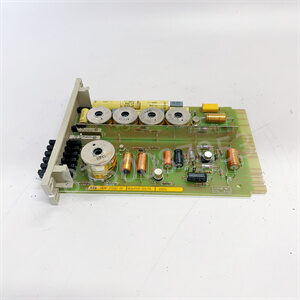
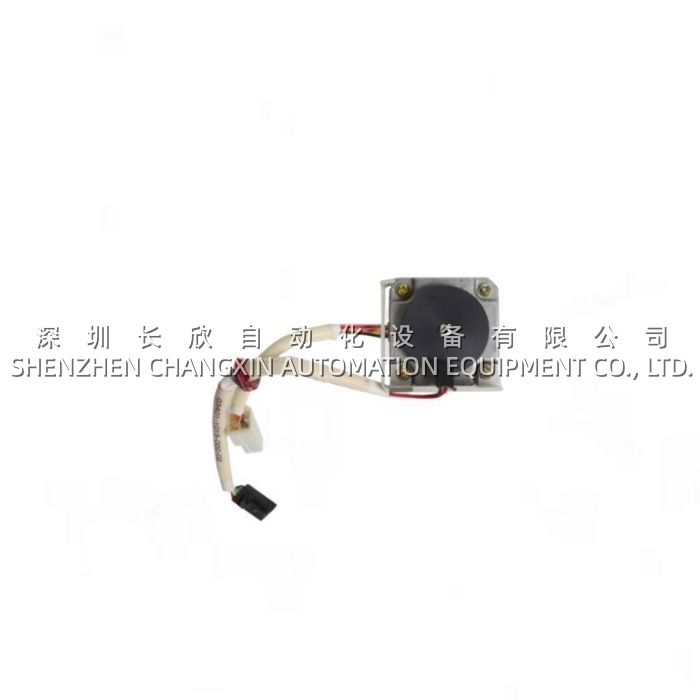
Technical Specifications
| Parameter Name | Parameter Value |
|---|---|
| Product Model | 2H17SH-KS02 |
| Manufacturer | K&S Motion Technology (K&S Electric) |
| Product Type | Two-Phase Hybrid Stepping Motor |
| Frame Size | NEMA 17 (42 × 42 mm flange) |
| Step Angle | 1.8° (200 steps/rev full-step; supports 1/16–1/256 microstepping) |
| Phase Current | 1.5–1.7 A / phase (rated) |
| Holding Torque | 0.45 N·m (≈4.5 kg·cm) |
| Winding Resistance | 16 Ω / phase |
| Winding Inductance | 8 mH / phase |
| Rotor Inertia | ≈54 g·cm² |
| Body Length | ≈40 mm |
| Shaft Diameter / Length | 5 mm / 20 mm effective (optional flat key) |
| Leads | 4-wire (A+, A−, B+, B−) |
| Bearing | Double ball bearing, ≥20.000 hr life |
| Insulation Class | Class B (130 °C), temperature rise ≤80 K |
| Protection | IP40 (cabinet/dust-free; IP54 optional sealing) |
| Operating Temperature | -20 °C to +85 °C (no condensation) |
| Weight | ≈0.25 kg |
Main Features and Advantages
Hybrid construction = torque density + low-speed stability. The 2H17SH-KS02 combines permanent-magnet and variable-reluctance stepping principles, giving it higher holding torque per frame size than a pure PM stepper and better damping than a pure VR type. The result: on a lab syringe pump or a desktop CNC Z-axis where the motor dwells at low step rates for long periods, the 2H17SH-KS02 doesn’t develop the auditable “growl” and mid-band instability that cheap PM steppers exhibit below 200 RPM. Paired with a 1/32 or 1/256 microstepping driver, motion stays silent enough for office-adjacent or medical-lab environments.
Winding tuned for 24 V chopper drivers. At 16 Ω / 8 mH, the 2H17SH-KS02 is a natural match for the ubiquitous DM542. TB6600. or TMC2209 driver ecosystem running on 24 V DC rails. The inductance is low enough that the driver’s chopping current recovers quickly between steps, so the torque curve stays flat out to 1000 RPM — beyond that the 1800 RPM no-load ceiling is reachable, but K&S recommends ≤1000 RPM under microstepping to preserve usable torque. This tuning means the 2H17SH-KS02 doesn’t need a 48 V rail “just to feel strong,” keeping the PSU BOM lean on cost-sensitive machines.
Double ball bearings vs. porous oil bushings. Many NEMA 17 steppers in the same price tier use sintered oil-impregnated bushings to save $0.80. The 2H17SH-KS02 uses double ball bearings rated 20.000+ hours at nameplate speed. On a 24/7 syringe-pump skid or a pick-and-place gantry doing millions of start-stop cycles, that bearing choice is the difference between “still running at year three” and “replace at month eight.” The shaft also takes side thrust better — useful when the motor couples directly to a small lead screw without a flexible coupling.
NEMA 17 standard = zero-adaptor replacement. The 42 mm flange, 31.75 mm (1.25″) pilot diameter, and 5 mm shaft all follow NEMA 17. so the 2H17SH-KS02 drops into mounts originally cut for MOONS’ MS17HA, Sanyo Denki 103H, Shinano Kenshi ST, or Applied Motion 17HD. For labs and machine shops running mixed-vendor spares, standardizing on the 2H17SH-KS02 simplifies the shelf — the only thing to watch is body length (40 mm here; some NEMA 17s run 34 mm or 48 mm, which changes coupling clearance).
Open-loop by default, closed-loop ready. The 2H17SH-KS02 runs open-loop natively, but the rear of the housing accepts a standard NEMA 17 encoder bracket (1000/2000-line incremental) if the application needs closed-loop “step-loss recovery” — useful on belt-driven gantries where a slipped tooth could wreck a batch. K&S and universal stepper drivers both support this topology without custom machining.
Application Field
The 2H17SH-KS02 clusters in applications where NEMA 17 is the right torque/size trade-off: enough to move a small ball-screw or timing-belt axis, small enough to fit inside a compact actuator head or desktop enclosure.
Desktop and benchtop CNC is the highest-volume use: 3018-class routers,小型雕铣机, PCB drilling rigs, and laser-engraver Y/Z axes routinely use the 2H17SH-KS02 because 0.45 N·m is enough to drive a 1605 ball screw on a 300 mm travel axis without gear reduction. The low inductance lets the shop run 24 V DC from a repurposed ATX PSU and still get clean rapids. Retrofit crews swapping out worn MOONS’ or Sanyo Denki NEMA 17s on 5–10 year old machines often land on the 2H17SH-KS02 as the cost-effective replacement that doesn’t require new mounting plates.
Laboratory automation and medical devices represent the second big slice. Syringe pumps, microtiter-plate stages, pipetting gantries, and optical-alignment stages all need the quiet, low-vibration motion the 2H17SH-KS02 delivers under 1/128+ microstepping — the hybrid damping plus ball bearings keeps audible noise below the threshold that matters in a lab environment. The -20 to +85 °C range also covers refrigerated sample compartments and incubator-adjacent stages.
Semiconductor and SMT peripheral equipment — small component handlers, tape-and-reel infeed stages, vision-system X/Y nests — use the 2H17SH-KS02 where a servo would be overkill but a DC gearmotor lacks positioning repeatability. The 1.8° step angle with microstepping gets repeatability into the ±0.03 mm band on a 5 mm-pitch belt, sufficient for many secondary-assembly tasks.
3D printer Z-axis and extruder upgrades are a steady aftermarket use: the 2H17SH-KS02 replaces stock PM steppers on I3-style printers where the Z axis has developed layer-shift from low holding torque. The 4.5 kg·cm hold torque is 2–3× what most stock PM Z motors carry, and the hybrid construction eliminates the “Z-binding buzz” on dual-lead-screw I3 frames.
Brownfield replacement rounds out the list: plants with mixed stepper brands (K&S, MOONS’, Sanyo Denki, Applied Motion) on legacy packaging lines or cartoners can standardize on the 2H17SH-KS02 as a universal NEMA 17 spare, since the flange, shaft, and lead pattern are NEMA-standard — only body length and current need a quick check against the original BOM.