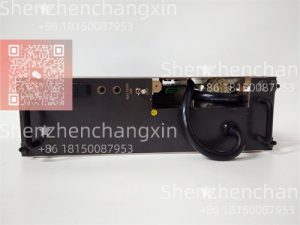
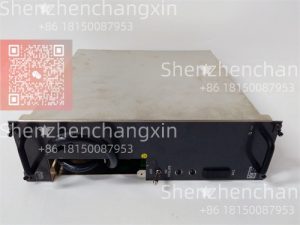
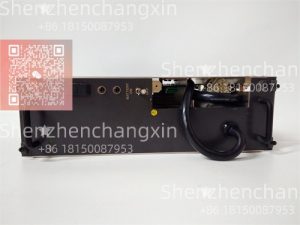
Application Scenarios:
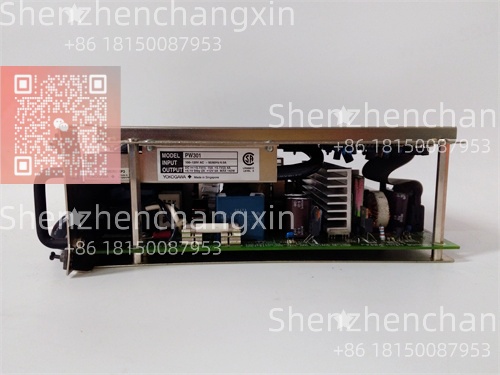
In a continuous petrochemical cracking plant, the stability of the Distributed Control System (DCS) is non-negotiable. Field Control Stations (FCS) managing reactor temperatures and pressures rely on clean, continuous DC power. A fluctuation or failure in this power could cause I/O cards to reset, leading to process upsets or even safety shutdowns. The plant utilizes redundant YOKOGAWA PW301 modules configured in a parallel, load-sharing arrangement within the control cabinet. When a minor voltage sag occurs on the main AC line due to a grid disturbance, the PW301 modules’ tight regulation maintains a perfect 24V DC output. Their built-in diagnostics alert maintenance to a gradual rise in operating temperature on one unit, allowing for a planned hot-swap during a minor outage, thus directly preventing an unplanned full plant shutdown and addressing the core pain point of power-related system instability.
Technical Principles and Innovative Values:
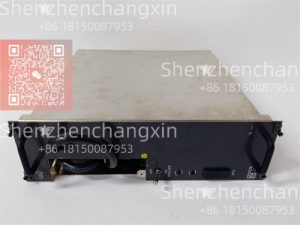
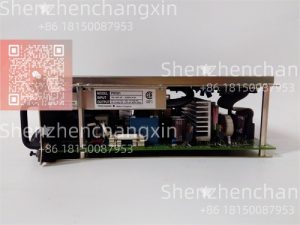
Innovation Point 1: Precision Regulation for Sensitive Electronics. The YOKOGAWA PW301 employs advanced switching power supply topology with high-frequency conversion and multi-stage filtering. This design yields exceptionally low output noise and ripple, which is critical for powering sensitive analog I/O modules and processor cards. Clean power translates to measurement accuracy and stable control output, directly impacting process quality and safety.
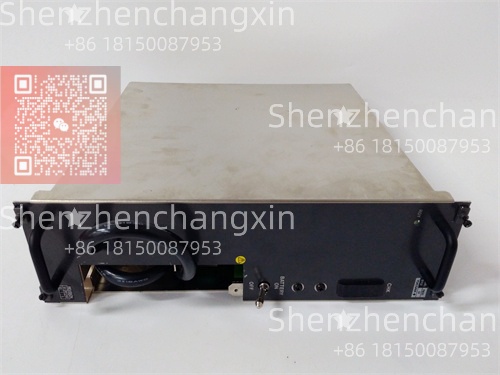
Innovation Point 2: Robust Design for Industrial Longevity. Engineered for 24/7 operation in harsh environments, the PW301 features a fanless, convection-cooled design. This eliminates a common point of failure—the cooling fan—and prevents dust ingress. Combined with high-grade components rated for extended temperature ranges and built-in protections (overcurrent, overvoltage, thermal), it achieves a high MTBF (Mean Time Between Failures), a crucial metric for control system power infrastructure.
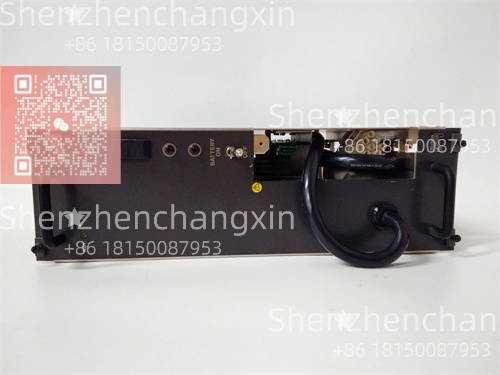
Innovation Point 3: Seamless Integration for Redundancy and Diagnostics. The module is designed for easy integration into Yokogawa’s system architecture. It supports simple parallel wiring for redundant power schemes, ensuring no single point of failure. Its status output contacts and LED indicators provide clear local and remote diagnostic information, enabling predictive maintenance and swift fault identification without needing to dismantle the control cabinet.
Application Cases and Industry Value:
A pharmaceutical manufacturer with a Yokogawa CENTUM CS 3000 system controlling sterile fermentation processes faced intermittent faults in analog input readings, leading to batch inconsistencies. Investigation traced the issue to electrical noise on the 24V DC power line supplying the I/O cards, originating from aging, non-Yokogawa power supplies. The engineering team standardized and replaced all field cabinet power sources with the YOKOGAWA PW301 module. The improvement was immediate and measurable. Signal noise on critical temperature and pH loops decreased by over 70%, as recorded by system historians. Batch consistency and yield improved significantly. The plant’s instrumentation lead reported, “Standardizing on the PW301 eliminated a persistent, elusive source of error. The power is now as stable and clean as the control system itself, which is foundational for our quality-critical processes.” This demonstrates the module’s value in enhancing process reliability, product quality, and reducing diagnostic time for elusive electrical issues.
Related Product Combination Solutions:
YOKOGAWA ANB10D: A dual power supply module for the CENTUM VP/CS 3000 systems. It represents a different form factor and higher power solution compared to the more compact PW301. used in larger nodes.
YOKOGAWA ANP12D: A power supply module for the Stardom network-based control system. It highlights Yokogawa’s power supply design philosophy across different product lines, where reliability is paramount.
YOKOGAWA ANB11A: A power supply adapter unit. It can be used to mount and integrate units like the PW301 into specific rack configurations, providing the mechanical and electrical interface.
YOKOGAWA ALR121: A relay unit. It is an example of a field device that would be powered by the clean 24V DC output from a PW301 module in a control cabinet.
YOKOGAWA NCF31: A Communication Interface Unit for the FCS. This critical controller brain is a primary load for the PW301. emphasizing the power module’s role in supporting core system functions.
YOKOGAWA AAM10D: A power supply module for auxiliary panels. It shows the application of specialized power supplies for different cabinet types within the same plant ecosystem, all requiring the reliability exemplified by the PW301.
YOKOGAWA CP461-E: A Power Supply Unit for ProSafe-RSL safety systems. This underscores that clean, reliable power from units like the PW301 is equally critical for standard control and safety instrumented systems.
Installation, Maintenance, and Full-Cycle Support:
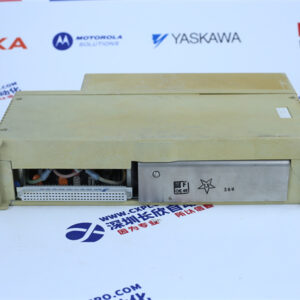
Installation of the YOKOGAWA PW301 is designed for efficiency. The module typically mounts on a standard DIN rail within the control cabinet. Wiring involves connecting the AC input (L, N, PE) from a filtered mains source and routing the DC output (+V, -V) to the system’s power distribution terminal blocks or busbars. For redundant configurations, the outputs of two or more PW301 modules are connected in parallel through isolation diodes. It is critical to follow local electrical codes, use appropriate wire gauges, and ensure all connections are torqued to specification to prevent heating.
Maintenance is straightforward and reliability-focused. The primary task is periodic visual inspection for signs of overheating, dust accumulation, or corrosion on terminals, ideally during planned plant shutdowns. Monitoring the status LED (typically green for OK, red or off for fault) is part of routine checks. The module’s solid-state, fanless design means there are no moving parts to wear out. Should a module fail, its hot-swappable design (in redundant configurations) allows for replacement without powering down the entire control station. We provide fully tested and burned-in YOKOGAWA PW301 power supply modules. Our technical support can assist with configuration guidance for redundant setups and compatibility verification with your specific CENTUM station configuration, helping to ensure the foundational power layer of your control system remains robust and dependable.
Contact us for a reliable source for the YOKOGAWA PW301 and to discuss your critical control system power requirements.