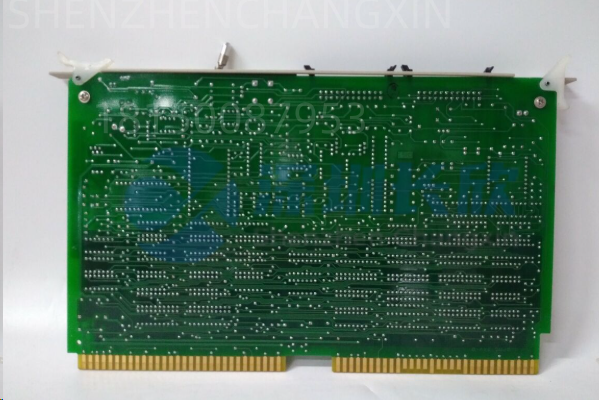
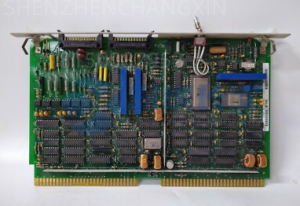
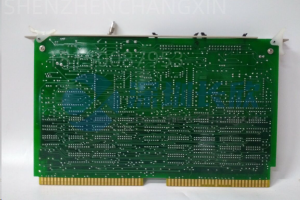
Application Scenarios
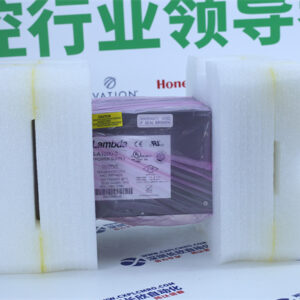
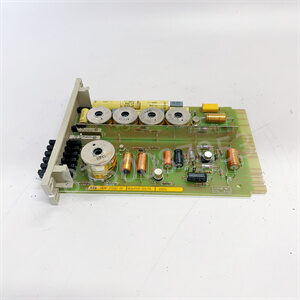
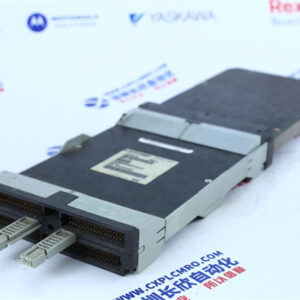
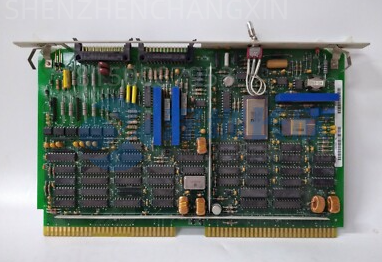
At a 1.200 MW coal-fired power station in Japan, aging turbine control logic running on legacy PLCs caused repeated load swings during grid frequency events. After migrating to a modernized Hitachi H6000 DCS powered by HITACHI LPU100A controllers, the plant achieved sub-50 ms response to grid signals and eliminated unscheduled derates. During a recent typhoon-induced blackout, the LPU100A’s redundant pair seamlessly failed over in 80 ms—keeping boiler feedwater pumps online and preventing a costly cold restart. Operators now credit the LPU100A not just for stability, but for enabling participation in fast-frequency-response ancillary markets. This real-world case highlights how the LPU100A transforms legacy infrastructure into agile, grid-compliant assets while solving critical pain points like single-point failures, slow scan times, and limited diagnostics.
Technical Principles and Innovative Values
Innovation Point 1: Deterministic Real-Time Kernel – The LPU100A runs a proprietary real-time operating system optimized for industrial control, guaranteeing consistent scan execution regardless of communication load or alarm bursts—unlike commercial OS-based controllers that suffer jitter under stress.
Innovation Point 2: Seamless Redundancy Without External Switches – Unlike many DCS controllers requiring external network switches for failover, the LPU100A uses internal dual Ethernet ports with heartbeat monitoring and automatic IP takeover, reducing single points of failure and cabling complexity.
Innovation Point 3: Unified I/O and Logic Management – The LPU100A directly manages local I/O modules (e.g., AI/AO/DI/DO cards) via high-speed backplane bus, eliminating intermediate gateways. This reduces latency by up to 40% compared to PLC-DCS hybrid architectures.
Innovation Point 4: Legacy Migration Bridge – Designed with backward compatibility in mind, the LPU100A can import logic from older Hitachi H3000 systems via configuration conversion tools, slashing re-engineering costs during plant modernization—a key differentiator versus greenfield-only competitors.
Application Cases and Industry Value
In a Southeast Asian combined-cycle power plant, the HITACHI LPU100A replaced obsolete Westinghouse Ovation nodes during a brownfield upgrade. Engineers retained 70% of existing field wiring while gaining 20x faster PID loop execution. Within six months, heat rate improved by 1.8%, translating to $2.3M annual fuel savings. Maintenance teams reported a 65% drop in “ghost alarms” thanks to the LPU100A’s noise-immune signal processing and timestamped event logging. Similarly, a European steel mill deployed LPU100A units to control reheating furnaces, achieving ±5°C temperature stability—critical for slab quality—while integrating seamlessly with their existing ABB 800xA historian via Modbus TCP.
Related Product Combination Solutions
HITACHI HIO100A: Digital input/output module—directly controlled by LPU100A for high-speed discrete logic.
HITACHI HAO100A: Analog output module—pairs with LPU100A for precise valve and drive positioning.
HITACHI HCM100A: Communication module—extends LPU100A connectivity to PROFIBUS, Modbus RTU, or OPC servers.
HITACHI H5000 Rack: Main chassis—provides power, backplane, and cooling for LPU100A and I/O modules.
ABB AC 800M: When interfacing with ABB DCS—LPU100A exchanges data via HCM100A using Modbus TCP.
Rockwell ControlLogix: For hybrid plants—LPU100A shares setpoints via Ethernet/IP gateway modules.
Emerson DeltaV: Integration possible through OPC DA—enabling LPU100A data visibility in AMS Suite.
HITACHI H-Engineering Tool: Configuration software—essential for programming, simulation, and online debugging of LPU100A logic.
Installation, Maintenance, and Full-Cycle Support
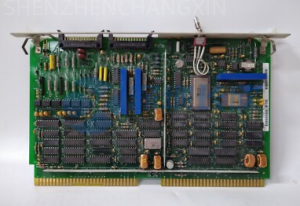
Installing the HITACHI LPU100A begins with secure mounting in an H5000/H6000 rack, followed by connection to redundant power supplies and dual Ethernet networks. The module auto-detects its role (primary or standby) and synchronizes with its partner within 30 seconds of power-up. Commissioning is accelerated by the H-Engineering Tool’s offline simulation mode, which validates logic before field deployment—reducing startup risk by up to 50%.
For maintenance, the LPU100A features front-access LEDs for power, run status, redundancy sync, and network activity. Its hot-swap design allows replacement during operation when paired with a standby unit. Routine tasks include checking battery health (for SRAM backup) and firmware updates via secure Ethernet—both supported remotely. As Hitachi Energy continues lifecycle support for the H-series through 2030+, the LPU100A remains a viable choice for both new builds and legacy extensions. We provide full technical backing—including configuration validation, redundancy testing, and spare parts with traceable certification—to ensure your LPU100A delivers decades of dependable service.
Contact us for a customized solution to modernize your DCS, enhance control responsiveness, or secure long-term support for your HITACHI LPU100A installation. With genuine inventory, factory-trained engineers, and global logistics, we keep your critical processes running—today and tomorrow.