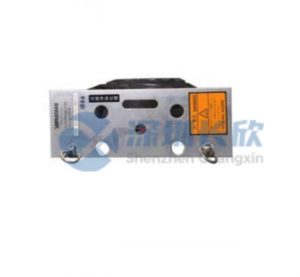
Application Scenarios
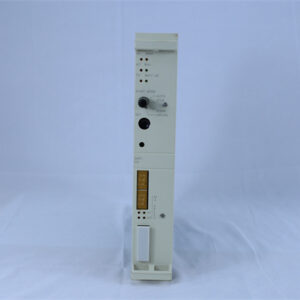
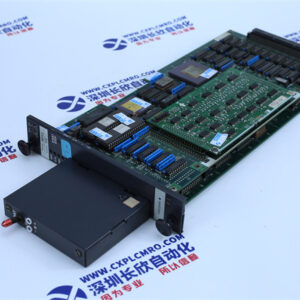
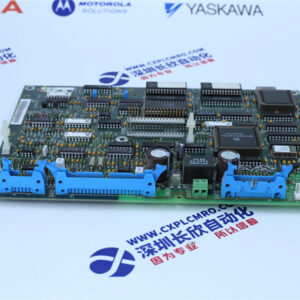
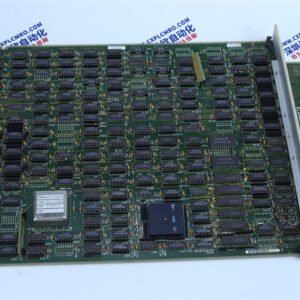
In a demanding offshore environment like a Floating Production, Storage, and Offloading (FPSO) vessel, reliable communication with field instruments is paramount. The Honeywell TC-FFPCX1 serves as the linchpin in such installations, interfacing between the Experion C200 controller and a network of smart field devices such as pressure transmitters, control valves, and level transmitters . Each TC-FFPCX1 module manages H1 links, providing power and a digital communication highway for dozens of devices. This architecture significantly reduces wiring costs, enhances diagnostic capabilities, and allows for advanced control strategies to be executed directly in the field. The module’s robustness ensures continuous operation in challenging conditions, safeguarding the production process .
Technical Principles and Innovative Values
Innovation Point 1: Advanced Communication Gateway. The Honeywell TC-FFPCX1 is engineered to translate and manage communication between the control system’s network and the Foundation Fieldbus H1 network. It supports multiple communication methods, including publish/subscribe and client/server, allowing for efficient and deterministic data exchange with field devices. This enables seamless integration of smart devices into the control strategy .
Innovation Point 2: Integrated Link Master Functionality. Each TC-FFPCX1 module acts as a Link Master and Time Master for its H1 segments. This means it actively schedules communications on the bus, ensuring precise timing and avoiding data collisions. This deterministic behavior is critical for control loops that rely on synchronized data from multiple field devices .
Innovation Point 3: Enhanced Diagnostics and Device Management. The module provides deep visibility into the health and status of the entire fieldbus segment. Through tools like Control Builder, engineers can monitor the status of each connected device, receive advanced diagnostics, and easily identify new devices added to the network, simplifying maintenance and reducing troubleshooting time .
Application Cases and Industry Value
A specific application is documented on an FPSO in the South China Sea, where the control system relied on Honeywell TC-FFPCX1 modules (referred to as FIMs) to manage 101 FF bus devices, including transmitters and control valves, across 20 distinct H1 links . This implementation demonstrated the value of the TC-FFPCX1 in a large-scale, critical process. The system’s redundancy and the module’s reliability contributed to high availability, minimizing unplanned shutdowns. The centralized diagnostics allowed for proactive maintenance, while the reduction in overall wiring lowered installation costs. The project highlighted how the TC-FFPCX1 is instrumental in building modern, efficient, and intelligent process automation systems .
Related Product Combination Solutions
Experion C200 or C300 Controller: These are the primary controllers that host the TC-FFPCX1 module, executing the control logic .
Remote Terminal Panel (RTP): This companion unit, often installed in field junction boxes, provides the physical connection points for the H1 field wiring and can supply power to the fieldbus segment .
Foundation Fieldbus Devices: Smart field devices like pressure transmitters, temperature transmitters, and valve positioners that communicate over the H1 network established by the TC-FFPCX1 .
Control Builder Software: The engineering tool used to configure, commission, and diagnose the TC-FFPCX1 and the entire control system .
Redundant Modules (RMs): Used in conjunction with the TC-FFPCX1 to create a fully redundant control and communication architecture, enhancing system availability .
Installation, Maintenance, and Full-Cycle Support
Installation of the Honeywell TC-FFPCX1 involves mounting it on a DIN rail within a suitable Experion C200/C300 or remote I/O chassis . Proper grounding and connection to a stable 24V DC power source are critical. The associated Remote Terminal Panel (RTP) must be installed in the field, and the H1 network wiring must comply with Foundation Fieldbus standards regarding trunk and spur lengths, shielding, and terminations to ensure signal integrity .
Routine maintenance is primarily conducted through the Control Builder software, which provides continuous diagnostic information on the module’s health and the status of the connected H1 network. If a module needs replacement, the process can be performed as a hot-swap in redundant configurations to minimize system downtime. The replacement module must then be reconfigured and introduced to the system via the engineering software . We provide comprehensive technical support throughout the product lifecycle, from initial system design and configuration assistance to troubleshooting and sourcing replacement parts. Our expertise ensures that your fieldbus communication infrastructure remains robust and reliable. Contact us for a customized solution or to discuss your specific application requirements.