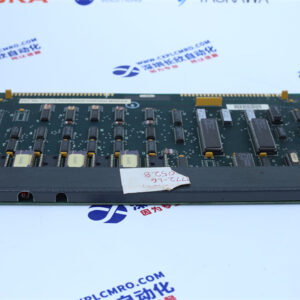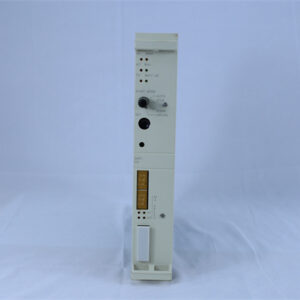
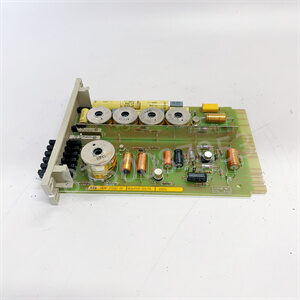
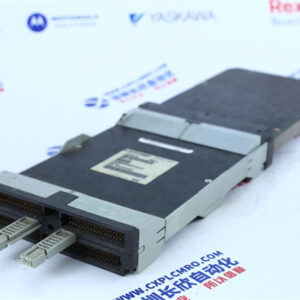
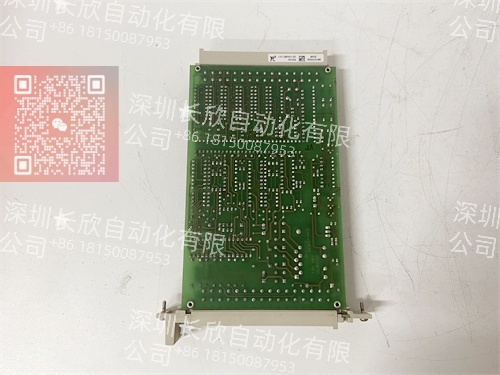
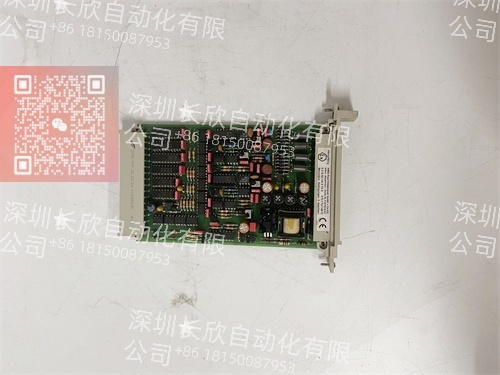
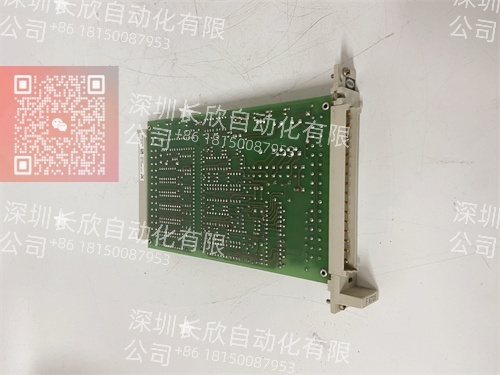
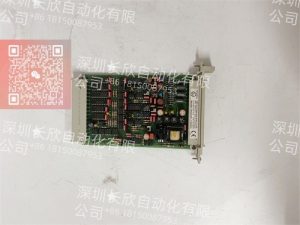
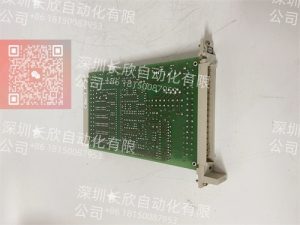
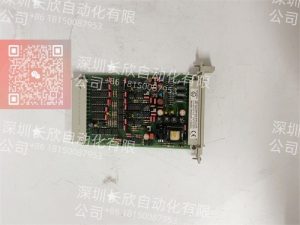
Application Scenarios
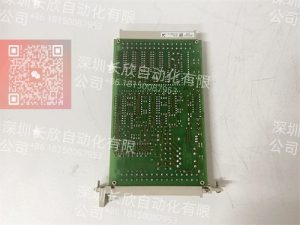
Within the emergency shutdown (ESD) system of a gas compressor station, the safety logic solver has just determined that pressure has exceeded a safe limit. The decision to close the main block valve must now be executed with absolute certainty. A standard output card failing to de-energize could leave the valve open, resulting in a dangerous release. The HIMA F6705 is engineered to prevent this precise failure. When the safety controller commands a shutdown, the F6705 module reliably interrupts the 24V DC power holding the solenoid-operated valve open. Its per-channel diagnostics continuously monitor the output circuit, verifying the command was physically executed. In the rare event of an internal fault, the module is designed to fail in a defined safe state—typically de-energizing the outputs. This guarantees that a failure within the output path itself does not prevent a safety action, directly addressing the paramount need for reliable final element control in process safety.
Technical Principles and Innovative Values
Innovation Point 1: High Diagnostic Coverage for Output Circuit Integrity. The HIMA F6705 incorporates intelligent diagnostics that go beyond simple on/off feedback. It continuously monitors each output channel for critical faults such as short circuits to ground or supply, open circuit (wire break), and overload conditions. This diagnostic capability is integral to achieving a high Safe Failure Fraction (SFF), a requirement for SIL 3. It ensures that dangerous undetected failures within the output switching circuitry are revealed, allowing for preventive maintenance before the safety function is compromised.
Innovation Point 2: Designed for Safety: De-energize to Trip (DET) Logic. True to safety system philosophy, the F6705 is fundamentally designed to fail safely. Its standard operating principle is “De-energize to Trip.” In its normal state, the output is energized to permit operation. Upon a safety demand or a detected fault (including loss of system power), the output is de-energized, causing the connected final element (e.g., a solenoid valve) to move to its safe position. This design ensures that the most common failure modes—loss of power or a fault in the module—lead to a safe process state.
Innovation Point 3: Seamless Integration for Simplified Safety Architectures. The module is fully integrated into the HIMA HIMax diagnostic and communication backbone. Faults detected at the channel level are instantly communicated to the central safety CPU and can be reported to the plant’s asset management or DCS system. This provides system-wide visibility into the health of the entire safety loop, from sensor (F3322 input) through logic solver to final element actuator (controlled by the F6705). Its plug-and-play design in the HIMA rack allows for easy configuration via engineering software, streamlining system build and maintenance.
Application Cases and Industry Value
Case 1: Offshore Platform Fire & Gas System Actuation. An offshore oil production platform upgraded its Fire & Gas (F&G) system with a new HIMA HIMax controller. The system utilized HIMA F6705 modules to control the shutdown of ventilation fans and the release of fire suppressant. During a routine test, the diagnostic function of a F6705 module detected a latent short-circuit condition on the cable leading to a critical ESD valve solenoid. The fault was logged and alarmed two weeks before the scheduled monthly functional test. Maintenance was able to repair the wiring during normal operations, avoiding a potential situation where the valve might have failed to close during a real emergency. The platform’s safety engineer highlighted that the proactive diagnostic capability transformed their maintenance strategy from reactive to predictive, significantly enhancing overall safety system integrity.
Case 2: Chemical Batch Reactor Safety Interlocks. A specialty chemical plant operating highly exothermic batch processes implemented a new safety interlock system (SIS) to manage reaction runaway risks. The system used HIMA F6705 modules to execute critical actions: closing feed valves, opening quench coolant valves, and dumping the reactor to a safe area. During a commissioning test, a simulated high-temperature trip correctly de-energized the outputs, but one channel on a F6705 module showed a slightly slower response time in the diagnostic log. This granular data allowed engineers to identify and rectify a marginal power supply issue affecting only that module. The precision of the module’s self-monitoring provided confidence that all safety outputs would perform identically and within the required time under real conditions, ensuring the reliability of the entire safety instrumented function.
Related Product Combination Solutions
The HIMA F6705 functions as part of a complete safety loop within a HIMA system:
HIMA F3322 / F3222: The complementary digital input modules that acquire signals from emergency stops, pressure switches, and other initiators, feeding information to the logic solver that the F6705 acts upon.
HIMA F-CPU (e.g., F35. F65): The central processing unit that executes the safety logic and commands the F6705 output states.
HIMA F3 Analog Output Modules (e.g., F3372): Used for final elements requiring a modulating control signal (e.g., a control valve with a positioner), whereas the F6705 handles on/off devices.
HIMA F3 Communication Modules: Modules that connect the safety system, including the F6705’s status data, to higher-level systems for monitoring and event logging.
HIMA Power Supply Modules (e.g., PS-1F): Provide clean, redundant power essential for the reliable operation of all modules, including the critical F6705 outputs.
HIMA Rack/Backplane (UR-1F): The chassis that houses and interconnects the CPU, I/O modules, and power supplies.
HIMax Engineering Software: Used to configure the F6705 (e.g., set pulse-test features, define behavior on fault) and integrate it into the application logic.
Installation, Maintenance, and Full-Cycle Support
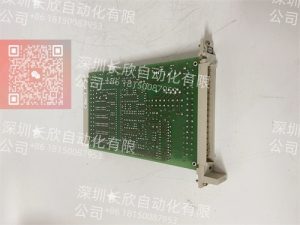
Installation of the HIMA F6705 is designed for reliability and serviceability. The module is inserted into its assigned slot on the HIMA UR rack until it engages with the backplane connector. Field wiring for the solenoids, contactors, or alarm devices is connected to the clearly marked, removable front-terminal blocks. Polarity and grouping are clearly indicated to prevent wiring errors. Commissioning involves using the HIMax engineering software to assign the physical channels to logical variables in the safety program and verify operation through a structured functional test.
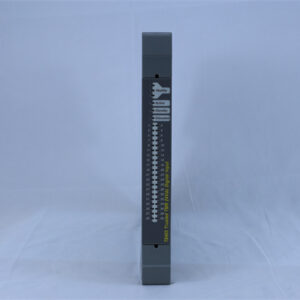
Maintenance is largely condition-based, driven by the module’s extensive diagnostics. The engineering station or connected DCS can provide real-time alerts for any channel faults, such as overload or open circuit. The module’s front-panel LEDs provide immediate local indication of status and per-channel faults. In the event a module requires replacement, the HIMA system’s support for hot-swapping (in redundant configurations) or safe removal procedures allows for replacement during planned downtime without a full system shutdown, maximizing availability.
We provide comprehensive support for the HIMA F6705 and the entire HIMA safety platform. From initial system design and SIL verification support to supplying genuine, factory-certified modules, we ensure your safety system maintains its integrity. Our technical team can assist with configuration, troubleshooting, and integration queries. We are committed to being your partner in achieving and sustaining the highest levels of functional safety performance.
Ensure the reliable execution of your safety commands. Contact us for genuine HIMA F6705 modules and expert support for your safety system lifecycle.