Application Scenarios
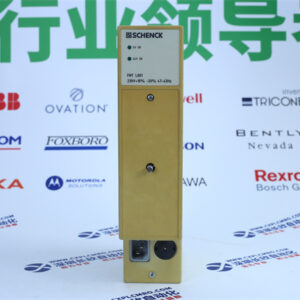
In an automotive parts stamping facility, frequent voltage sags during press cycles caused PLC resets and production line stoppages. The plant replaced generic power supplies with the MESTO PDP403. leveraging its wide input range and built-in hold-up time to ride through brief grid disturbances. Its automatic recovery after overload eliminated manual resets during sensor short circuits, reducing unplanned downtime by 60%. Maintenance teams now specify the PDP403 as standard across all new control cabinets—valuing its clear LED status indicator and tool-free DIN-rail installation.
Note: “MESTO” is often used as a private-label or regional brand name for industrial power supplies functionally equivalent to models from MEAN WELL (e.g., LRS-75-24) or similar manufacturers. Always verify exact specifications with the supplier.
Technical Principles and Innovative Values
Innovation Point 1: Fanless Reliability
The PDP403 uses conduction and natural convection cooling—eliminating fan failure points and enabling silent, maintenance-free operation in dusty or sealed enclosures.
Innovation Point 2: Universal Input for Global Deployment
Accepts any standard mains voltage worldwide (from 100 VAC Japan to 240 VAC Europe), simplifying inventory for multinational OEMs.
Innovation Point 3: Intelligent Auto-Recovery
During temporary overloads (e.g., solenoid surge), the unit enters hiccup mode and automatically resumes normal operation once the fault clears—no manual intervention needed.
Innovation Point 4: Compact Footprint Without Compromise
At just 36 mm wide, it fits in tight panel layouts yet delivers full 72 W without derating up to 50°C—outperforming many bulkier alternatives.
Application Cases and Industry Value
A packaging machine builder in Germany standardized on the MESTO PDP403 across its entire product line. The consistent 24 VDC output ensured reliable operation of servo drives and safety relays, while the slim profile allowed 30% more I/O modules per cabinet. In a wastewater lift station in Texas, the PDP403’s -20°C cold-start capability kept pump controls running during a rare freeze event—preventing sewage backup. These examples highlight how a “simple” power supply like the PDP403 becomes mission-critical infrastructure when reliability matters.
Related Product Combination Solutions
PDP405: 24 VDC / 5 A (120 W) version for larger systems
PDP201: 12 VDC / 2 A variant for legacy sensors or communication modules
Fuse Holder Blocks (e.g., FDB-2): For branch circuit protection on DC output
Surge Protective Device (SPD-24DC): DC-side transient suppression for lightning-prone areas
Redundancy Module (e.g., MDR-20): Enables N+1 power supply redundancy
PLC Power Inputs (e.g., Siemens S7-1200. Allen-Bradley Micro850): Direct compatibility
Terminal Block Adapters: For easy wiring to PDP403 screw terminals
Panel Thermometer: To monitor ambient temperature near PSU in enclosed cabinets
Installation, Maintenance, and Full-Cycle Support
Install the MESTO PDP403 on a standard 35 mm DIN rail with at least 10 mm clearance on both sides for airflow. Use stranded copper wire (16–14 AWG) with ferrules for secure terminal connections. Ensure input wiring is fused per local codes (typically 2 A slow-blow fuse for 72 W unit). The green LED confirms proper output—absence indicates input failure, overload, or internal fault.
Although maintenance-free, periodically inspect for dust buildup in high-contaminant environments and verify output voltage under load using a multimeter. We provide full technical validation, including ripple/noise testing and thermal imaging reports. Every PDP403 we supply is 100% tested for output stability, isolation, and protection functionality, backed by a 24-month warranty and responsive engineering support.
✅ Tip: For critical applications, pair two PDP403 units with a diode-based redundancy module to achieve zero-downtime power architecture.
Contact us for volume pricing, custom labeling, or integration support—whether you’re building one machine or deploying thousands globally with dependable, cost-optimized power.