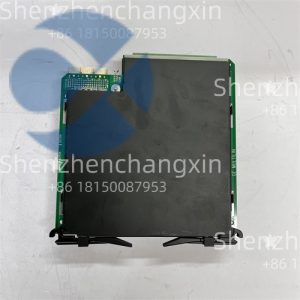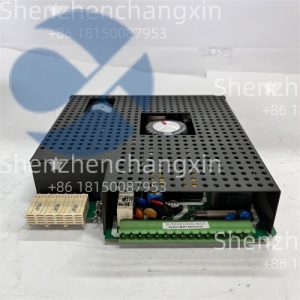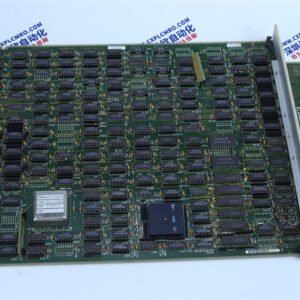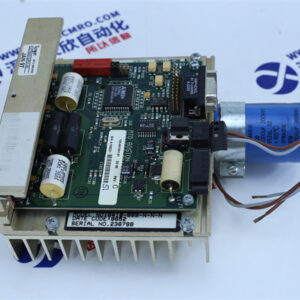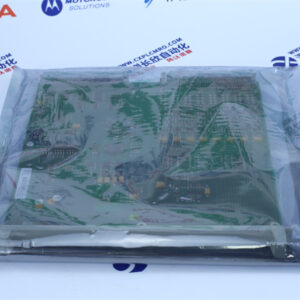
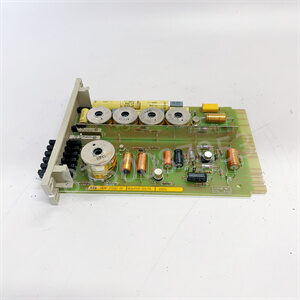
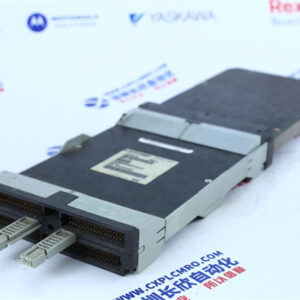
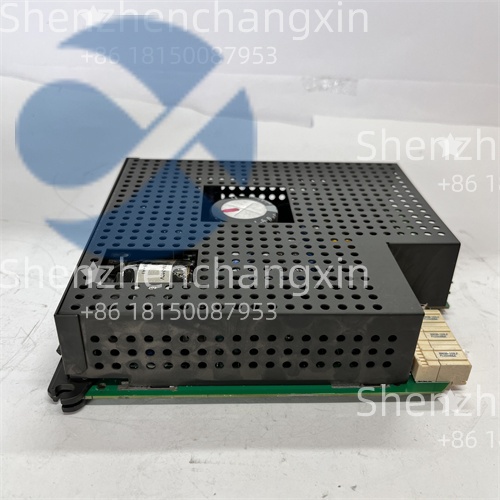

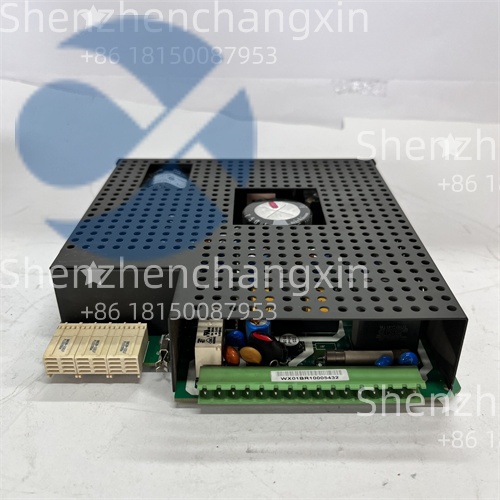
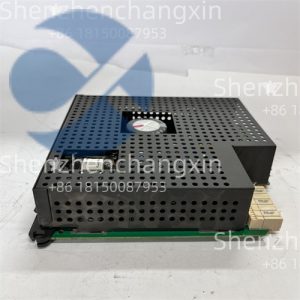
Application Scenarios:
In a major 230kV transmission substation, a critical bus section experienced a phase-to-ground fault due to insulation failure. Traditional overcurrent protection schemes struggled with selectivity, risking the unwanted tripping of multiple healthy feeders connected to the same bus, which could lead to a widespread blackout. The GE URRHH relay, deployed as the core of the busbar protection scheme, used its high-speed, percentage-restrained differential algorithm. By instantaneously comparing the current entering and leaving the protected bus zone via all connected circuits, it detected the internal fault within 1-1.5 cycles. The relay then issued precise, high-speed trip commands only to the circuit breakers of the faulted section, isolating the problem while keeping the rest of the substation—and the grid—fully operational. This application highlights the relay’s role in ensuring selective tripping, which is paramount for preventing fault propagation, minimizing outage impact, and protecting expensive switchgear and transformers from severe damage.
Parameter:
Technical Principles and Innovative Values:
The GE URRHH operates on the fundamental principle of Kirchhoff’s current law, but its innovation lies in its implementation, speed, and security.
Innovation Point 1: Ultra-High-Speed, Secure Differential Algorithm. The core of the URRHH is its percentage-restrained, variable-slope differential algorithm. It provides exceptional security by remaining stable during heavy through-faults, even with significant CT saturation, while maintaining extreme sensitivity for internal bus faults. Its operating time of 1-1.5 cycles is among the fastest in the industry, significantly limiting let-through energy and potential arc-flash hazards at the bus.
Innovation Point 2: Flexible, Distributed System Architecture. The URRHH is not just a standalone relay; it’s a system component. Multiple relays can be linked via high-speed, redundant fiber-optic channels (e.g., using the UR’s built-in C37.94 or Ethernet ports) to create a distributed bus differential scheme. This allows for the protection of complex bus arrangements like breaker-and-a-half, ring bus, or dual-bus systems without the need for a large, centralized master unit, enhancing both flexibility and reliability.
Innovation Point 3: Advanced CT Saturation Detection and Security. A major challenge for bus differential protection is Current Transformer (CT) saturation during external faults, which can cause false differential currents. The URRHH incorporates advanced logic and waveform analysis to detect CT saturation and automatically adjust its restraint characteristics, virtually eliminating the risk of incorrect operation. This makes it exceptionally reliable in demanding network locations with mixed CT types and high fault currents.
Application Cases and Industry Value:
Case Study: Modernization of a Metropolitan Area Substation.
A large city’s aging downtown substation, serving a dense mix of commercial and residential loads, needed a bus protection upgrade. The existing electromechanical scheme was slow, uncommunicative, and difficult to test. The utility chose a system based on the GE URRHH for its main and reserve bus protection.
The new system utilized the distributed architecture of the URRHH. Two relays, one for each bus section, were installed and interconnected via a dedicated, redundant fiber ring. They exchanged real-time current data to provide complete, overlapping protection coverage. During commissioning, a staged fault test demonstrated the system’s speed and selectivity. The protection engineer noted: “The GE URRHH system performed flawlessly. The speed is phenomenal, and the event records provided crystal-clear insight into the operation. The commissioning with EnerVista software was streamlined. Most importantly, the system’s inherent stability gives us confidence that it won’t operate incorrectly for an external fault, which is critical in this congested part of the network. This upgrade has significantly enhanced our grid resilience and asset protection.”
Related Product Combination Solutions:
GE UR F60: Feeder Management Relay. Protects the individual transmission or distribution feeders connected to the bus protected by the URRHH, providing coordinated system protection.
GE UR T60: Transformer Protection Relay. Protects the main power transformer whose secondary side connects to the bus, forming a complete bay protection scheme with the URRHH.
GE UR L90: Line Differential Relay. Provides primary protection for transmission lines emanating from the substation, coordinating with the bus protection of the URRHH.
GE UR D60: Generator Differential Relay. For protecting generators connected to the station, ensuring coordination with bus fault clearing times.
GE EnerVista UR Setup Software: The comprehensive configuration, setting, and monitoring software suite for the entire UR platform, essential for configuring the complex logic and communications of the URRHH.
GE F35: Multiple Feeder Protection Relay. Can be used for protection of smaller feeders or as a backup relay in schemes where the URRHH is the primary bus protection.
GE C70: Capacitor Bank Protection Relay. Protects substation capacitor banks, which are often connected directly to the main bus.
GE B90: Busbar Current Differential System. A dedicated, centralized bus differential system for the most complex applications; the URRHH represents a more flexible, distributed alternative within the UR family.
Installation, Maintenance, and Full-Cycle Support:
Installation of the GE URRHH involves mounting the relay in a standard 19-inch rack or panel, with connections for power, current transformers (CTs) from all associated circuits, trip/output contacts to breakers, and communication cables. The most critical aspect is the correct polarity and grouping of all CT inputs into the differential scheme, which is meticulously configured in the EnerVista software. Commissioning involves testing the differential element’s restraint characteristic, verifying fiber-optic channel communication between relays in a distributed system, and coordinating its operation with downstream feeder relays.
Routine maintenance is greatly simplified by the relay’s extensive self-monitoring, event logging, and oscillographic capabilities. Health status of the relay, its power supply, and communication channels is continuously reported. The detailed sequence of events (SOE) and disturbance fault records (DFR) are invaluable for post-event analysis. The modular design of the UR platform allows for efficient replacement of components if needed. Our support encompasses the full lifecycle: from initial system design and configuration file preparation to on-site commissioning assistance and training. We provide access to genuine firmware updates, spare parts, and 24/7 technical support to ensure your GE URRHH bus protection system delivers decades of reliable, secure service.
Contact us for a customized solution to ensure your most critical busbars are protected by the speed, security, and intelligence of the GE Multilin UR platform.