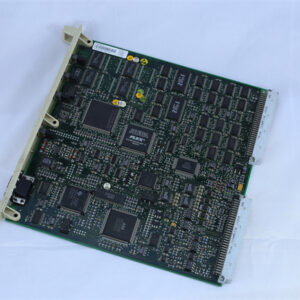
GE Multilin 269PLUS-D/O-278-100P-HI Motor Management Relay, Drawout Case

GE Multilin 269PLUS-D/O-278-100P-HI Motor Management Relay, Drawout Case

Description:

The GE Multilin 269PLUS-D/O-278-100P-HI​ is a microprocessor-based motor management relay from GE Multilin (now part of GE Vernova), built for protection, metering and control of medium and large three-phase AC motors. It belongs to the 269 Plus family and ships in a drawout (D/O) case.

In plain terms, it watches phase current, ground current and up to ten RTD temperature points at the same time, then decides whether to alarm, block a start, or trip. The “100P” block means 100 Ω platinum RTDs, “HI” marks the universal 90-300 V DC / 80-265 V AC control supply, and “278” fixes the CT matching, fail-safe logic and contact arrangement at the factory.


Application Scenarios:

A 1,500 kW cooling-water pump on a steel mill trips twice a month. Electromechanical overload relays see the current, but they never see the bearing that is slowly cooking itself. Maintenance swaps the relay, the motor restarts, and the pattern repeats — until the winding insulation finally gives out and the pump is down for three days.

Swap that same cubicle over to a 269PLUS-D/O-278-100P-HI​ and the picture changes. Pt100 sensors land directly in the bearing housings and stator slots; the relay reads them alongside the current-derived thermal model. Rising bearing temperature shows up as an alarm days before the trip, so lubrication gets scheduled instead of reacted to. And when a protection test is due, the drawout case lets the technician withdraw the relay from its cradle for bench testing while the motor keeps running — no process stop to justify.

Water and wastewater plants hit the same pain from the other direction: frequent start-stop duty on aeration blowers burns through the thermal headroom, and the 269PLUS-D/O-278-100P-HI​ tracks starts-per-hour and thermal capacity used (%TCU), blocking a restart before the motor cooks. Oil and gas pump stations, mine conveyors with high-inertia loads, and chemical plant compressor drives all lean on the same capability set.

GE Multilin 269PLUS-D/O-278-100P-HI Motor Management Relay, Drawout Case


Parameter:

Parameter Value What it means on site
Product Model 269PLUS-D/O-278-100P-HI Full order code; all options below are factory-fixed
Manufacturer GE Multilin (GE Vernova), Markham, Ontario Original OEM, discontinued line
Product Category Motor management / protection relay Replaces several discrete relays in one MCC cubicle
Chassis Type D/O drawout case Relay body withdraws from the cradle without de-energising the motor circuit
Order Code Block “278” CT matching + fail-safe code + contact arrangement Phase/ground CT ratio, Trip/Aux2 fail-safe logic and Alarm/Aux1 contact form are set at order time and cannot be changed in the field
Control Power (HI) 90-300 V DC / 80-265 V AC, 50/60 Hz One unit covers AC and battery-backed DC control buses; LO variant covers 20-60 V DC / 20-48 V AC
Current Inputs 3 phase CTs + 1 ground CT, 0.05-12 × CT primary setting range CT ratio is keypad-programmed up to 1500:5; above that, consult the factory
RTD Inputs 10 × 100 Ω platinum (Pt100), 3-wire, up to 6 assigned to stator winding Unused stator channels can be reassigned to bearings, ambient or process temperature, with open-circuit detection
Output Relays 4 × Form C (SPDT): Trip (86, latched), Alarm, Aux 1, Aux 2 Trip and Aux 2 available in fail-safe form, so loss of control power drives the output to its safe state
Digital Inputs Spare input, speed switch (14), differential relay contact (87), external reset Enough for start interlocks and external protection device interfacing
Communication Isolated RS-485, Modbus RTU Direct link to DCS, SCADA or PLC for metering, status and event records
Protection Functions 49 thermal overload with FlexCurve, 50/51 short circuit, 46 unbalance, 48 locked rotor / multiple starts, 50G/51G ground fault, 37 undercurrent, 38 bearing RTD, 66 starts per hour Covers the ANSI function set a motor cubicle normally needs
Display & Setup Backlit alphanumeric LCD with keypad; EnerVista 269 software (Windows) Local setpoint entry and event recall without a laptop
Operating / Storage Temperature -20 °C to +60 °C / -40 °C to +85 °C Standard MCC cubicle environment
Dimensions & Weight (approx.) 193 × 125 × 290 mm (W × H × D), ~2.8 kg for the drawout variant Values differ by suffix and packaging; confirm against the unit nameplate
Certifications UL, CSA, CE; designed to IEC 60255 and IEEE C37.90 practice Accepted in North American and international switchgear assemblies
Lifecycle Status Discontinued by the OEM Supply is new surplus or professionally refurbished stock


Technical Principles and Innovative Values:

  • Innovation Point 1 — two independent heat measurements instead of one: 269PLUS-D/O-278-100P-HI​ runs a current-derived thermal model (with thermal memory retained through power loss) and, at the same time, reads real Pt100 temperatures from the winding and bearings. Where a current-only relay guesses at motor temperature, this one measures it — which is why nuisance trips drop and genuine overheating still gets caught. RTD readings also bias the thermal model when ambient conditions push the motor harder than the nameplate assumes.
  • Innovation Point 2 — FlexCurve user-defined overload curve: fifteen standard curves cover most machines, but a high-inertia conveyor or a long-acceleration fan motor often fits none of them. FlexCurve lets the protection curve be drawn to match the actual acceleration characteristic, so the motor can start without the relay interpreting inrush as a fault.
  • Innovation Point 3 — withdrawable case that keeps the process running: with the GE Multilin 269PLUS-D/O-278-100P-HI, periodic relay testing no longer needs a shutdown. The cradle stays wired, the body pulls out, and the spare body drops in. On continuous process lines, avoided downtime is typically worth more than the relay itself.
  • Innovation Point 4 — diagnostics that shorten fault finding: last-trip data, learned motor parameters, motor run hours (±1%), start counter and a time-stamped event record are stored in the relay. After a trip, the question “what did the motor see?” is answered from the front panel rather than by swapping in a spare and hoping.
  • Innovation Point 5 — one serial port instead of a separate transducer package: the isolated RS-485 port carrying Modbus RTU hands currents, %TCU, temperatures and status to the DCS. Panel space and marshalling wiring both shrink compared with a discrete-relay-plus-transducer build.
Scroll to Top