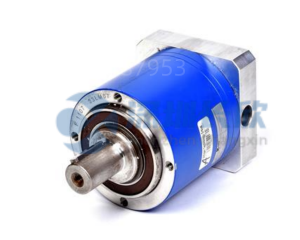
 Application Scenarios:
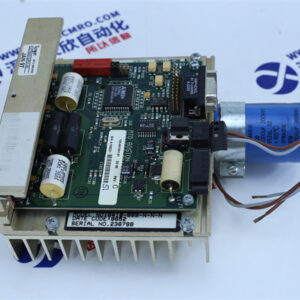
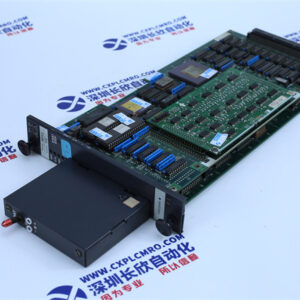
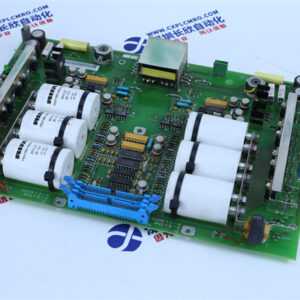
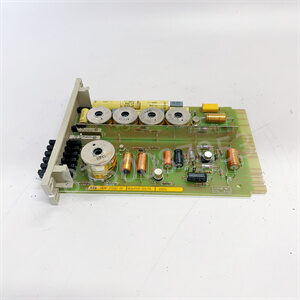
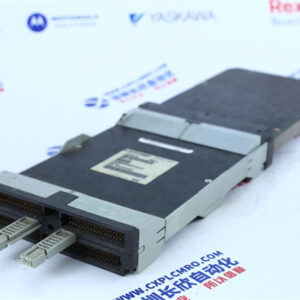
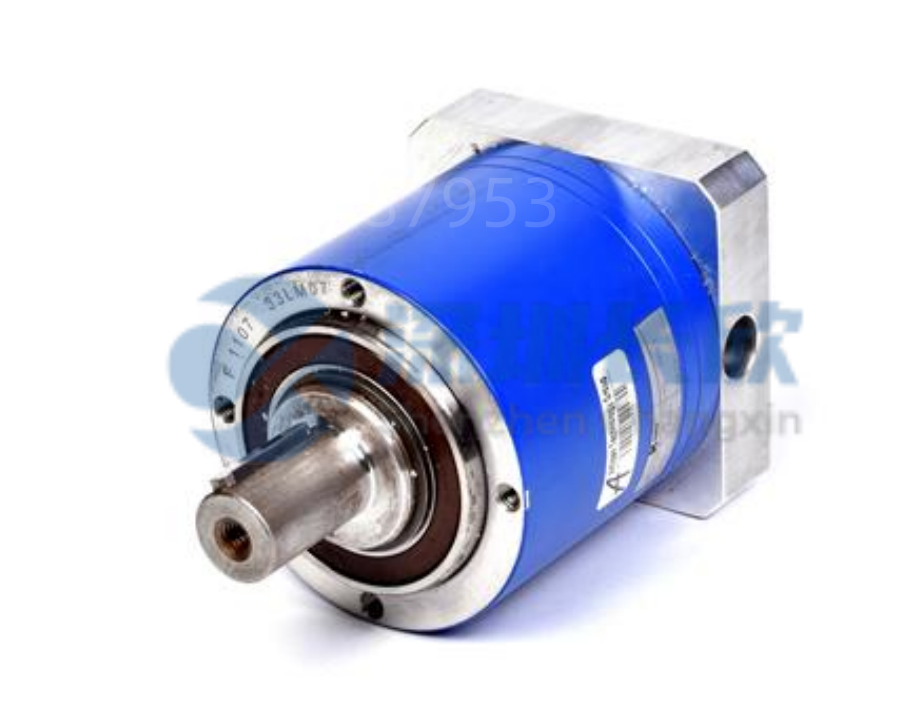
In a combined-cycle power plant, a GE 7HA.03 gas turbine operates under extreme conditions, with hundreds of critical parameters—from exhaust thermocouple readings and bearing vibration to fuel valve feedback—requiring continuous, fault-tolerant monitoring. Any signal loss or degradation can lead to conservative control actions or, worse, a protective trip, resulting in significant revenue loss. This is where the GE LP090-MO1-5-111-000 is deployed. Installed in a distributed I/O cabinet near the turbine, it directly connects to dozens of these 4-20mA and thermocouple signals. Its robust design filters out electrical noise endemic to the power plant environment, while its integration with the Mark VIe’s Triple Modular Redundant (TMR) architecture ensures that even a module failure does not cause a data blackout. The GE LP090-MO1-5-111-000 directly addresses the core pain point of signal integrity and availability, turning raw sensor data into the trusted information backbone for the turbine’s control and protection algorithms.
Parameter:
Technical Principles and Innovative Values:
The GE LP090-MO1-5-111-000 embodies key design principles for mission-critical industrial I/O:
Innovation Point 1: High-Density, Modular Design for Scalability. The GE LP090-MO1-5-111-000 packs a large number of I/O channels into a single module footprint. This modularity allows system engineers to configure exactly the I/O mix needed for a turbine skid—concentrating analog temperature inputs here, valve controls there—reducing cabinet size, wiring complexity, and overall system cost while maximizing flexibility.
Innovation Point 2: Advanced Signal Conditioning and Integrity. Each channel on the GE LP090-MO1-5-111-000 incorporates precision signal conditioning. For analog inputs, this includes filtering, scaling, and analog-to-digital conversion with high resolution. Critical innovations include high-grade isolation that prevents ground loops and noise from corrupting sensitive millivolt signals from thermocouples, ensuring the data passed to the controller is an accurate representation of the process.
Innovation Point 3: Seamless Integration with TMR Architecture. The module is engineered not as a standalone device but as an integral component of the Mark VIe’s high-availability framework. In TMR configurations, multiple GE LP090-MO1-5-111-000 modules (or their data) are used in parallel. The system’s voting logic can compare signals across these redundant paths, identifying and mitigating sensor or channel failures before they impact control decisions, thus providing an unparalleled level of operational resilience.
Innovation Point 4: Diagnostics and Maintainability. The GE LP090-MO1-5-111-000 features built-in diagnostics that monitor channel health, wire breaks, and out-of-range signals. This information is communicated to the central controller and engineering tools like ToolboxST, enabling predictive maintenance and drastically reducing Mean Time To Repair (MTTR) by pinpointing faults to a specific channel, rather than an entire wiring loom.
Application Cases and Industry Value:
A large independent power producer in Southeast Asia was experiencing unexplained fluctuations in reported compressor discharge pressure on several Frame 9E units, leading to inefficient engine loading and occasional nuisance alarms. Traditional troubleshooting of the single pressure transmitter and its wiring found no fault. The issue was traced to a marginal analog input channel on an aging I/O module that was susceptible to minor electrical noise. During a planned outage, they replaced the old module with a new, higher-performance GE LP090-MO1-5-111-000 pack. The improved signal conditioning and filtering of the new module immediately resolved the signal noise issue. The plant reported not only the elimination of the alarms but also smoother turbine start-ups and more stable base-load operation, as the control system could now act on a perfectly clean pressure signal. This translated to an estimated 0.5% efficiency gain and enhanced operational confidence. The GE LP090-MO1-5-111-000 delivered value by acting as a high-fidelity data gateway, turning unstable sensor data into a trusted control parameter, directly boosting asset performance and reliability.
Related Product Combination Solutions:
GE IS200TREGH1BEC Terminal Server: This Ethernet gateway module provides the robust network connection between the Mark VIe controller and the I/O racks containing the GE LP090-MO1-5-111-000.
GE IS200ERICxxx (e.g., ERTG, ERTD): These are other I/O pack types (for RTDs, digital I/O) that would be used alongside the GE LP090-MO1-5-111-000 in the same rack to create a complete I/O suite.
GE IS200ICMGH1A / ICM (Controller): The main control processor that executes the turbine logic based on signals from the GE LP090-MO1-5-111-000.
Mark VIe I/O Rack/Chassis: The physical enclosure, backplane, and power supply that houses and powers the GE LP090-MO1-5-111-000 and other I/O modules.
ToolboxST Engineering Software: The essential platform for configuring the GE LP090-MO1-5-111-000 (assigning tags, scaling, alarms) and monitoring its diagnostics.
Field Sensors (RTDs, TCs, Transmitters): The actual temperature and pressure devices wired directly into the terminals of the GE LP090-MO1-5-111-000.
GE LS2100D Termination Panels: These are often used as the interface between field wiring and the I/O packs like the GE LP090-MO1-5-111-000. providing marshalling and surge protection.
Installation, Maintenance, and Full-Cycle Support:
Installation of the GE LP090-MO1-5-111-000 is performed within the structured environment of a Mark VIe I/O cabinet. It involves carefully seating the module into its assigned slot on the rack’s backplane and securing it with fasteners. The critical pre-installation step is the meticulous wiring of field cables to the corresponding terminal blocks, ensuring correct polarity, gauge, and segregation of signal types to prevent cross-talk. Configuration via ToolboxST is mandatory, where each channel is defined (e.g., 4-20mA input, Type K thermocouple), scaled, and tagged.
Routine maintenance is primarily condition-based, leveraging the module’s onboard diagnostics. Engineers monitor for channel faults or drift through the control system HMI. Physical maintenance is minimal but includes checking terminal tightness during scheduled outages. A key advantage is the module’s hot-swap capability (in properly designed redundant configurations), allowing for replacement without a full system shutdown. We provide end-to-end support for the GE LP090-MO1-5-111-000. from supplying genuine or certified compatible modules to offering technical guidance on configuration and troubleshooting. Our commitment is to ensure you have reliable access to these critical I/O components and the expertise to maintain them, supporting the long-term health of your turbine control system.