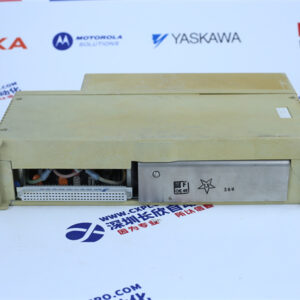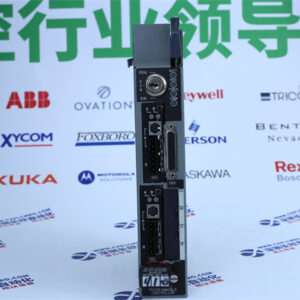
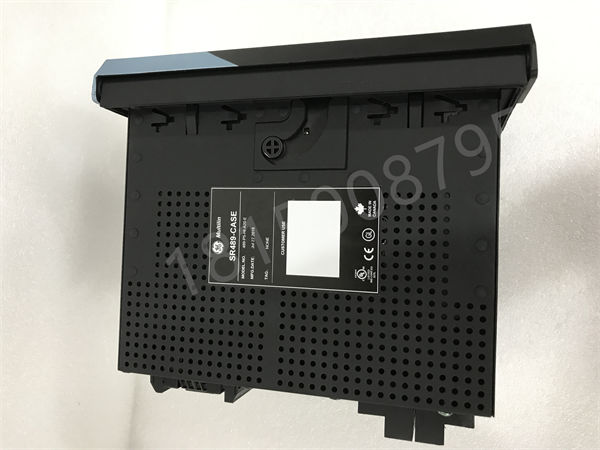
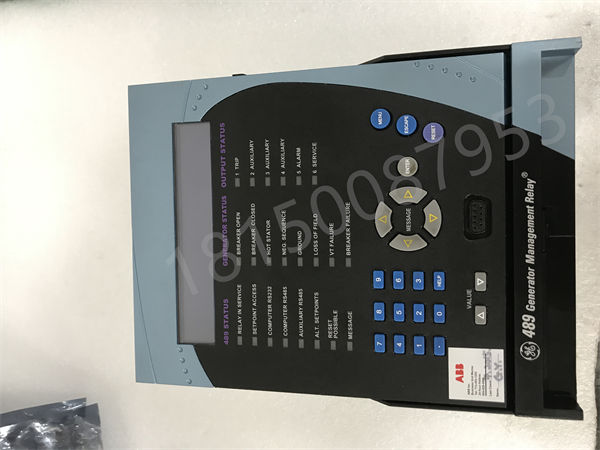
In industrial environments where motors drive critical processes—from water pumps in municipal treatment plants to compressors in oil refineries—unexpected failures can cascade into production losses, safety hazards, and costly repairs. Protecting these assets requires more than basic thermal overload relays; it demands intelligent, adaptive, and highly reliable protection that responds precisely to real-world electrical and mechanical stresses. The GE Multilin™ 489-P5-LO-A20 motor management relay delivers exactly that. As part of General Electric’s (now Emerson) renowned Multilin 489 series, this model is engineered for medium-voltage induction motors up to 15 kV, offering comprehensive protection, precise metering, advanced diagnostics, and seamless integration into modern control systems—all within a rugged, field-proven platform trusted across power, mining, and heavy industry for decades.
Core Protection Capabilities: Beyond Overload
The “489-P5-LO-A20” designation encodes key features tailored for industrial robustness:
P5: Panel-mount version with enhanced environmental sealing;
LO: Low-order harmonic filtering for accurate measurement in VFD or rectifier-rich environments;
A20: 20 A rated current inputs (standard for CT secondary circuits).
At its heart, the 489-P5-LO-A20 provides 36+ protection functions, far exceeding traditional electromechanical relays:
Thermal overload protection with programmable cooling curves and RTD biasing;
Phase unbalance and phase loss detection—critical for motors fed by aging switchgear;
Jam/stall protection during startup or mechanical seizure;
Undercurrent (dry-run) for pump cavitation prevention;
Ground fault with sensitive 0.05 A resolution via optional core-balance CT;
Negative sequence overcurrent to detect rotor overheating from voltage imbalance.
Unlike generic relays, the 489 uses adaptive thermal modeling that accounts for ambient temperature, load history, and cooling conditions—preventing nuisance trips during repeated startups while ensuring true thermal safety. “It doesn’t just react—it anticipates,” says David Chen, a reliability engineer at a copper mine in Arizona. “When our slurry pump jammed underground, the 489 tripped in 1.2 seconds—saving the gearbox and motor.”
Precision Metering and Diagnostic Intelligence
Beyond protection, the 489-P5-LO-A20 serves as a motor health monitor:
Real-time metering of kW, kVAR, power factor, harmonics (up to 15th), and energy;
Event recording with 1 ms time-stamping and oscillography (up to 16 channels);
RTD inputs (up to 6) for direct stator or bearing temperature monitoring;
Start-up counter and timer to track motor usage and predict maintenance needs.
This data feeds directly into asset management systems like GE’s Enervista UR Setup or third-party SCADA platforms via Modbus RTU/TCP or DNP3. At a wastewater facility in California, trend analysis of motor current harmonics revealed early bearing wear—allowing replacement during scheduled downtime rather than after a catastrophic failure. “We’ve cut motor-related downtime by 70% since deploying the 489s,” notes Maria Lopez, plant automation lead.
Rugged Design for Harsh Environments
Built for industrial reality, the 489-P5-LO-A20 features:
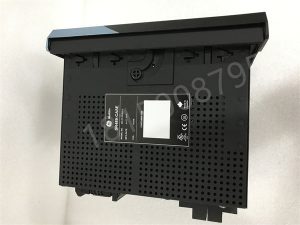
NEMA 4X / IP65-rated front panel resistant to dust, water jets, and corrosion;
Operating temperature range of -40°C to +70°C, suitable for outdoor or non-climate-controlled MCCs;
Conformal-coated PCBs to withstand humidity and chemical exposure;
EMC immunity tested to IEC 61000-4 standards for operation near VFDs and arc furnaces.
Its large backlit LCD displays real-time values, alarms, and trip logs—enabling rapid troubleshooting without a laptop. Front-panel LEDs provide instant status: green for healthy, red for alarm/trip, yellow for warning.
Real-World Validation Across Critical Sectors
Case Study 1: Offshore Oil Platform (Gulf of Mexico)
Seawater injection pumps operate 24/7 in high-salt, high-vibration conditions. The 489-P5-LO-A20’s ground fault protection detected insulation degradation in a submersible motor before seawater ingress caused a short circuit. “That one alert prevented a $2M repair and a platform shutdown,” recalls Lars Eriksson, offshore electrical supervisor.
Case Study 2: Cement Plant Kiln Drive (India)
A 6 MW kiln motor experienced repeated thermal trips due to dust-clogged cooling fans. The 489’s adaptive thermal model, combined with RTD inputs, distinguished between actual winding overheating and blocked airflow—eliminating false trips while maintaining safety. “Now we get an alarm to clean the fans, not a trip that halts production,” explains Rajiv Mehta, plant manager.
Case Study 3: District Cooling System (Middle East)
In 50°C ambient temperatures, standard relays degraded within two years. The 489-P5-LO-A20 has operated reliably for over eight years, with its wide temperature rating and harmonic filtering proving essential in a VFD-dominated environment. “Reliability here isn’t optional—it’s contractual,” states Ahmed Al-Mansoori, facilities engineer.
Expert Recommendations for Optimal Deployment
“Protection is only as good as its configuration,” advises Dr. Elena Petrova, former GE Multilin application specialist. She offers three best practices:
Use RTDs for critical motors: Thermal models are estimates; direct temperature measurement is truth;
Enable harmonic filtering (LO option): In VFD environments, low-order harmonics distort current measurements—this feature corrects for that;
Integrate event records into root-cause analysis: Don’t just reset after a trip—download oscillography to understand why it happened.
Additionally, ensure proper CT sizing (typically 5 A secondary) and grounding to avoid false ground-fault indications—a common issue in high-resistance grounded systems.
Legacy Support and Future Relevance
Although newer relays like the Multilin 869 offer Ethernet and IEC 61850. the 489 series remains in active production due to overwhelming global demand. Its proven reliability, simplicity, and cost-effectiveness make it ideal for brownfield upgrades and new installations where advanced networking isn’t required. Emerson continues to provide firmware updates, technical support, and factory-refurbished units with tested components.
Conclusion: Trusted Protection Where It Matters Most
The GE 489-P5-LO-A20 is more than a motor relay—it’s a guardian of industrial continuity. By combining intelligent protection algorithms with rugged hardware and actionable diagnostics, it transforms reactive maintenance into proactive asset management. From desert oil fields to arctic mines, it operates silently but decisively, ensuring that when a motor is at risk, the right action is taken at the right time. For engineers tasked with keeping critical processes running safely and efficiently, the 489-P5-LO-A20 isn’t just a component—it’s peace of mind, engineered into every cycle.