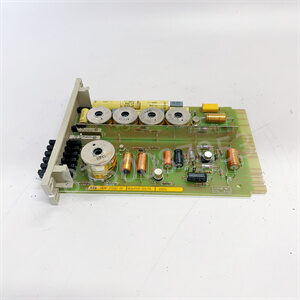
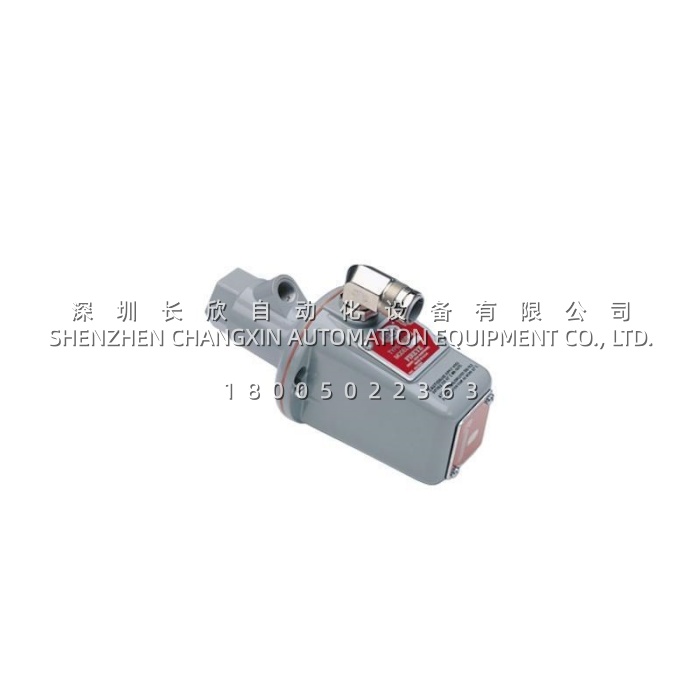
Application Scenarios
Consider a large coal-fired power plant operating multiple low-NOx burners, where adjacent burner radiation and hot refractory background frequently caused nuisance flame relay trips. Plant operators installed the Fireye 45RM4-1001 and used its 16-position rotary frequency selector to precisely tune into the optimal flame flicker frequency for pulverized coal combustion, effectively discriminating the target burner flame from background interference . The integrated 10-LED bargraph simplified scanner alignment and reduced commissioning time by over 50%. In chemical plants and refineries, the 45RM4-1001’s 24VDC operation minimizes the electrical noise interference common with AC-powered scanners, ensuring stable flame relay operation even in high-electromagnetic-interference environments . The scanner’s self-checking electronic shutter, driven by pulses from the companion amplifier, verifies scanner integrity every cycle, ensuring that a failed component never produces a false “flame present” signal .
Parameters
| Main Parameters | Value/Description |
|---|---|
| Product Model | 45RM4-1001 |
| Manufacturer | Fireye |
| Product Category | Self-Checking Infrared Flame Scanner Head |
| Supply Voltage | 24 VDC (+10%, -15%), from external supply or compatible Fireye amplifier |
| Current Consumption | 100 mA per scanner (typical) |
| Photodetector | Lead Sulfide (PbS) cell, spectral response 700–2500 nm |
| Frequency Selector | 16-position rotary switch for flame flicker tuning (20–150 Hz) |
| Signal Indication | 10-LED bargraph display for flame signal strength |
| Self-Check Mechanism | Electronic shutter assembly for amplifier-driven self-check cycle |
| Housing Material | Die-cast Aluminum |
| Mounting Connection | 1″ female thread (BSP variant for 1001; 1000 uses NPT) |
| Operating Temperature | -25°C to +65°C (-13°F to +150°F) |
| Humidity | 0% to 95% RH, non-condensing |
| Purge Air Requirement | 4.0 SCFM (113 L/min) minimum; up to 15 SCFM for dirty fuels |
Technical Principles and Innovative Values
The Fireye 45RM4-1001 stands out for its proven flame discrimination and safety architecture.
- Frequency-Tuned Flame Discrimination: The scanner detects flame by sensing the “flicker” frequency of combustion, a signature that varies by fuel type. The 16-position rotary selector allows field engineers to tune the 45RM4-1001 to the specific frequency where the best Flame ON vs. Background ratio exists . This is critical for low-frequency applications like pulverized coal and low-NOx burners, as well as mid-range natural gas flames, enabling reliable discrimination from adjacent burners and refractory glow .
- Electronic Self-Checking Shutter: Unlike passive flame detectors, the 45RM4-1001 incorporates an electronic shutter that, under control of the companion Fireye amplifier, periodically blocks the PbS cell’s view. A properly functioning system must show a zero signal during this “shutter closed” interval; if the signal persists, the amplifier initiates a safe burner shutdown . This continuous self-test elevates the 45RM4-1001 to the reliability standard required for safety-critical burner management.
- Background Gain Control (BGC): The scanner features a selectable BGC function that inversely adjusts gain based on flame brightness. On burners where background brightness increases when the monitored flame goes out (due to refractory or adjacent flames), enabling BGC ensures the flame signal decreases, causing the amplifier to reliably drop out the flame relay .