


ECPE82-2
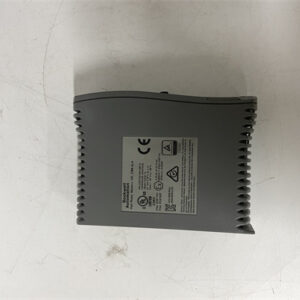
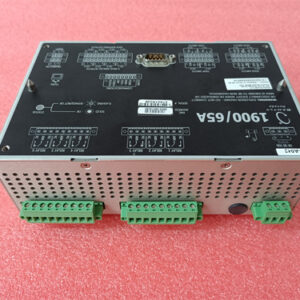
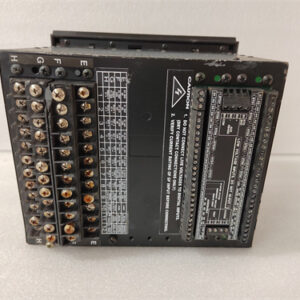
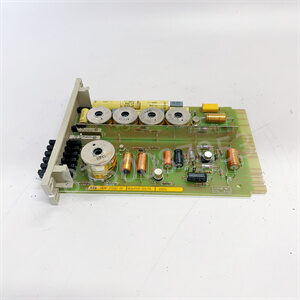
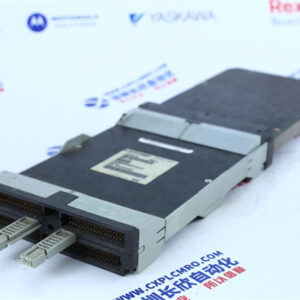
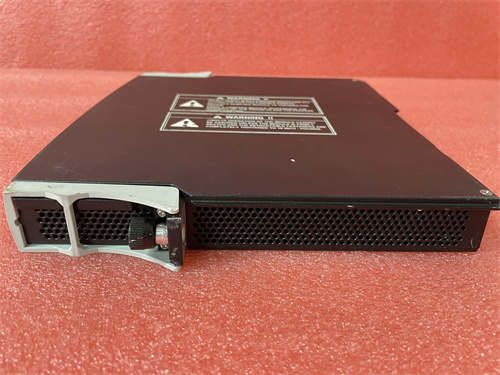
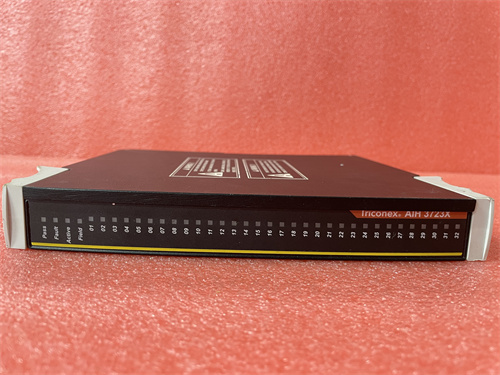
The ECPE82 – 2 module is a high – performance device tailored for industrial automation and control systems, acting as a key enabler for enhancing system efficiency, reliability, and precision in diverse industrial operations.
- Comprehensive Signal Management
The ECPE82 – 2 module is engineered to handle a broad spectrum of input and output signals. It can interface with an extensive range of industrial sensors, including temperature sensors, pressure transducers, flow meters, and proximity sensors. For analog input signals, it precisely converts the sensor – generated analog values into digital data, facilitating in – depth analysis by the control system. In a chemical processing plant, it can monitor the temperature and pressure of reactors through connected sensors, converting these analog signals into digital values that can trigger safety mechanisms or adjust the reaction process. For digital signals, it can receive status information from digital – output devices such as limit switches and photoelectric sensors, and then execute corresponding control actions, like starting or stopping a conveyor belt in a manufacturing assembly line.
- Advanced Control and Seamless Communication
Equipped with sophisticated control algorithms, the module is capable of executing complex control tasks. It supports functions such as sequential control, feedback control, and proportional – integral – derivative (PID) control. In a power generation facility, PID control can be utilized by the ECPE82 – 2 module to precisely regulate the speed of turbines based on electrical load demands. Moreover, the module features multiple communication interfaces and supports common industrial communication protocols, including Modbus, Profibus, and Ethernet/IP. This enables seamless integration with other devices in the industrial network, such as programmable logic controllers (PLCs), human – machine interfaces (HMIs), and other intelligent modules. It can transmit real – time process data to a central control system for monitoring and receive control instructions from higher – level systems, facilitating efficient centralized management of industrial operations.
- Robust and Reliable Design
Constructed with high – quality materials and advanced manufacturing techniques, the ECPE82 – 2 module is built to endure harsh industrial environments. It demonstrates excellent resistance to electromagnetic interference (EMI), radio – frequency interference (RFI), and mechanical vibrations, which are prevalent in industrial settings with heavy machinery and electrical equipment. It can operate stably within a wide temperature range, typically from – 20°C to + 60°C, and tolerate humidity levels up to 95% non – condensing. The module also incorporates built – in self – diagnostic functions. It continuously monitors its internal components, power supply, and communication status. In case of a fault, such as a hardware failure, communication error, or abnormal signal value, it can quickly detect the problem, trigger alarms, and record diagnostic data, which helps maintenance personnel to identify and resolve issues promptly, minimizing system downtime.
- User – Friendly Configuration
The ECPE82 – 2 module offers user – friendly configuration options. It can be easily configured through dedicated software tools, allowing users to set parameters such as input/output types, communication protocols, and control algorithms according to specific application requirements. The intuitive interface of the configuration software makes it accessible to engineers and technicians with different levels of expertise, enabling them to customize the module’s functions to meet the unique needs of various industrial applications.
Product Parameters
- Electrical Parameters
- Operating Voltage: Typically operates at 24V DC, with a tolerance range of ±10% to adapt to voltage fluctuations in industrial power supplies.
- Power Consumption: Approximately [X] Watts, designed for energy – efficient operation while maintaining high – performance output.
- Input/Output Parameters
- Analog Inputs: Usually [X] channels, supporting common analog signal ranges such as 4 – 20mA current signals, 0 – 10V voltage signals. The analog – to – digital conversion resolution is often [X] bits, ensuring high – precision data acquisition.
- Analog Outputs: [X] channels, capable of outputting signals within ranges like 4 – 20mA or 0 – 10V, with a stable output impedance for accurate signal delivery to connected devices.
- Digital Inputs: [X] channels, designed to detect binary – state signals (e.g., ON/OFF, HIGH/LOW), with an input voltage range conforming to industrial standards (e.g., 24V DC ±10%).
- Digital Outputs: [X] channels, able to drive loads with a certain current capacity (e.g., up to 2A per channel at 24V DC), and can be configured as sinking or sourcing outputs.
- Communication Parameters
- Supported Protocols: Modbus RTU/TCP, Profibus DP, Ethernet/IP.
- Communication Speed: For serial – based protocols (e.g., Modbus RTU), the baud rate can be adjusted from 9600 bps to 115200 bps; for Ethernet – based protocols, it supports speeds of 10/100/1000 Mbps.
- Number of Communication Ports: Usually equipped with [X] serial ports (e.g., RS – 232/RS – 485) and [X] Ethernet ports, providing flexible connectivity options for different industrial devices.
- Environmental Parameters
- Operating Temperature: – 20°C to + 60°C.
- Storage Temperature: – 40°C to + 85°C.
- Relative Humidity: 5% – 95% (non – condensing).
Product Specifications
- Physical Dimensions
The module has a compact design, with approximate dimensions of [Length] × [Width] × [Height] (e.g., 100mm × 80mm × 50mm), allowing for easy installation in standard industrial control cabinets and saving space.
- Weight
It weighs around [X] kg (e.g., 0.3 – 0.5 kg), which is convenient for handling during installation, maintenance, and transportation within industrial settings.
-1-300x300-c.jpg)