
Technical Specifications
| Parameter | Value |
|---|---|
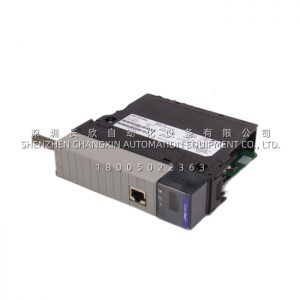
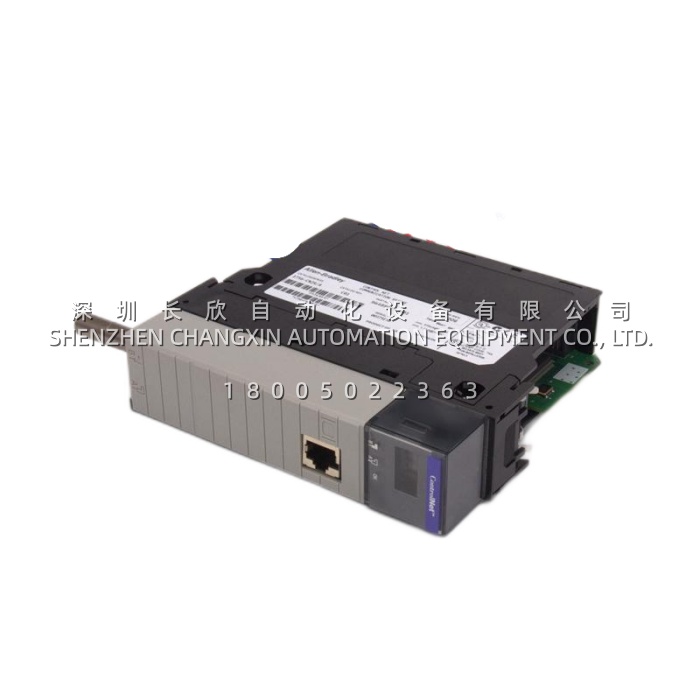
| Product Model | 1756-IB16I |
| Manufacturer | Allen-Bradley / Rockwell Automation |
| Product Type | ControlLogix 16-Point 24 V DC Isolated Sinking Input Module |
| Number of Inputs | 16, single-ended, individually channel-isolated |
| Input Type | Sinking (current sinking), DC |
| Operating Voltage Range | 10–31.2 V DC at input terminal, 24 V DC nominal |
| On-State Current | 4 mA @ 24 V DC (typ.) |
| Off-State Current | 1.5 mA max. |
| Input Impedance | Approx. 6 kΩ |
| On/Off Delay | 1 ms / 1 ms (filter; 0.5 ms hardware on Series B, config-filterable) |
| Isolation per Channel | 250 V AC continuous, 1500 V AC dielectric, 250 V AC field-to-field |
| Module Power | 0.31 A @ 24 V DC field rail; 8 A @ 5.1 V backplane (0.25 A @ 120 V AC P/S equivalent) |
| Terminal Block | Removable 1756-TBNH (20-pin screw) or 1756-TBSH (spring) |
| Slot Occupancy | 1 slot in any 1756 chassis |
| Operating Temperature | 0 to 60 °C (IEC), -20 to 85 °C storage |
| Enclosure / Mount | Open-style, chassis/DIN-mounted, IP20 touch-safe |
| Dimensions (H×W×D) | 142 × 102 × 82 mm (5.59 × 4.02 × 3.22 in.) |
| Approvals | UL 508, CSA C22.2, CE, C-Tick, FM, ATEX/IECEx (Ex nA IIC T4 on conformal variant) |
| Programming | Studio 5000 Logix Designer / RSLogix 5000, 1756-AENT/EN2T/EN3T + Logix5000 generic electronic keying |
| Lifecycle Status | Active, in-catalog ControlLogix spare (new, surplus, and refurbished stock available) |
Values are the published Bulletin 1756 ratings for the 1756-IB16I isolated configuration. Series letter, firmware major revision, and the optional conformal-coat/XT environmental suffix should be read from the module label before keying a controller replacement.
Main Features and Advantages
Individual channel isolation changes the failure math
A conventional 16-point DC input module shares a reference, which means a single grounded sensor, a lifted common, or a 48 V stray on the return can take out the whole rack of points. The Allen-Bradley 1756-IB16I breaks that shared path: each input is opto-isolated from its neighbors and from the backplane, so a wiring fault on channel 7 leaves channels 0–6 and 8–15 reporting normally. In a skid where proximity switches, solenoid feedback, and safety interlocks all arrive on the same module, that containment is the difference between a five-minute hunt and a line-wide reset.
Sinking input plays cleanly with the installed base
The sinking personality is the one the world’s DC sensor stock was built around. Two-wire DC proxes, three-wire PNP-style sources, dry contacts, and relay auxiliaries all source current toward the input, and the 1756-IB16I sinks it. There is no polarity dance, no external interposing relay to invert a signal, and no need to rewire a panel full of existing limit switches. The 10–31.2 V window tolerates a sagging 24 V rail during a contactor inrush without dropping legitimate on-states, while the 4 mA threshold ignores the leakage current that plagues long cable runs.
Fast enough to matter, filtered enough to be trusted
With a 1 ms on/off characteristic, the Allen-Bradley 1756-IB16I catches the short-duration event — a registration mark, a parts-present transition, a guard-door timing window — without the 5–10 ms laziness of older discrete input families. Yet the input is not so fast that a mechanical contact bounce registers as two events. The result is a module you can wire to either a solid-state sensor or a 30-year-old limit switch and get a clean bit in the controller without adding debounce logic in the ladder.
Diagnostic visibility without a field call-out
The module’s status word exposes more than a green OK: undervoltage on the field rail, individual channel fault, and backplane communication health all surface in the I/O tree. A technician watching the 1756-IB16I in Studio 5000 can tell whether the bit is zero because the limit switch is open, because the 24 V supply dipped, or because the terminal block worked loose — before walking to the panel. That is the kind of visibility that turns a vague “input not working” ticket into a ten-minute fix.
Removable terminations make the swap a non-event
The 1756-TBNH screw terminal block (or 1756-TBSH spring cage) carries the field wiring, not the module. Replace a failed by loosening two captive screws, extracting the module, seating the spare, and reconnecting the block. No wire labels to misread, no 32 conductor ends to re-strip, no re-termination torque check under production pressure. Pair that with the Series-compatible I/O definition and the replacement is electrically and logically invisible to the controller.
Built for the electrical noise of real panels
Opto-isolation, 1500 V dielectric rating, and a backplane that is galvanically separated from the field side let the sit next to VFDs, contactors, and 480 V starter feeds without picking up false transitions. The module’s 8 A backplane draw is modest enough that a fully loaded 1756-A10 chassis stays within a single 1756-PA72/PA75 supply budget, and the open-frame design sheds heat without a fan. For a ControlLogix rack that is expected to run a decade between touches, those are the boring specifications that actually matter.
Application Field
Mixed-source DC signal islands on a single rack
The classic use for the is the panel where the input list is heterogeneous: a packaging machine brings in 24 V DC proxes from the infeed, dry contacts from a legacy safety relay, and feedback from a pneumatic valve bank, all referenced to different power supplies. Shared-common input modules force you to tie those references together and hope, which is how ground loops get written into commissioning reports. The isolated channels of the let each device keep its own source and return, and the module presents sixteen clean bits to the Logix controller regardless.
Long cable runs and electrically noisy cells
Conveyor lines, transfer cars, and bulk-handling cells run sensor cable alongside starter trays and braking resistors. The 250 V AC continuous channel isolation and 1500 V dielectric strength of the reject the induced transients that show up as intermittent one-shots in the ladder. On runs where a sensor sits 80 metres from the panel, the 10 V minimum operating threshold and the 1.5 mA off-state leakage ceiling keep the bit stable even when the cable capacitance and terminal-block contamination would fool a less forgiving input.
Safety-interlocked cells, monitored without compromise
The is not a safety-rated input — that is the 1756-IB16S or the GuardLogix safety I/O family — but it is the right device for monitoring non-safety guard-door auxiliary contacts, light-curtain muting inputs, and interlock bypass pushbuttons where the safety function itself lives in a separate safety relay or safety controller. Isolating those monitor points from the production-prox channels prevents a noisy sensor ground from corrupting the interlock status word, and the per-channel fault bit gives the maintenance system a clean audit trail.
OEM skids and multi-vendor equipment
Skid builders standardize on the because it accepts whatever the customer’s sensor shelf already holds. A European PNP proximity, a North American dry-contact level switch, and a Japanese photoelectric can all land on the same module without interposing relays. The removable terminal block also lets the OEM ship the panel pre-wired and the controls integrator drop in the module on-site. For a skid that must certify under UL 508 and CE in the same enclosure, the arrives with the approvals already on the label.
Migration and brownfield expansion
When a plant moves from PLC-5 or SLC to ControlLogix, the is the natural landing point for the existing 24 V DC field devices. The I/O addresses map into a user-defined data structure rather than fixed I:xx files, so the conversion ladder can be written once and reused across machines. Because the module is still active catalog, spares are not a scavenger hunt, and a brownfield line can be expanded with another years after the original panel was built without revisiting the spare-parts strategy.


