Application Scenarios
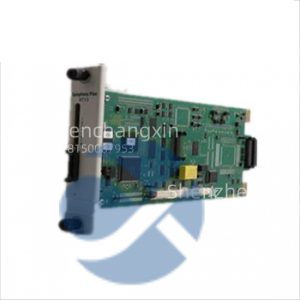
At a North Sea offshore oil platform, engineers needed to integrate new subsea pressure sensors into the existing ABB 800xA system—but the sensors were located in classified Zone 1 areas where any spark could trigger catastrophe. Installing the ABB SPIIT13 at the marshalling cabinet boundary allowed safe signal transfer without compromising measurement accuracy or communication integrity. Over three years of operation, the platform reported zero safety incidents related to signal wiring, and maintenance crews praised the module’s clear labeling and tool-free terminal access. In this high-risk environment, the ABB SPIIT13 wasn’t just a component—it was a certified lifeline between field reality and control logic.
Parameter
表格
Technical Principles and Innovative Values
Innovation Point 1: True Passive Intrinsic Safety – The ABB SPIIT13 uses precision resistors, Zener diodes, and fuses to limit voltage, current, and power without requiring external power—ensuring fail-safe operation even during total system blackouts.
Innovation Point 2: HART Transparency – Unlike older IS barriers that filter high-frequency signals, the ABB SPIIT13 preserves HART communication up to 2.4 kHz, enabling remote diagnostics and calibration of smart transmitters in hazardous zones.
Innovation Point 3: Universal Signal Compatibility – One ABB SPIIT13 module can be configured (via terminal strapping or jumper settings) for mA, RTD, or thermocouple inputs—reducing spare parts inventory and simplifying engineering design.
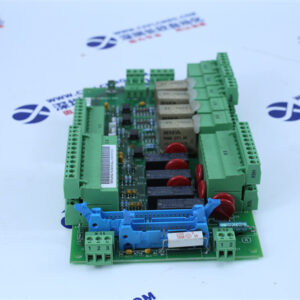
Innovation Point 4: Maintenance-Optimized Design – Color-coded terminals, clear signal labels, and removable front covers allow technicians to verify wiring or replace modules without de-energizing adjacent circuits—critical in continuous-process plants.
Application Cases and Industry Value
In a petrochemical complex in Saudi Arabia, a flare gas recovery unit suffered frequent analyzer failures due to ground loops and surge coupling through unprotected signal lines. After retrofitting all toxic gas detector feeds with ABB SPIIT13 barriers, the facility eliminated false alarms and extended sensor life by over 40%. Safety auditors noted that the ABB SPIIT13’s compliance with Entity parameters simplified hazardous area documentation—a major win during regulatory inspections.
Similarly, a pharmaceutical plant in Switzerland uses the ABB SPIIT13 to connect reactor temperature probes in solvent-handling rooms classified as ATEX Zone 1. The module’s low thermal drift (<0.01% / °C) ensures batch-to-batch consistency, while its compact size allows dense mounting in space-constrained control panels. Operators now rely on it as a “silent guardian” of both product quality and personnel safety.
Related Product Combination Solutions
ABB SPKIT13: Companion terminal block kit—provides secure, labeled wiring for SPIIT13 field connections.
ABB AI810: Analog input module—receives conditioned signals from SPIIT13 in the safe area.
ABB TB820: Terminal base—often used downstream of SPIIT13 for I/O module interfacing.
ABB CI854A: Profibus DP module—can coexist in the same rack; SPIIT13 protects analog side, CI854 handles digital.
Pepperl+Fuchs KFD2-STC4-Ex1.20: Competitor IS barrier—useful for cross-platform validation but lacks native ABB integration.
ABB 800xA Asset Optimization: Software suite that leverages HART data passed through SPIIT13 for predictive maintenance.
ABB SA110: Redundancy module—not directly linked, but often deployed in same cabinets for PSU redundancy.
MTL Instruments 55xx Series: Alternative IS barriers—considered during multi-vendor studies, though SPIIT13 offers tighter ABB ecosystem synergy.
Installation, Maintenance, and Full-Cycle Support
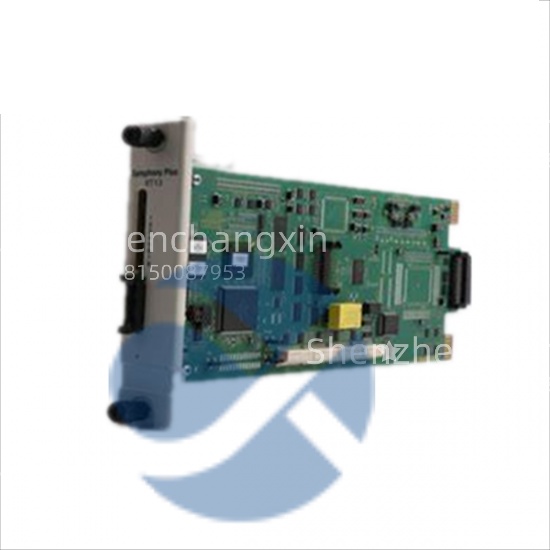
Installing the ABB SPIIT13 requires mounting it on a DIN rail in the safe-area marshalling cabinet, with field-side terminals connected to hazardous-zone devices and system-side terminals wired to the DCS I/O card (e.g., AI810). Critical best practices include using separate cable trays for IS and non-IS wiring, ensuring proper grounding of the IS reference point, and verifying loop resistance to stay within Entity limits. No configuration software is needed—the ABB SPIIT13 operates purely through hardware-defined safety parameters.
Routine maintenance involves visual inspection of fuse status (some variants include windowed fuse holders), checking for terminal corrosion in humid environments, and verifying loop current during calibration cycles. If a fault occurs (e.g., blown fuse due to a field short), the entire module can be replaced in under two minutes without disrupting adjacent channels. As part of our full-cycle support, we supply only genuine, factory-tested ABB SPIIT13 units with valid certification labels, traceable serial numbers, and 24-month warranty. Our application engineers also provide free guidance on hazardous area classification mapping, loop calculation templates, and SIL verification documentation.
Contact us for a customized solution—whether you need a single ABB SPIIT13 for emergency replacement or a complete IS barrier strategy for a new ABB 800xA deployment in oil & gas, chemicals, or life sciences.