
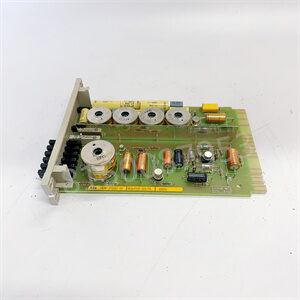
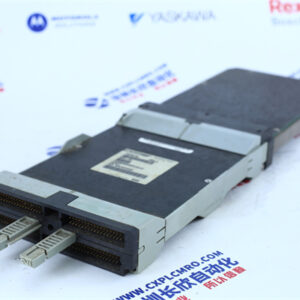
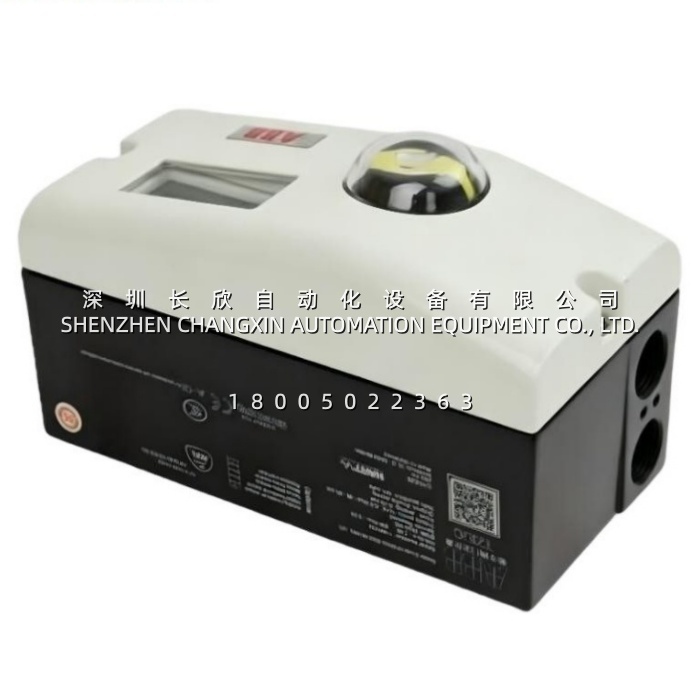
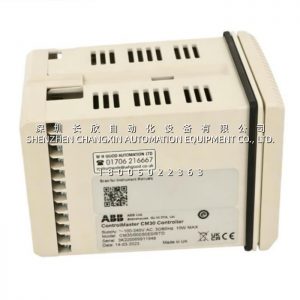
Application Scenarios
Imagine a regional water-treatment facility responsible for managing a network of pump stations, chemical-dosing systems, and filtration units spread across a wide geographic area. The central control room runs an ABB DCS, but several remote sites require local control intelligence to maintain operations during communication interruptions with the central SCADA system. In this scenario, the ABB CM30/2 modules deployed at each remote site provide autonomous loop control—managing flow rates, pressure setpoints, and chemical-feed ratios—while simultaneously exchanging data with the central controller when the communication link is available.
For plant engineers, the core challenges are distributed asset management, communication reliability, and maintaining process control during network outages. The ABB CM30/2 addresses these concerns through its autonomous processing capability, robust communication interfaces, and seamless integration with ABB’s broader automation ecosystem. Whether deployed in a municipal water system, a chemical batch-processing skid, or a power-plant auxiliary system, the module ensures that local control loops remain stable and responsive even when the central system is temporarily unreachable.
Parameter
| Main Parameters | Value/Description |
|---|---|
| Product Model | CM30/2 |
| Manufacturer | ABB |
| Product Category | Compact Controller Module |
| Processor | 32-bit RISC processor (system-specific clock speed) |
| Memory | Integrated Flash and RAM for program and data storage |
| Control Loops | Supports multiple PID loops (quantity depends on firmware) |
| I/O Capacity | Expandable via local and remote I/O modules |
| Communication Protocols | ABB proprietary bus; optional Modbus RTU/TCP, Profibus DP |
| Programming Languages | Function Block Diagram (FBD), Ladder Logic, Structured Text |
| Scan Time | Deterministic, sub-millisecond typical for typical loop configurations |
| Power Supply | 24 VDC nominal (backplane-powered) |
| Operating Temperature | 0 °C to +60 °C (industrial control-panel rating) |
| Storage Temperature | −40 °C to +85 °C |
| Mounting | DIN-rail or backplane/chassis mount |
| Diagnostics | On-board status LEDs; system-level fault reporting |
| Certifications | CE compliant; UL listed (verify per manufacturing batch) |
Key annotations: The 32-bit processor delivers the computational throughput required for multi-loop control without sacrificing determinism. The expandable I/O architecture allows a single ABB CM30/2 to scale from a handful of local signals to hundreds of remote I/O points as the application grows.
Technical Principles and Innovative Values
- Innovation Point 1 – Deterministic Multi-Loop Execution: The ABB CM30/2 employs a priority-based task scheduler that ensures critical control loops execute within guaranteed time windows. This determinism is essential for processes where control latency—even measured in milliseconds—can affect product quality or equipment safety.
- Innovation Point 2 – Modular, Scalable Architecture: The module supports both local I/O expansion and remote I/O communication, allowing system designers to start with a minimal configuration and scale up without replacing the controller. A single ABB CM30/2 can thus serve a small skid-mounted process today and expand to manage an entire process area tomorrow.
- Innovation Point 3 – Communication Resilience: Built-in support for multiple protocols—including ABB’s proprietary control bus and open standards such as Modbus—ensures interoperability with both legacy and modern field devices. The module can operate autonomously during communication loss, caching data and resuming seamless synchronization once the link is restored.
- Innovation Point 4 – Integrated Diagnostics and Status Reporting: On-board LEDs and system-level diagnostics provide immediate visibility into module health, communication status, and I/O integrity. Fault conditions are reported to the engineering workstation, enabling predictive maintenance and reducing mean time to repair (MTTR).
- Innovation Point 5 – Backward Compatibility with Legacy ABB Systems: The maintains compatibility with earlier ABB controller families, making it an ideal upgrade and sparing solution for plants operating mixed-vintage automation equipment. Existing control strategies can often be migrated with minimal rework.
- Innovation Point 6 – Rugged Industrial Design: Conformal-coated PCBs, wide operating-temperature range, and robust connectors ensure reliable operation in harsh environments—from hot, humid pump houses to electrically noisy motor-control centers.


