Application Scenarios
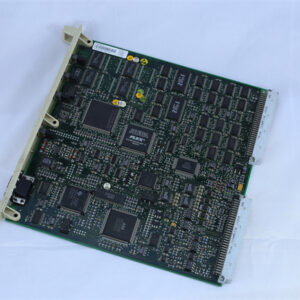
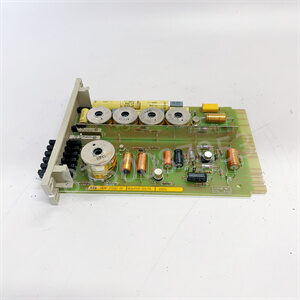
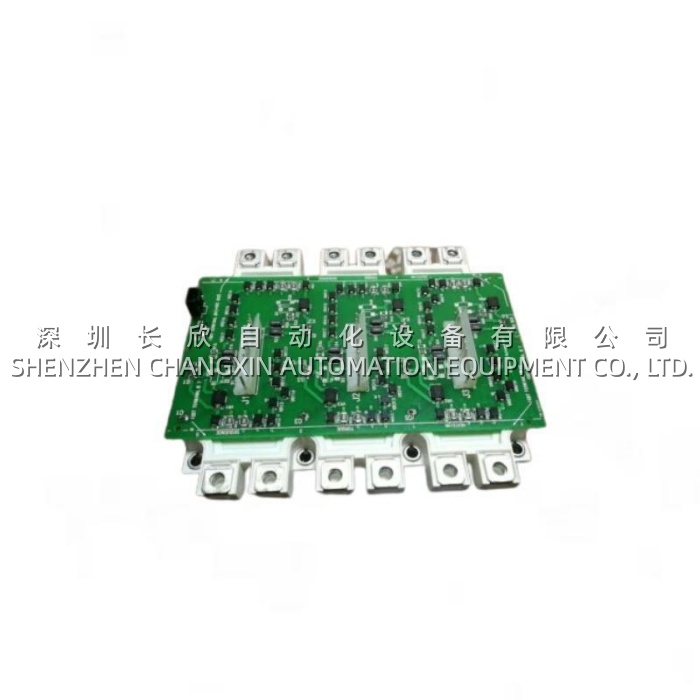
A 2×350 MW combined-cycle power plant in Southeast Asia was midway through a brownfield DCS modernization, migrating legacy Symphony nodes to Symphony Plus. The bottleneck wasn’t the controllers—it was the communication layer: the old interface cards could only handle one Modbus TCP stream and a single RS485 loop, forcing the integrator to daisy-chain three protocol gateways just to get turbine auxiliary data and ambient-temperature PLCs onto the same screen. Latency spiked to 800 ms during peak polling, and the OPC server threw “stale tag” warnings every shift. Swapping those nodes for the 3BHE015619R0001 changed the topology overnight—each XVD825A01 delivered two independent 10/100 Mbps Ethernet ports plus a dedicated RS485 terminal, all galvanically isolated at 3000 Vrms from the system side. Polling latency dropped below 120 ms, stale-tag events vanished, and the plant eliminated three standalone gateway boxes per unit. For the lead DCS engineer, the takeaway was simple: “The XVD825A01 didn’t just add ports—it removed failure points.”
h2 Parameter
| Main Parameters | Value/Description |
|---|---|
| Product Model | 3BHE015619R0001 (XVD825A01) |
| Manufacturer | ABB |
| Product Category | DCS Communication / Interface PCB |
| System Compatibility | ABB Symphony Plus (HC800, AC 800M contexts) |
| Ethernet Interface | 2 × RJ45, 10/100 Mbps auto-negotiation |
| Serial Interface | 1 × RS485 (terminal block), up to 115.2 kbps |
| Supported Protocols | Modbus TCP/IP, Profibus DP, ABB proprietary bus |
| Isolation | Network ↔ system side: 3000 Vrms optical isolation |
| Operating Voltage | 24 V DC ±10 % |
| Power Consumption | ≤ 12 W |
| Operating Temp. | -5 °C to +60 °C (extended ratings available per build) |
| Mounting | DIN rail / panel mount (Symphony Plus station form factor) |
| Dimensions / Weight | ≈220 × 160 × 30 mm / ≈0.55 kg |
h2 Technical Principles and Innovative Values
- Innovation Point 1: Triple-Protocol Concurrency on a Single PCB: Most DCS interface cards force a choice—Ethernet or Profibus or serial. The 3BHE015619R0001 runs all three simultaneously, with the onboard FPGA handling packet de-multiplexing so the host controller sees clean, pre-parsed data blocks. This eliminates the “gateway sprawl” that bloat control cabinets in retrofit projects.
- Innovation Point 2: 3000 Vrms Optical Isolation on the Network Side: In power-plant and substation DCS cabinets, Ethernet runs often share trays with CT/PT secondary wiring and VFD output ducts. The 3BHE015619R0001 isolates the RJ45/RS485 front end from the 24 V logic domain at 3000 Vrms, meaning a surge coupled in from a switched 6.6 kV bus won’t propagate into the Symphony Plus backplane—a design choice that directly reduces spurious controller reboots.
- Innovation Point 3: Symphony Plus Native Integration Without Middleware: Because the XVD825A01 speaks ABB’s internal bus natively, it appears as a first-class node in Control Builder M / SPlus Engineering. No third-party OPC wrapper, no custom function blocks—commissioning teams drop it into the hardware tree, map the Modbus registers, and go live.
h2 Application Cases and Industry Value
A regional water-treatment utility running six oxidation-ditch lines on ABB AC 800M controllers needed to pull turbine-flow meter data from three legacy vendors (one used Modbus RTU over RS485, another pushed Profibus DP, the third had a Modbus TCP gateway that crashed weekly). Rather than deploy three vendor gateways, the utility’s系统集成商 spec’d the ABB 3BHE015619R0001 at each ditch’s local Symphony Plus station—one RJ45 pair went to the plant LAN (Modbus TCP), the RS485 terminal absorbed the legacy meter daisy chain, and Profibus DP rode the second RJ45 via an external DP/ETH coupler. Total gateway count across the site dropped from nine to zero. Eighteen months post-commissioning, the utility reported 99.97% data availability on the SCADA historian, up from 94% pre-retrofit. “The XVD825A01 paid for itself the first time a rain-event poll didn’t time out,” the lead automation engineer noted.