Application Scenarios
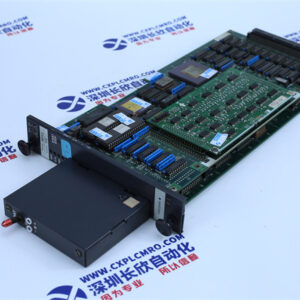
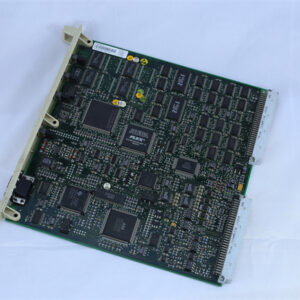
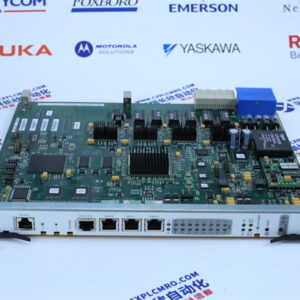
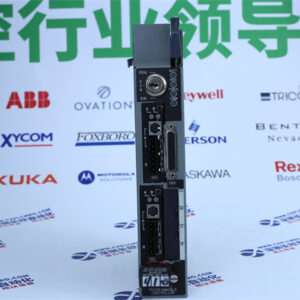
In a 600 MW coal-fired power plant in Eastern Europe, the maintenance team struggled with uneven thyristor loading across two parallel six-pulse rectifier bridges in the UNITROL 5000 excitation cabinet. One bridge consistently ran 12°C hotter than the other, triggering periodic overtemperature trips during peak grid demand. After tracing the issue to a degraded interface board that could no longer enforce dynamic current sharing, the engineers replaced it with the 3BHB005922R0001. Within 48 hours of commissioning, bridge-to-bridge current deviation dropped from 18% to under 3%, and the thermal spread normalized. More importantly, the plant avoided what would have been a forced derating during the winter peak—a scenario where excitation instability could have cascaded into a generator off-line event. This case illustrates why the 3BHB005922R0001 isn’t just a “spare card”—it’s the enabler of load balance, isolation, and protection logic that keeps synchronous generators firmly on the grid.
h2 Parameter
| Main Parameters | Value/Description |
|---|---|
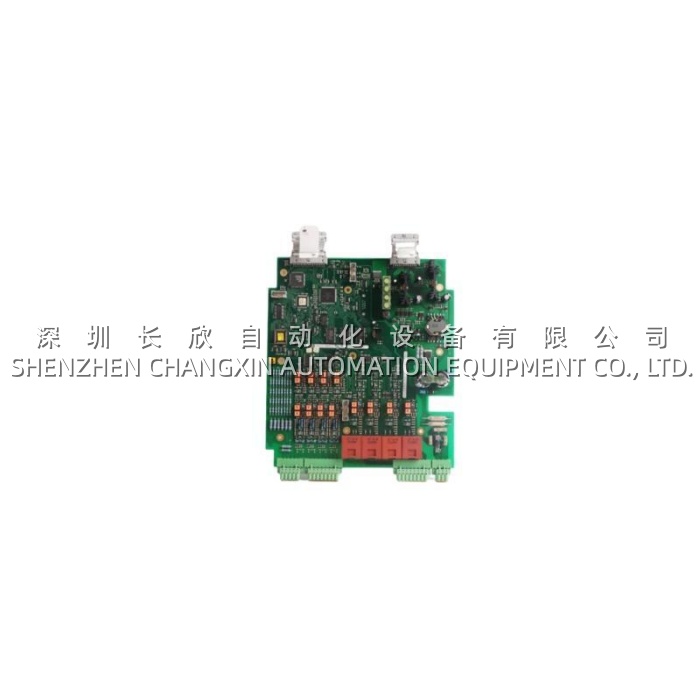
| Product Model | 3BHB005922R0001 (UNS0880A-P V1) |
| Manufacturer | ABB |
| Product Category | Rectifier Bridge Interface Board (CIN) |
| Compatible Systems | ABB UNITROL 5000, UN5000 excitation systems |
| Operating Voltage | 24V DC (wide range 18–36V DC) |
| Communication Bus | TMR (Triple Modular Redundancy) bus; PROFIBUS DP, Modbus RTU/TCP |
| Isolation | Ch-to-ch ≥2500V AC; Ch-to-ground ≥1500V AC |
| Redundancy | Dual-bus redundancy (switch ≤10ms); dual 24V DC power redundancy (switch ≤5ms) |
| Operating Temp. | -25°C to +70°C (wide-range industrial grade) |
| Protection Class | IP20 (control-cabinet rated) |
| Mounting | Standard DIN rail / 19″ rack mounting |
| Dimensions / Weight | ≈255 × 240 × 35 mm / ≈0.36 kg |
| Certifications | CE, RoHS, TÜV Rheinland, SIL2 |
h2 Technical Principles and Innovative Values
- Innovation Point 1: High-Voltage/Low-Voltage Galvanic Isolation: The 3BHB005922R0001 electrically segregates sensitive control-logic circuits (24V domain) from the thyristor gate drives (pulsed kV-level transients). With channel-to-channel isolation ≥2500V AC, the board prevents gate-trigger noise from propagating back into the DCS/controller, a frequent root cause of spurious excitation trips in older cabinet designs.
- Innovation Point 2: Dynamic Current Sharing Algorithm: Unlike passive interface cards that merely relay trigger pulses, the 3BHB005922R0001 actively monitors per-bridge DC current and adjusts firing angles in real time to equalize load between parallel rectifier stacks. This mitigates thermal runaway risk on individual thyristors and extends the mean time between failures (MTBF) of the entire power section.
- Innovation Point 3: TMR Bus + Sub-10ms Redundancy Switchover: Integrated into ABB’s redundant excitation architecture, the board supports dual TMR bus paths and dual 24V DC feeds. Bus switchover completes within 10 ms and power switchover within 5 ms—fast enough that the generator AVR loop never sees a discontinuity, maintaining IEEE 421.5 compliance even during a single-point bus failure.
h2 Application Cases and Industry Value
A hydropower station on the Yangtze cascade retrofitted three UNITROL 5000 cabinets serving 175 MW Francis turbines. The original CIN boards had been in service for 14 years, and the station was seeing intermittent “bridge fuse fail” alarms during load rejection tests. After swapping to the ABB 3BHB005922R0001, the station reported zero false fuse alarms over the following 18 months. More tangibly, the automatic voltage regulator’s step-response settling time improved from 4.2 seconds to 3.1 seconds, bringing the unit closer to PSS (Power System Stabilizer) optimal tuning. The plant’s electrical supervisor noted that “the new CIN boards made the excitation cabinet feel invisible again—which in this business is the highest compliment.” Beyond hydro, the same 3BHB005922R0001 footprint is routinely deployed in thermal, nuclear, and gas-fired units where static excitation reliability directly correlates with grid ancillary service revenue.
h2 Related Product Combination Solutions
To build a complete UNITROL-class excitation control chain around the 3BHB005922R0001, these companion models are typically specified together:
- 3BHB006943R0002 (UNS0885A-Z V2) – Rectifier Bridge Display & Control Module (CDP), the operator-facing companion to the CIN board, showing fuse status, fan run, and bridge temperature.
- 3BHE019426R0001 (COB) – Controller Output Board, the main AVR/PI controller that sits upstream of the 3BHB005922R0001 in the UNITROL stack.
- 3BHB007630R0001 (GDI) – Gate Drive Interface board, sitting downstream of the CIN to drive individual thyristor gates with reinforced isolation.
- 3BHL000985P0001 – UNITROL 5000 rack backplane, providing the TMR bus physical layer that the 3BHB005922R0001 plugs into.
- 3BSE053241R1 (PM866) – ABB AC 800M controller CPU, often the DCS-side host that exchanges setpoints and alarms with the excitation cabinet via the CIN’s PROFIBUS/Modbus path.
- 3BSC690087E – UNITROL 5000 human-machine terminal (HMI), aggregating CIN+CDP data for local operator screens.
- 3BHB002483R0001 – Thyristor snubber/protection card, paired mechanically in the same cubicle to protect the rectifier bridges the 3BHB005922R0001 controls.