Application Scenarios
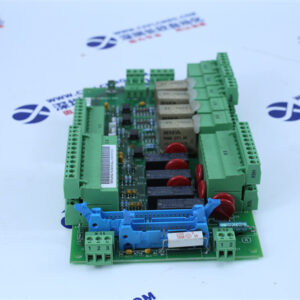
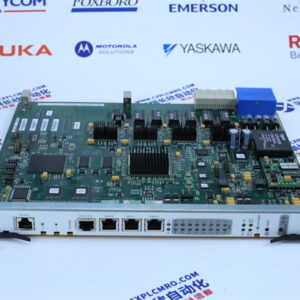
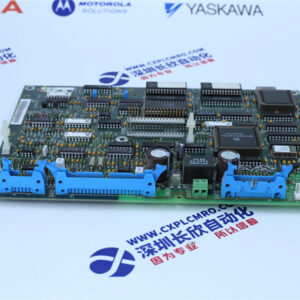
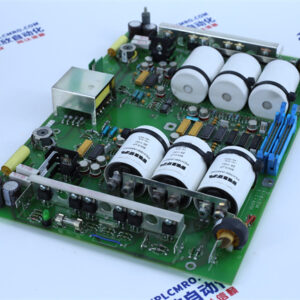
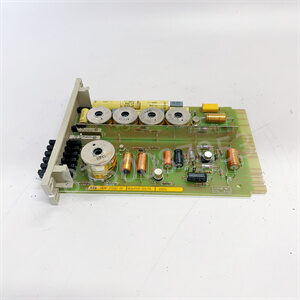
In a regional water pumping station control cabinet, the original controller had reached the end of its service life, causing repeated unplanned shutdowns that disrupted water supply to thousands of households. The facility’s automation engineer needed a drop-in replacement that would preserve the existing control logic and field wiring. By installing the ABB 07KR31 with ordering code FPR3600227R1202, the maintenance team restored full functionality within hours — the module’s 12 digital inputs directly captured float switch and pressure transmitter states, while its 8 relay outputs drove pump motor contactors and alarm horns. The integrated RS485 CS31 bus allowed seamless connection to remote I/O units located near the pump wells, reducing wiring costs by approximately 80% compared to a centralized topology. For plant managers overseeing legacy Procontic CS31 installations, the ABB 07KR31 is not just a spare part — it is a lifeline that keeps decades-old automation infrastructure running reliably without the massive capital expenditure of a full system replacement.
Parameter
| Main Parameters | Value/Description |
|---|---|
| Product Model | ABB 07KR31 (FPR3600227R1202) |
| Manufacturer | ABB (originally BBC Brown Boveri) |
| Product Category | PLC Central Processing Unit (CPU) / Basic Unit |
| System Platform | ABB Procontic CS31 Distributed Automation System |
| User Program Memory | 2K word EEPROM (non-volatile, battery-free retention) |
| Digital Inputs | 12 × 24 V DC (sink/source) |
| Digital Outputs | 8 × relay outputs, 2 A at 250 V AC per channel |
| High-Speed Counter | 1 channel, up to 10 kHz counting frequency |
| Serial Port | Programmable RS232 (COM1) for programming, ASCII, or MODBUS |
| System Bus | RS485 CS31 bus for remote I/O expansion |
| Protocol Support | Built-in MODBUS Master/Slave |
| Real-Time Clock | Integrated, for time-stamped events and scheduling |
| Supply Voltage | 24 V DC (typical, 20.4 – 28.8 V DC range); 120 V AC and 230 V AC versions available |
| Power Consumption | Max 0.4 A @ 24 V DC (typical ~5 W) |
| Operating Temperature | 0°C to +55°C (industrial grade) |
| Mounting Method | DIN rail or screw-fixed plug-in base (ECZ) |
| Dimensions (H×W×D) | 240 mm × 140 mm × 85 mm |
| Weight | Approx. 1.3 kg |
| Protection Rating | IP20 (for installation inside control cabinet) |
| Indicators | LED status for RUN, STOP, ERROR, BUS, and I/O points |
Technical Principles and Innovative Values
Innovation Point 1: Integrated All-in-One CPU Architecture. The ABB 07KR31 breaks the traditional separation between CPU and I/O modules. By embedding 12 digital inputs and 8 relay outputs directly on the processor board, the ABB 07KR31 eliminates the need for separate I/O cards in basic automation tasks. This integration slashes cabinet space requirements and reduces wiring complexity, making it exceptionally cost-effective for small-to-medium applications.
Innovation Point 2: 10 kHz High-Speed Counter with Real-Time Clock. Unlike conventional entry-level PLC CPUs of its era, the ABB 07KR31 incorporates a dedicated high-speed counting channel capable of capturing pulses up to 10 kHz. Combined with the built-in real-time clock, the module supports precision flow metering, encoder feedback, and time-stamped event logging — capabilities typically reserved for higher-tier controllers.
Innovation Point 3: Dual Serial Architecture with Native MODBUS. The ABB 07KR31 features a programmable RS232 port (configurable as programming interface, ASCII link, or MODBUS node) alongside a dedicated RS485 CS31 system bus. The built-in MODBUS master/slave protocol enables direct communication with HMIs, SCADA systems, and third-party devices without additional gateway hardware. This flexibility allows the ABB 07KR31 to serve as a standalone controller, CS31 bus master, or remote slave processor.
Innovation Point 4: Non-Volatile EEPROM Memory. The 2K-word EEPROM user program memory in the ABB 07KR31 retains control logic permanently without requiring battery backup. This design eliminates the common failure mode of battery-backed RAM, dramatically improving long-term reliability for unattended installations.